
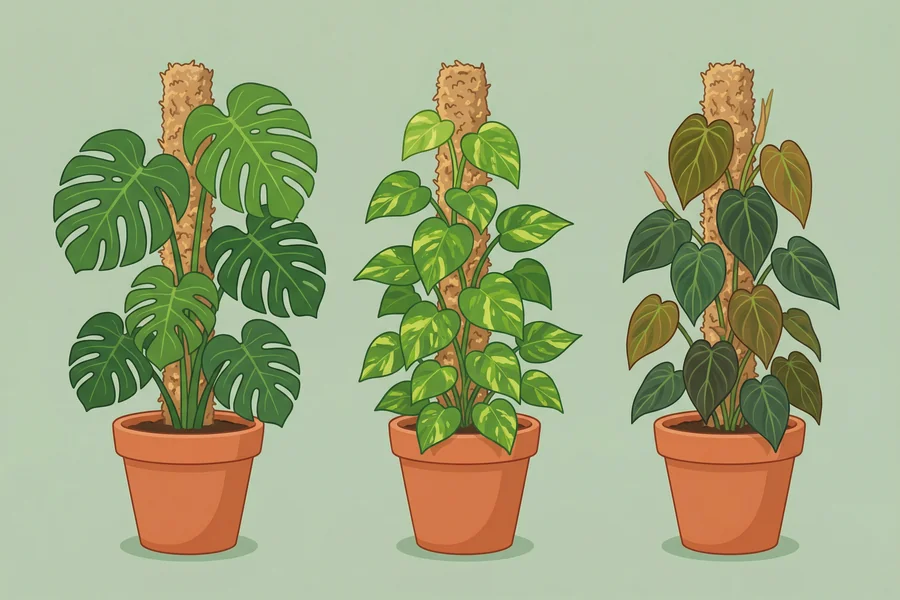
If you have ever scrolled through plant Instagram or visited a local nursery, you have probably seen those majestic, towering indoor plants climbing up a fuzzy, green pole. It looks incredible, but it is not just for aesthetics. As I discussed in my previous guide on why plants benefit from moss poles, providing vertical support is the secret to unlocking mature, massive foliage in many popular houseplants.
However, not every plant wants or needs to climb. If you stick a succulent or a fern next to a moss pole, nothing is going to happen. Over the years, I have experimented with dozens of climbing houseplants, and I have learned exactly which ones will enthusiastically grab onto a pole and which ones will just ignore it. If you are ready to elevate your indoor jungle, here are the absolute best plants for a moss pole, based on my personal experience.
Why Do Some Plants Need to Climb?
To understand which plants work best, we have to look at how they grow in the wild. Many of our favorite indoor plants belong to the Araceae family (often called aroids). In their natural tropical rainforest habitats, these plants start on the dark forest floor and use their aerial roots to climb up tree trunks toward the canopy to reach sunlight. You can read more about the fascinating biology of these plants in our complete guide to Aroids.
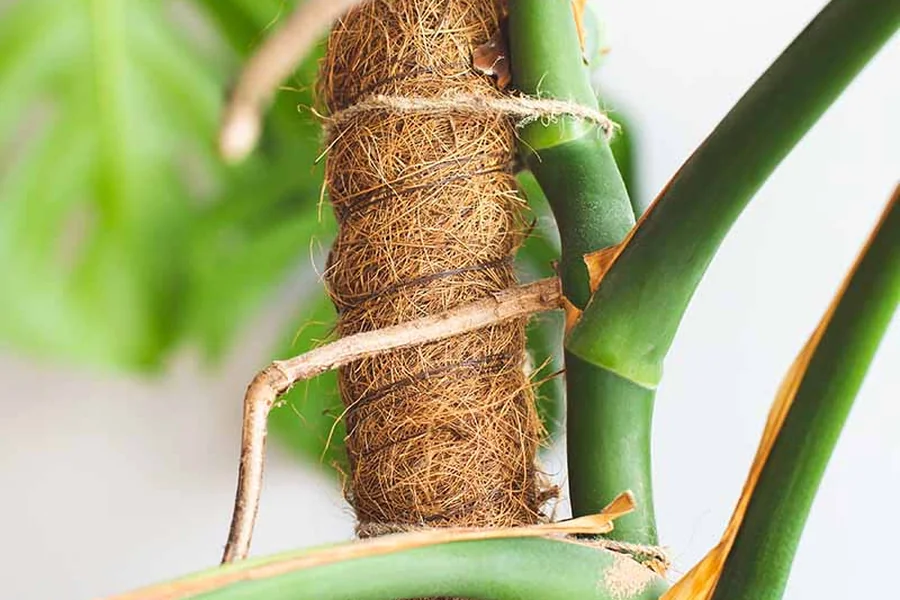
When we grow these plants indoors without support, they tend to trail downward, and their leaves stay small and juvenile. But when we provide a moist structure—like one made from sphagnum moss—the plant’s aerial roots attach to it. The plant “thinks” it is climbing a tree, which triggers it to produce significantly larger, mature leaves, and in some species, beautiful fenestrations (splits and holes).
Top 5 Best Plants for a Moss Pole
1. Monstera deliciosa
Let’s start with the undisputed king of the moss pole. The Monstera deliciosa is famous for its massive, Swiss-cheese-like leaves. While they can survive as sprawling floor plants, they truly thrive when given vertical support.
In my experience, once a Monstera’s thick aerial roots securely latch onto a damp moss pole, the transformation is incredible. The internodes (the space between leaves on the stem) become shorter, making the plant look fuller, and the new leaves become exponentially larger with double or even triple fenestrations. Because Monsteras get heavy, ensure your pole is sturdy and deeply anchored into the potting mix.
2. Climbing Philodendrons
The Philodendron genus is incredibly diverse, but the vining varieties are absolute moss pole magnets. My personal favorite to put on a pole is the Philodendron ‘Pink Princess’. Without support, a Pink Princess can become leggy, top-heavy, and prone to snapping. Once attached to a pole, the leaves grow larger, and the stem thickens up beautifully.
Other fantastic Philodendrons for poles include the Philodendron melanochrysum (which develops stunning, velvety, elongated leaves when climbing) and the classic Heartleaf Philodendron (Philodendron hederaceum). Even common varieties look like entirely different, premium plants once they start climbing.
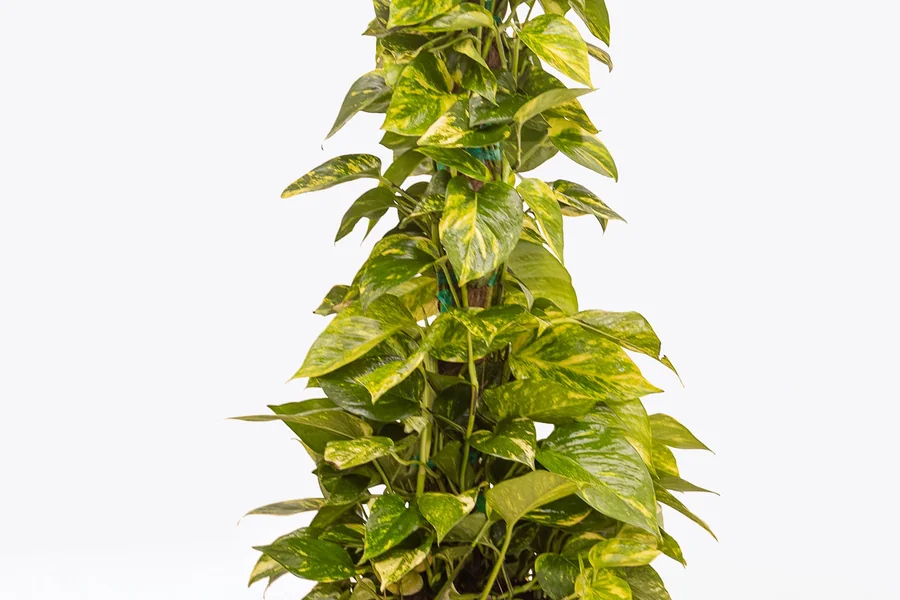
3. Epipremnum aureum (Golden Pothos)
Most people treat the Golden Pothos as a hanging plant, letting the vines trail down from a bookshelf or macrame hanger. While this looks lovely, trailing actually signals to the plant that it is moving away from the light, causing the leaves to stay small.
If you take that exact same Pothos and train it up a moss pole, you will be shocked by the results. The aerial roots will quickly grab the moss, and within a few months, the leaves can grow to the size of dinner plates and even develop splits similar to a Monstera. It is the easiest and most rewarding plant for a beginner to try on a pole.
4. Monstera adansonii
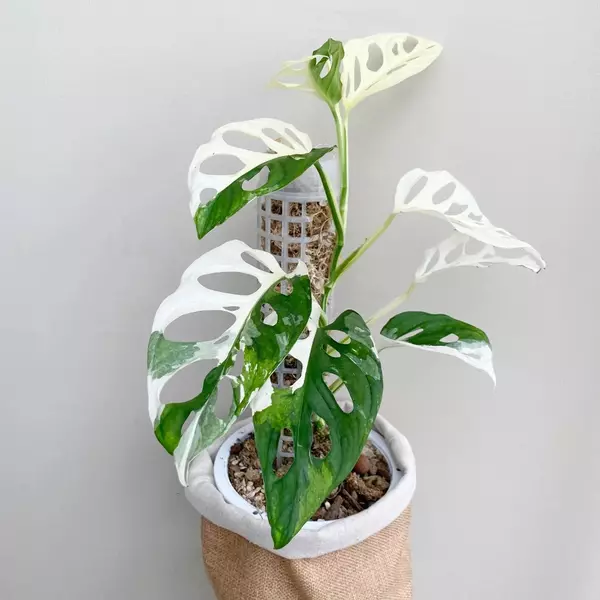
Often called the “Swiss Cheese Vine,” this smaller cousin of the deliciosa is a rapid grower. When left to trail, the leaves tend to stay small and sometimes look a bit sparse. But when you wrap the vines around a moss pole and keep it consistently moist, the Monstera adansonii takes off.
The leaves will overlap beautifully, creating a dense, lush column of green, and the holes in the leaves will become much more prominent. Because the stems are thinner, I usually plant two or three cuttings at the base of the pole to create a fuller look right from the start.
5. Rhaphidophora tetrasperma
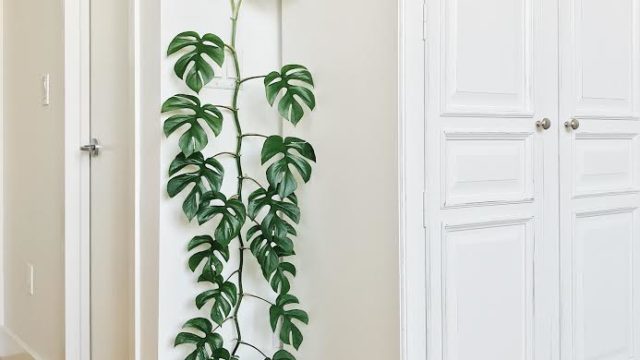
Sometimes sold as a “Mini Monstera” (though it is not a true Monstera), this plant is an aggressive climber. In fact, it grows so fast vertically that it practically demands a pole. Without support, it will quickly fall over under its own weight.
The Rhaphidophora tetrasperma has a relatively thin stem, so I recommend tying it to the pole with soft plant velcro or twine until the aerial roots take hold. Once it attaches, it will race to the top of the pole, producing those deeply split, quirky leaves all the way up.
A Quick Tip on Maintenance
Choosing the right plant is only half the battle; keeping the pole moist is the other half. If the moss dries out, the aerial roots will stop growing into it, and the plant will stop sizing up. If you struggle with this, be sure to check out my recent guide on how often you should water a moss pole, where I share my favorite low-effort watering tricks.
Whether you choose a classic Pothos or a rare Philodendron, giving your climbing plants a moss pole is one of the most rewarding experiences in indoor gardening. Grab a pole, tie up those vines, and watch your indoor jungle reach new heights!
