
If you have been collecting houseplants for a while, you probably have a windowsill crowded with dozens of individual pots. At some point, looking at all those separate containers, you might have wondered: Can I just put some of these together in one big pot?
The short answer is yes! Growing multiple plants in the same pot is not only possible, but it can also create stunning, lush displays that look like miniature indoor gardens. However, before you start digging up your favorite green friends and tossing them into a communal planter, there are a few golden rules you need to follow.
Over the years, I have created some beautiful mixed planters, but I have also made some disastrous combinations that ended in root rot and heartbreak. Here is everything you need to know about combining houseplants successfully.
The Golden Rule: Match Their Needs
The absolute most important factor when potting plants together is that they must share the same basic care requirements. If you put a water-loving fern in the same pot as a drought-tolerant cactus, one of them is going to die. You cannot customize watering or lighting for individual plants once they share the same soil.
Before combining plants, make sure they match in these three areas:
1. Light Requirements:Do they both thrive in bright indirect light, or are they low-light indoor plants
2. Watering Needs: Do they like their soil constantly moist, or do they need to dry out completely between waterings?
3. Soil Type: Do they need a chunky, well-draining aroid soil mix or something more moisture-retentive
Classic Combinations That Work
If you are new to mixed planters, it is easiest to stick to plants within the same family or genus, as they naturally have similar needs.
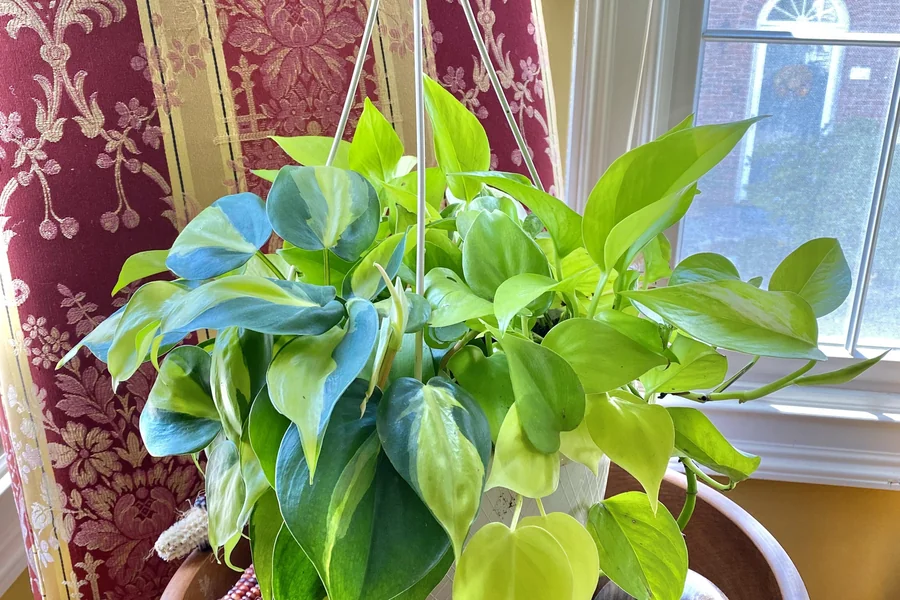
1. The Pothos and Philodendron Mix
This is my absolute favorite combination for beginners. Both Pothos (Epipremnum) and Heartleaf Philodendrons have identical care requirements. They both love bright indirect light, prefer to dry out slightly between waterings, and look incredible trailing down from a hanging basket. You can mix a neon Pothos with a dark green Philodendron for a striking contrast.
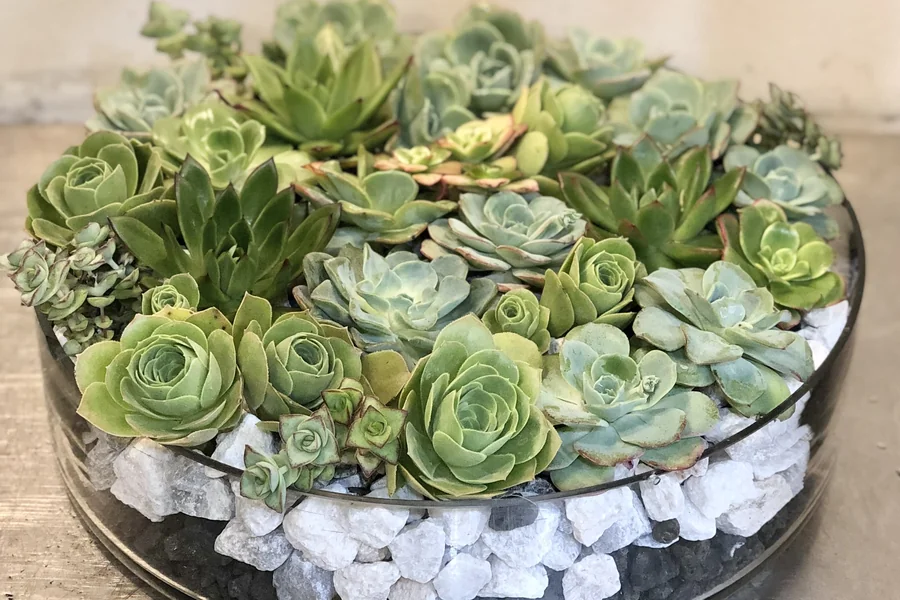
2. The Succulent Bowl
Succulents look amazing when clustered together. You can combine Echeverias, Haworthias, and small [Peperomia Graveolens](https://leafplantgarden.com/peperomia-graveolens/) in a shallow terracotta bowl. Just make sure to use a very gritty cactus mix and provide plenty of direct sunlight.
3. The Jungle Floor
For a shadier corner, you can combine moisture-loving plants like small ferns, Fittonias (nerve plants), and Calatheas. These plants all appreciate high humidity and consistently moist soil, making them perfect companions for a terrarium-style setup.
How to Design a Mixed Pot
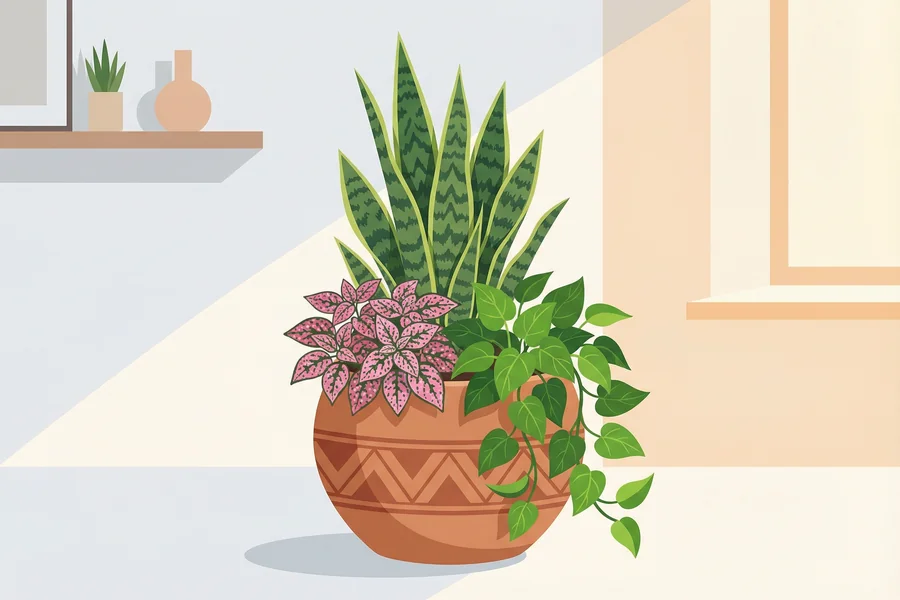
When garden centers create outdoor planters, they use the “Thriller, Filler, Spiller” method. You can use this exact same design principle for your indoor pots!
– Thriller: A tall, striking plant in the center to draw the eye (e.g., a Snake Plant or a small Dracaena).
– Filler:Medium-sized, bushy plants around the base to add volume (e.g., a bushy Peperomia or a Begonia).
– Spiller: A trailing plant near the edge that cascades down the side of the pot (e.g., Pothos or trailing Philodendron).
Things to Watch Out For
While combining plants is fun, it does come with a few challenges:
– Pot Size:
Do not use a pot that is too large. When you combine plants, you still want the pot to be only slightly larger than their combined root balls. Too much empty soil holds excess water, which leads to root rot and yellowing leaves
– Aggressive Growers: Some plants grow much faster than others. A vigorous grower like a Monstera might quickly outcompete and smother a delicate companion plant. Keep an eye on them and prune the faster grower if necessary.
– Pests: If one plant gets spider mites or mealybugs, the others in the pot will get them too. Always quarantine and inspect new plants before adding them to a mixed arrangement.
Combining houseplants is a fantastic way to save space and unleash your creativity. As long as you pair plants with similar care needs, you can turn a collection of plain pots into a spectacular indoor jungle display!
