
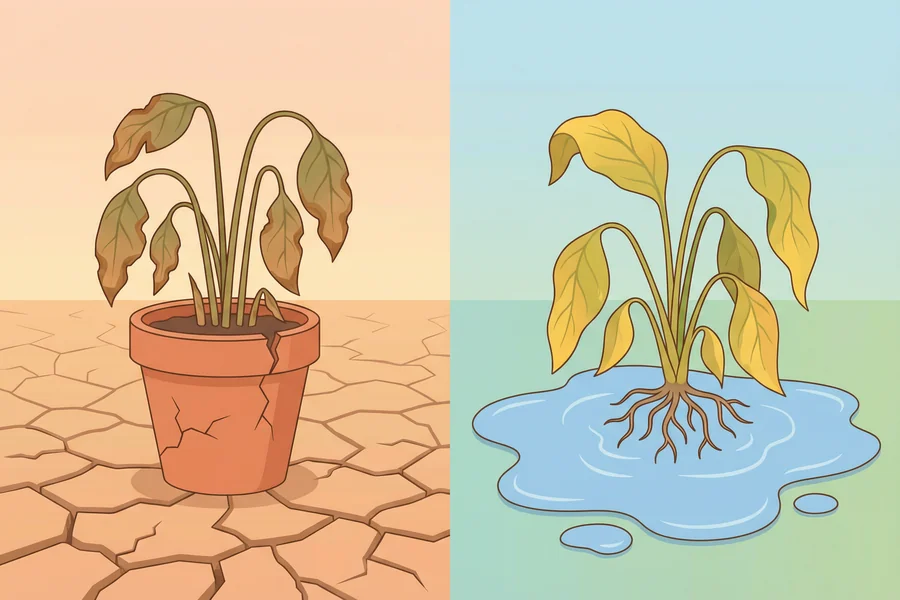
There is a moment of panic every plant parent experiences: you walk up to your favorite houseplant, and it looks completely miserable. The leaves are drooping, the color is off, and it just looks *sad*. Your immediate instinct is probably to grab the watering can. But wait! Did you know that a plant dying of thirst and a plant drowning in too much water can look surprisingly similar?
I have lost more than a few plants by guessing wrong. Overwatering is actually the number one killer of houseplants, largely because we tend to “love our plants to death.” In this guide, I will share the simple, experience-based methods I use to figure out exactly what my plants are trying to tell me, so you can stop guessing and start saving your green friends.
Why Do They Look the Same?
It seems confusing at first: why would a plant with too much water wilt just like a plant with no water? The answer lies in the roots.
When you underwater a plant, there is no moisture in the soil for the roots to absorb. The plant loses turgor pressure (the internal water pressure that keeps stems and leaves stiff) and wilts.
When you overwater a plant, the soil stays soggy for too long, pushing out all the oxygen. Plant roots need to breathe. Without oxygen, the roots suffocate, die, and begin to rot. Once the roots rot, they can no longer absorb water—even though they are sitting in a puddle! So, ironically, an overwatered plant is actually dying of thirst because its root system has been destroyed. This is one of the most common indoor plant problems beginners face.
Signs of Underwatering (The Thirsty Plant)
Underwatering is generally much easier to fix than overwatering. If you catch it in time, a good soak will often have the plant perked up within a few hours.
Key Symptoms:
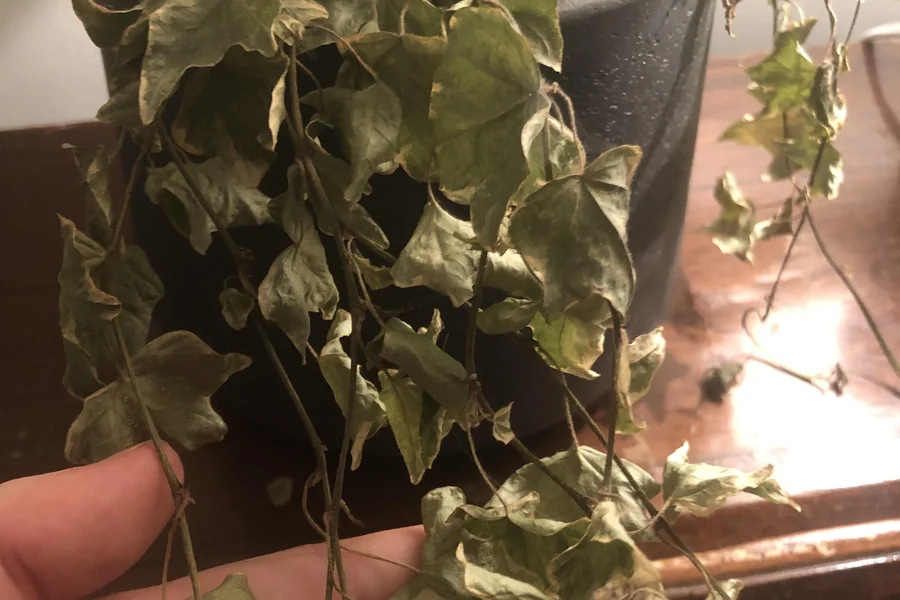
– Dry, Crispy Edges: The tips and edges of the leaves turn brown and crispy. They will crumble if you crush them between your fingers.
– Wrinkled or Puckered Leaves: This is especially noticeable on succulents or semi-succulents like the Peperomia Graveolens. The plump leaves will look deflated.
– Lightweight Pot:If you pick up the pot, it will feel incredibly light because all the water weight is gone.
– Soil Pulling Away:The soil might shrink and pull away from the sides of the pot, creating a gap.
– Drooping but Firm: The plant wilts, but the stems might still feel somewhat stiff rather than mushy.
Signs of Overwatering (The Drowning Plant)
Overwatering is dangerous because the damage happens below the soil line before you see it on the leaves. By the time an overwatered plant wilts, root rot has often already set in.
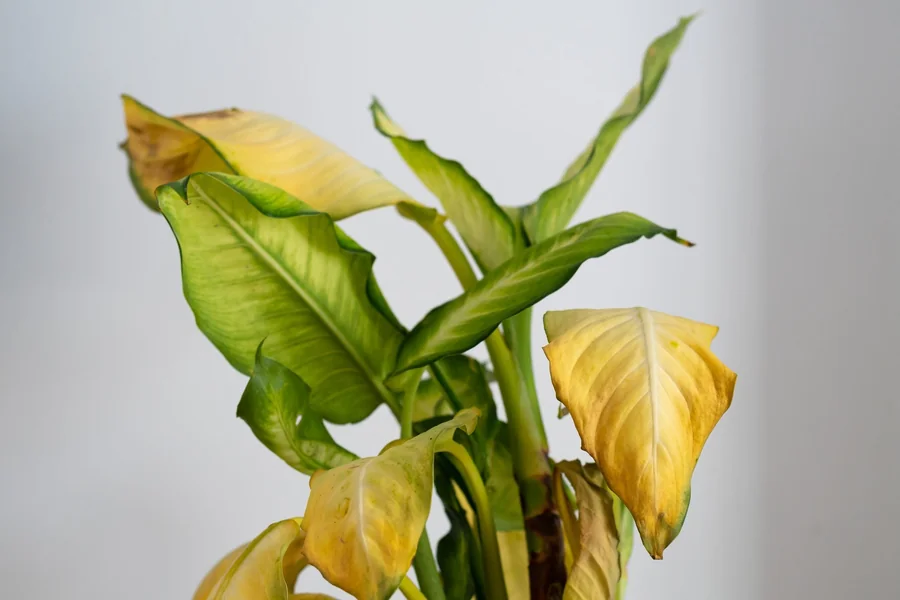
– Yellowing Leaves: While older leaves naturally turn yellow and drop off, a sudden flush of yellow leaves—especially lower leaves—is a classic sign of overwatering.
– Soft, Mushy Stems: If the base of the stem feels squishy or slimy, rot is present.
– Heavy Pot: The pot will feel surprisingly heavy even days after watering.
– Fungus Gnats or Mold:Constantly wet soil attracts tiny black flies (fungus gnats) and fuzzy white mold on the soil surface.
– Foul Smell: If you sniff the drainage holes and it smells like a swamp or rotten eggs, that is the unmistakable scent of root rot.
The “Finger Test”: Your Best Tool
The most reliable tool for deciding whether to water is completely free: your finger.
Before you water, push your index finger into the soil up to your second knuckle (about 1 to 2 inches deep).
– If it feels completely dry, it is time to water.
– If it feels even slightly moist, wait a few more days.
This simple rule applies to the vast majority of tropical houseplants. For drought-tolerant plants like the Sansevieria Black Gold, you should wait until the soil is 100% dry all the way to the bottom before watering again.
How to Fix It
If you underwatered: Place the pot in a bowl of water and let it soak from the bottom up for about 30-45 minutes. This allows the dry, hydrophobic soil to rehydrate slowly.
If you overwatered: Stop watering immediately. Move the plant to a spot with better airflow and slightly brighter light to help the soil dry. If the plant is severely wilting and the soil smells bad, you will need to unpot it, trim away any black, mushy roots, and repot it in fresh, dry soil. Learning basic plant care foundations like proper drainage will prevent this from happening again.
By paying close attention to the leaves, the weight of the pot, and the moisture in the soil, you will soon develop an intuitive sense for exactly what your plants need. When in doubt, remember the golden rule of houseplants: it is always better to underwater than to overwater!
