Are you running out of floor and shelf space for your growing plant collection? You are not alone. As houseplant enthusiasts, we often reach a point where every windowsill is occupied, yet we still want to bring more greenery into our homes. The solution? Look up. Your blank walls are an untapped canvas waiting to be transformed into a lush, living masterpiece.
What are the best wall mounted planters?
The best wall mounted planter ideas include geometric ceramic vessels for modern spaces, breathable mounting boards for epiphytes like staghorn ferns, felt pocket planters for vertical herb gardens, and glass test tube stations for propagation. Choosing the right material ensures proper drainage and airflow for your specific plant type.
In this guide, we will explore the 8 best wall mounted planter ideas, Whether you are looking for a sleek modern aesthetic or a functional mount for your rare tropicals, we have you covered.
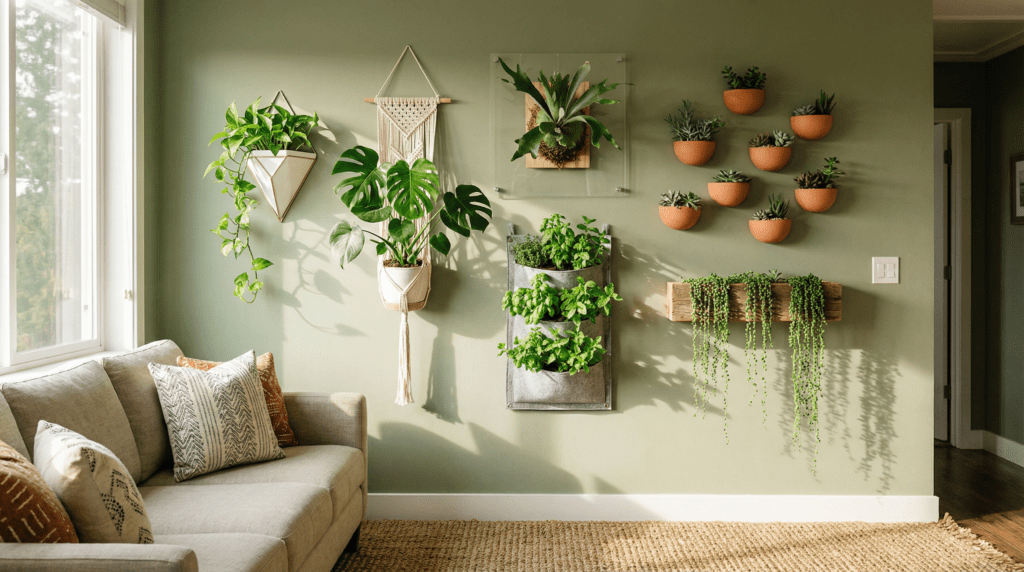
Creating a living wall with diverse wall mounted planters instantly adds texture, color, and life to any room.
Why Choose Wall Mounted Planters?
Before diving into the list, it is important to understand why wall planters are such a game-changer for indoor gardening:
1.Space Optimization: They free up valuable floor and counter space, making them perfect for small apartments.
2.Pet and Child Safety: Hanging toxic or delicate plants high up keeps them out of reach of curious cats, dogs, and toddlers.
3.Improved Air Circulation: Epiphytic plants (like orchids and staghorn ferns) naturally grow on tree trunks. Wall mounting mimics their natural habitat, providing the airflow their roots desperately need.
4.Visual Impact: Plants draw the eye upward, making ceilings feel higher and rooms feel larger.
Top Wall Mounted Planter Ideas:
Here are our favorite wall mounted planter styles, featuring a head-to-head look at popular Amazon options and premium TropicalPlantKit designs.
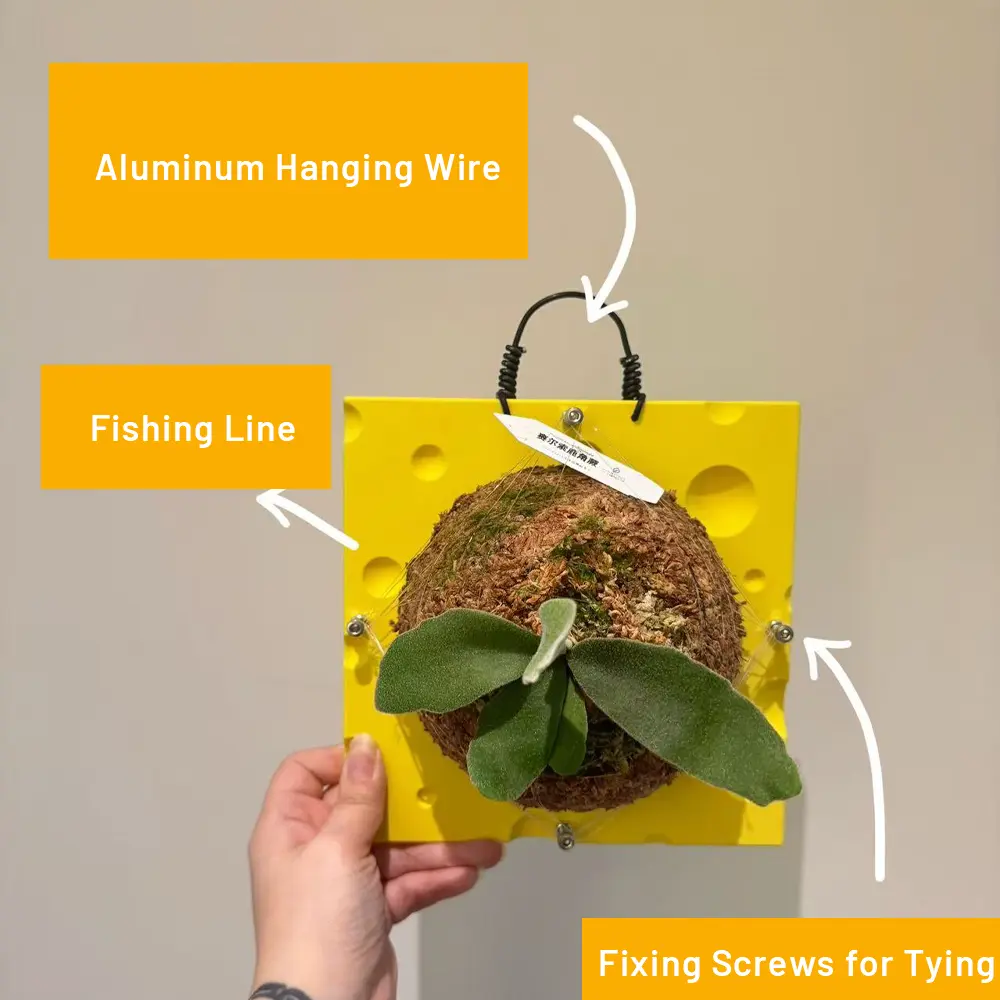
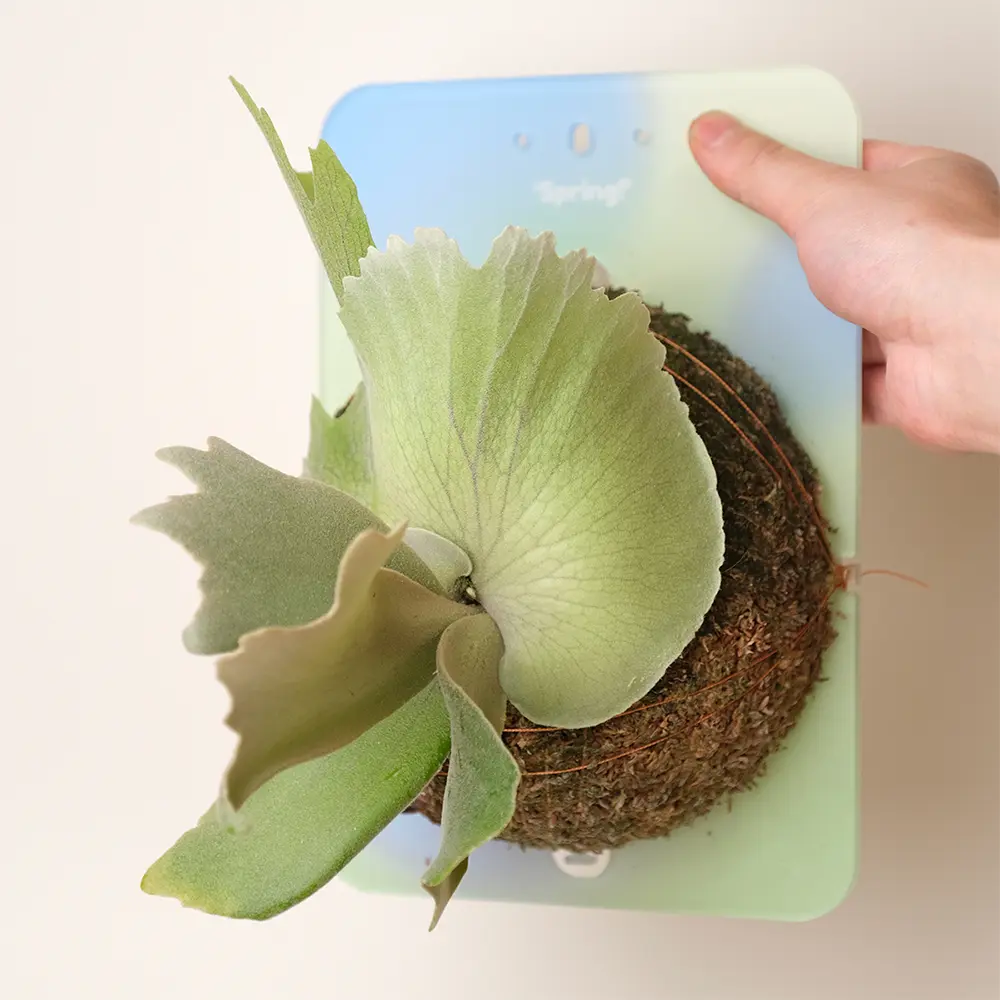
1. The Playful Epiphyte Mount: Cheese-Style Mounting Board
If you grow staghorn ferns, orchids, or hoyas, traditional pots can suffocate their roots. Mounting them on a board is the most natural way to grow them.
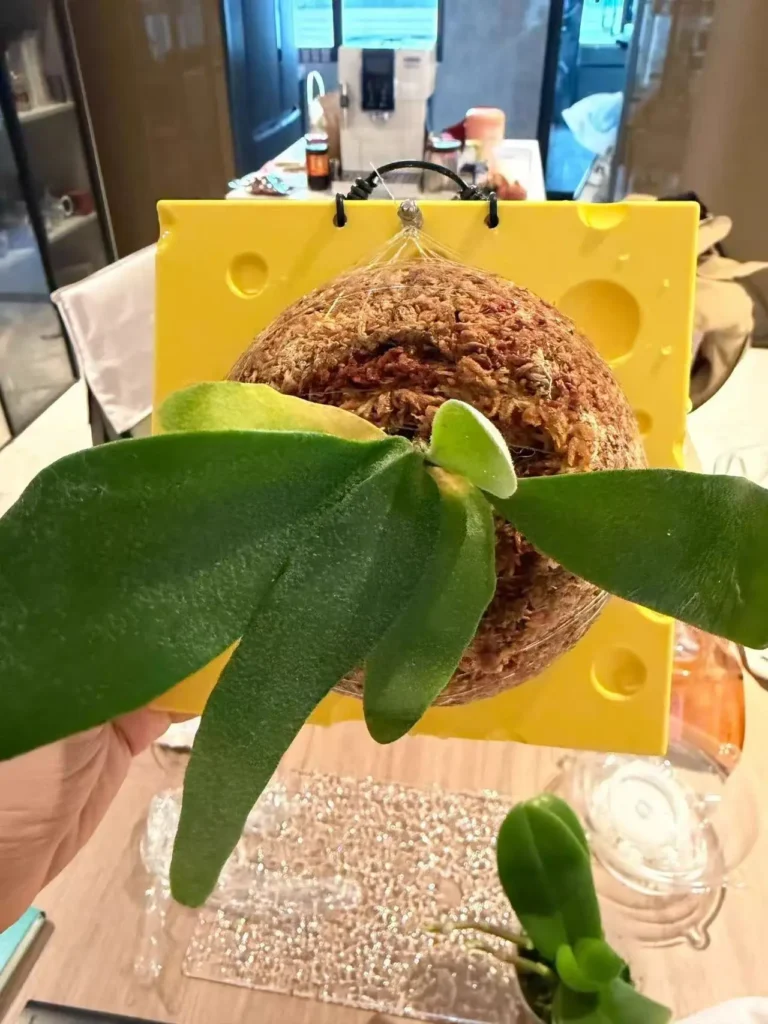
The playful cheese-hole design isn’t just for looks; it provides essential ventilation for epiphytic roots. (Image via TropicalPlantKit)
•Pros: Made from eco-friendly PLA, extremely lightweight, and features central air holes that prevent root rot. Comes with hanging wire and fixing screws.
•Cons: Requires you to know how to wrap a moss ball (though it’s quite easy to learn!).
•Best For: Staghorn ferns (Platycerium), orchids, and trailing hoyas.
The one we ordered took about 25 days to ship to Canada, but it was definitely worth the wait. The design is unique, the board is very lightweight, and it’s a great value for money.
2. The Modern Minimalist: Geometric Ceramic Wall Planters
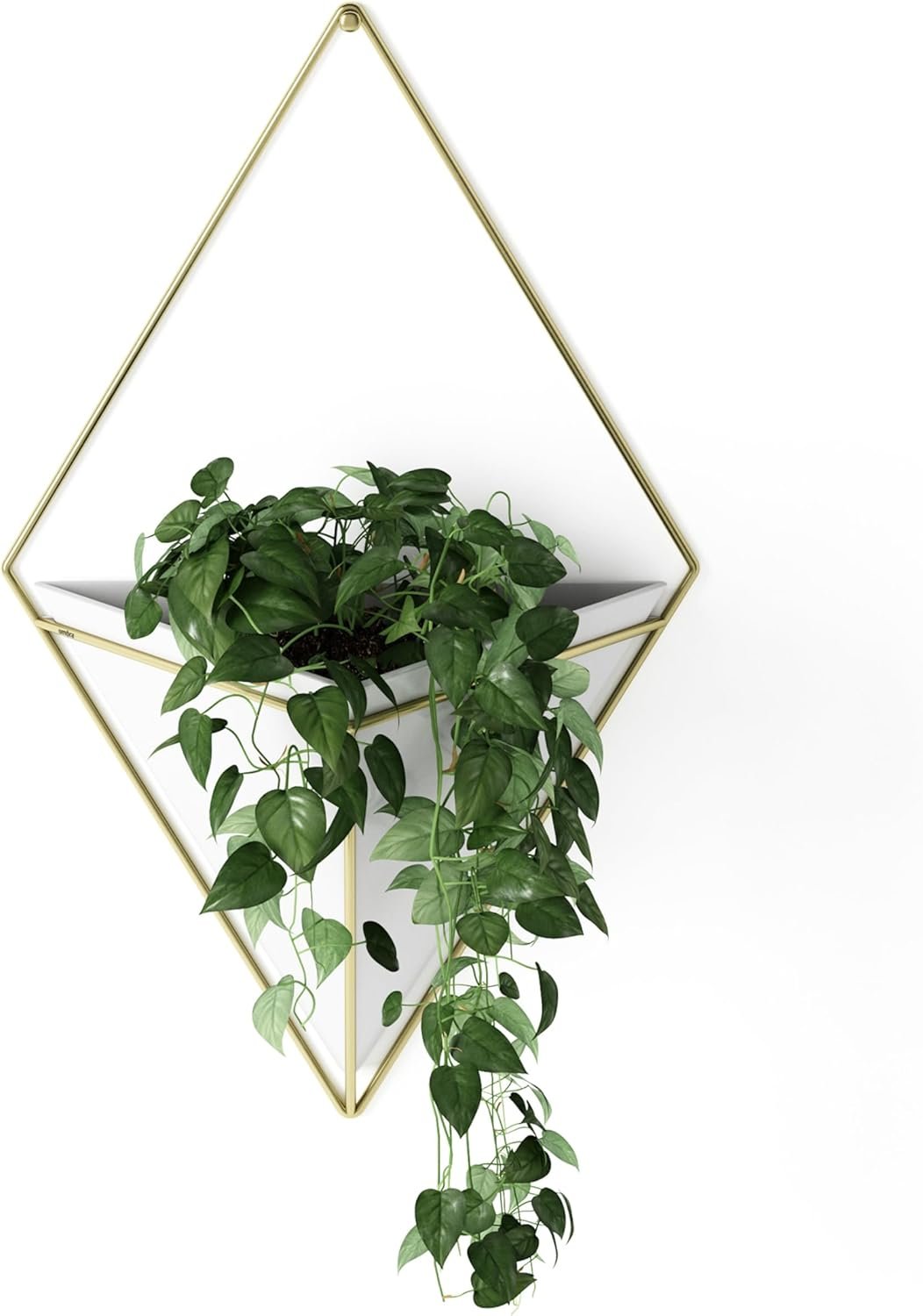
For a clean, contemporary look, geometric ceramic planters are incredibly popular. You can arrange them in sets of three or five to create a honeycomb or diamond pattern on your wall. The geometric surface catches light beautifully, giving your wall a sculptural, gallery-like quality.
Featuring a white ceramic vessel and brass wire frame, this iconic design adds a sophisticated touch to any room. (Image via Amazon)
•Pros: Sleek aesthetic, available in multiple finishes (white/brass, black/gold), and incredibly popular with over 17,000 positive reviews. The ceramic is high-quality and the wire frame is sturdy.
•Cons: No drainage holes. You must use them as cachepots (placing a plastic nursery pot inside) or add a layer of gravel and water very carefully to avoid root rot.
•Best For: Pothos, Philodendrons, and String of Pearls.
3. The Invisible Illusion: Transparent Acrylic Wall Mount Board
Want your plant to look like it is magically floating on the wall? Acrylic mounts offer a high-end, gallery-like display that doesn’t distract from the foliage.
Crystal-clear acrylic allows the natural beauty of the plant and moss to take center stage. (Image via TropicalPlantKit)
•Pros: Minimalist design, moisture-resistant (won’t rot like wooden boards), and includes precision ventilation holes.
•Cons: Fingerprints and hard water stains can show if not wiped down occasionally.
•Best For: Showcasing rare or highly textured epiphytes where you want the plant to be the sole focus.
4. The Boho Classic: Macrame Wall Hanging Planters
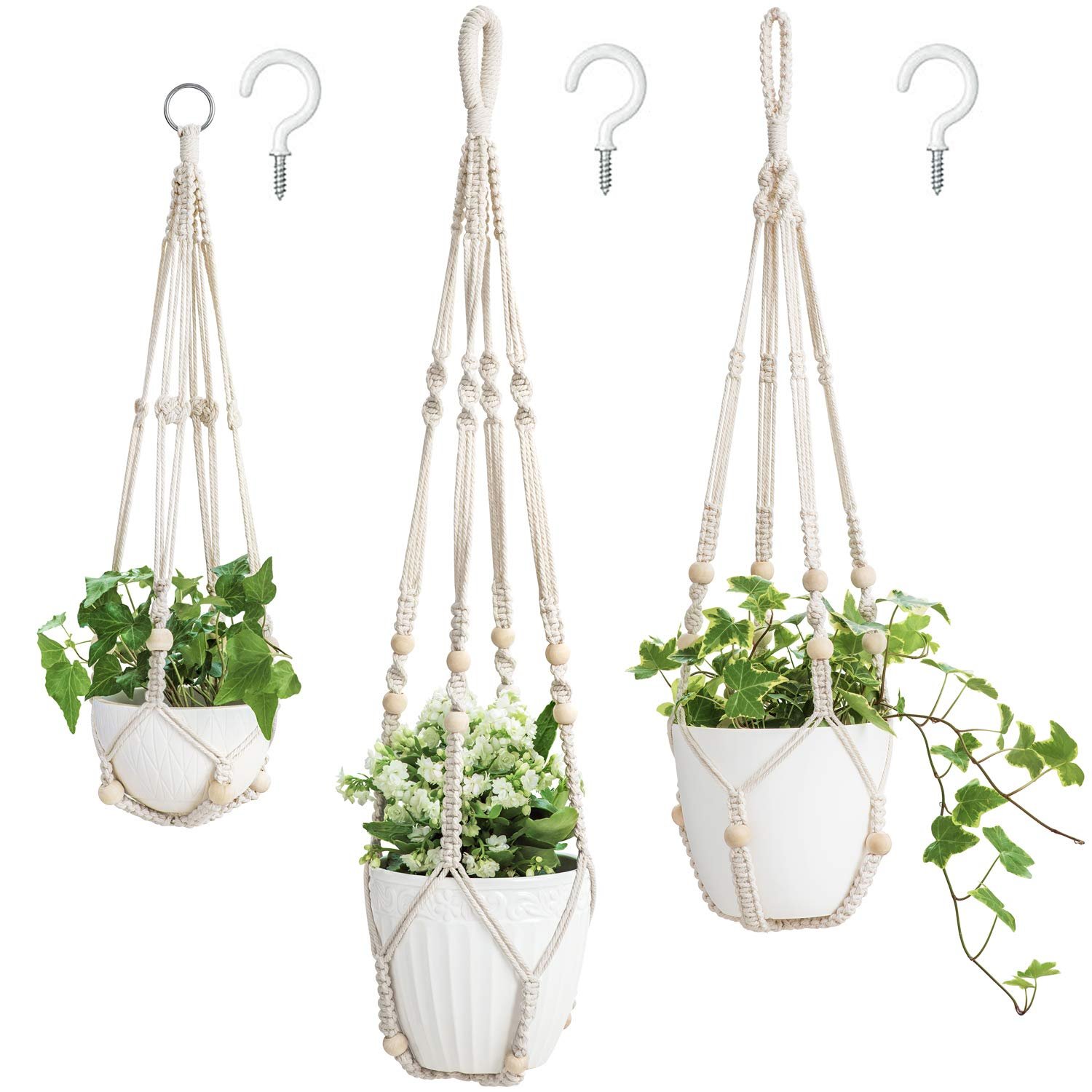
Macrame has made a massive comeback and shows no sign of slowing down. These woven cotton hangers add warmth, texture, and a relaxed bohemian vibe to any bedroom or living room. The best part? They work with any standard pot, so you never have to compromise on drainage.
Handcrafted from natural cotton rope, these hangers come in different sizes to create a dynamic, multi-level display. (Image via Amazon)
•Pros: Very affordable set of three, highly decorative with wooden beads, and allows you to use standard nursery pots with drainage holes. Boasts a stellar 4.6-star rating from thousands of buyers.
•Cons: Cotton cords can get dirty or moldy if splashed with soil and water over time. Not ideal for very heavy ceramic pots.
•Best For: Lush, bushy plants like Boston Ferns, Spider Plants, or Monsteras.
5. The Micro-Garden: 7cm Mini Magnetic Hanging Planter
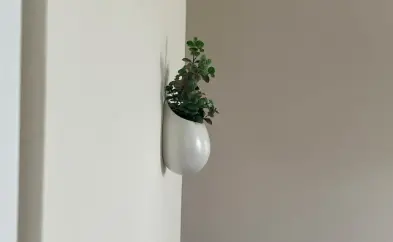
Not all walls are made of drywall. What about the side of your refrigerator, a metal filing cabinet, or a pegboard? Mini magnetic planters are perfect for utilizing unconventional vertical spaces.
Equipped with built-in magnets, these tiny planters turn your fridge or pegboard into a vertical garden. (Image via TropicalPlantKit)
•Pros: Dual-mounting versatility (magnetic and pegboard compatible), excellent airflow, and perfect for tiny cuttings.
•Cons: Too small for mature plants; strictly for miniature species or propagation.
•Best For: Succulent cuttings, small air plants, and mini epiphytes.
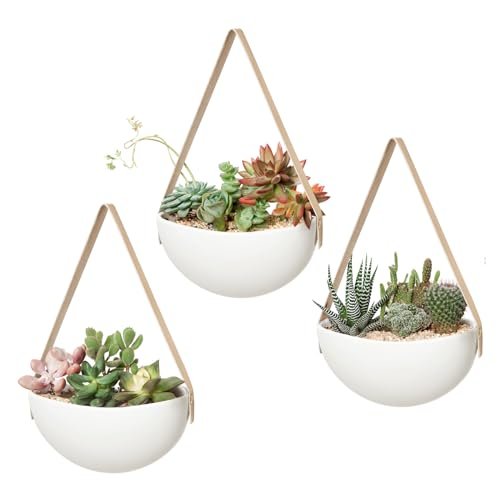
6. The Leather-Strap Ceramic: Round Wall Planters
If you want something softer than sharp geometric lines but more modern than macrame, round ceramic planters suspended by leather straps are the perfect middle ground.
The combination of matte white ceramic and tan leather straps creates a warm, Scandinavian-inspired look. (Image via Amazon)
•Pros: Exceptionally high 4.7-star rating. The matte white finish is flawless, and the artificial leather straps are durable and cruelty-free. Comes with all necessary mounting hardware.
•Cons: At 4 inches wide, they are quite small. Best suited for young starter plants or succulents. No drainage holes.
•Best For: Succulents, small trailing vines, and air plants.
If your home has a modern style, this minimalist design would be perfect for adding some flowers, but if it’s just green leaves, it might look a bit monotonous.
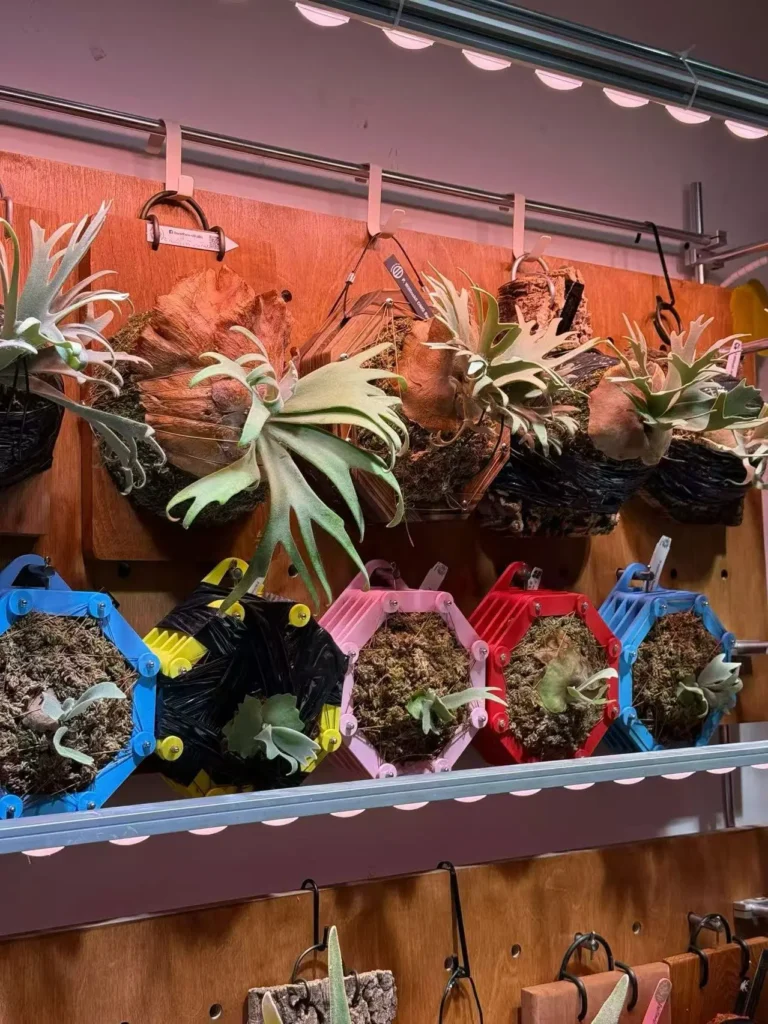
7. The Structural Frame: Octagon Staghorn Hanging Planter
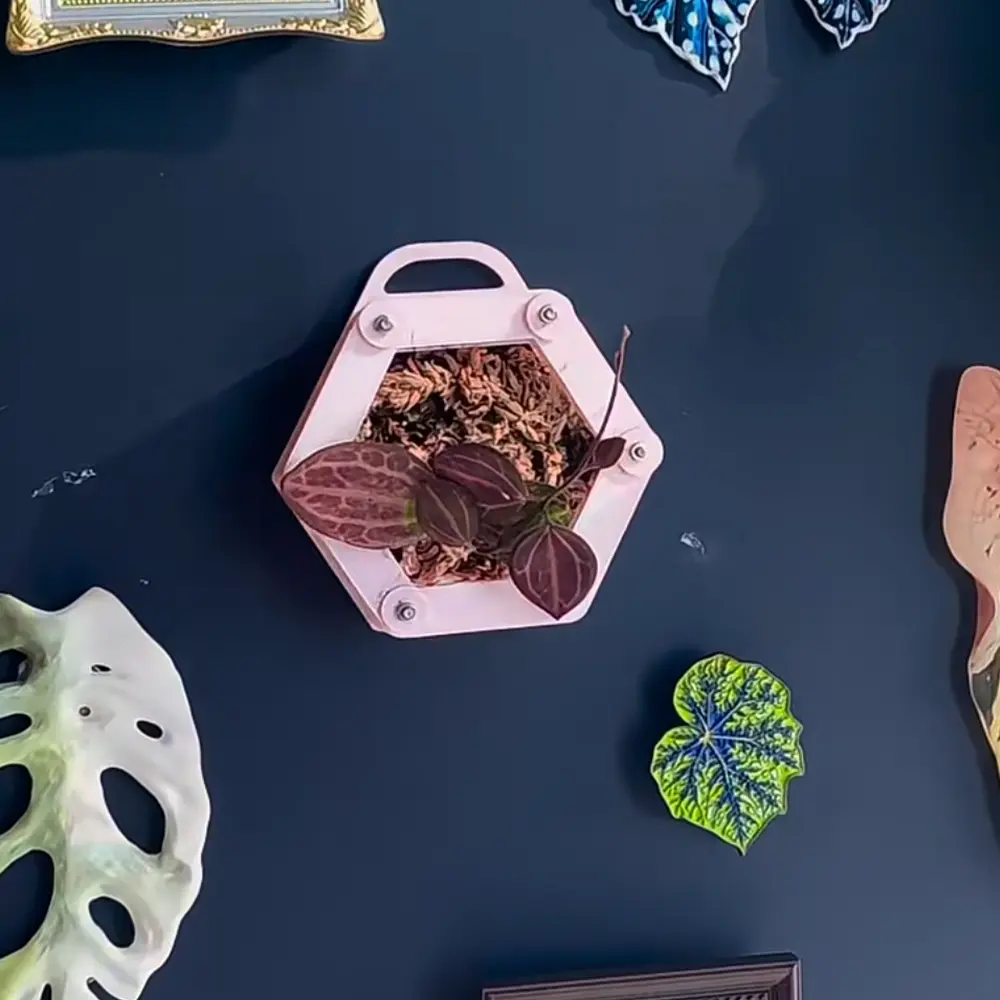
Sometimes you need a planter that provides structural support while keeping the roots contained. A cage-style frame is an excellent alternative to flat boards.
This lightweight octagon frame securely holds sphagnum moss and roots while looking incredibly sleek. (Image via TropicalPlantKit)
•Pros: Solid and smooth material, very lightweight, and holds moss securely without flexing. Great modern octagon shape.
•Cons: Best used with sphagnum moss rather than loose soil to prevent a mess.
•Best For: Platycerium bifurcatum and other medium-sized ferns.
Most of these designs sold on the market are made of wood, and to be honest, they’re not very waterproof and tend to mold. However, this seller claims the material is environmentally friendly plastic, which is essentially cornstarch, so we think it’s a very worthwhile option to try.
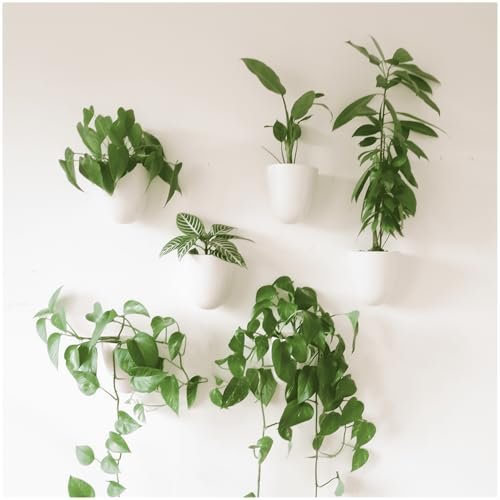
8. The Living Wall: Self-Watering Vertical Planters
If you want to create a massive, lush green wall on a balcony or patio, modular self-watering planters are the way to go. They take the guesswork out of watering a large number of plants simultaneously.
These modular planters feature a hidden water reservoir, allowing plants to drink at their own pace for weeks. (Image via Amazon)
•Pros: Highly rated at 4.6 stars. The self-watering system means you can go weeks without watering. They are lightweight and incredibly easy to install with just a hammer.
•Cons: Made of plastic, which may not appeal to those looking for natural materials like ceramic or wood.
•Best For: Indoor herb gardens (basil, mint, cilantro) or creating a dense fern wall.
Common Mistakes When Using Wall Planters
While wall planters are beautiful, they come with unique challenges. Avoid these common pitfalls:
The Mistake
The Consequence
The Solution
Ignoring Drainage
Water pools at the bottom of the planter, leading to deadly root rot.
Use planters with drainage holes outdoors, or use the “cachepot” method indoors (keep the plant in a plastic pot inside the decorative wall planter).
Underestimating Weight
Wet soil is incredibly heavy. A weak nail will rip out of the drywall, destroying your plant and the wall.
Always use proper drywall anchors or locate a wall stud before hanging heavy ceramic or water-logged planters.
Forgetting Light Requirements
Hanging a sun-loving plant in a dark hallway corner just to fill empty space.
Match the plant to the wall’s light exposure. Use low-light plants like ZZ plants or Pothos for darker walls.
Watering Damage
Water drips down the wall, ruining paint and causing mold.
Take the plants down to water them in the sink, or use a long-spout watering can and double-check for leaks.
Conclusion
Elevating your plants off the floor and onto your walls is one of the most rewarding ways to decorate your home. Whether you opt for the highly functional and breathable Cheese-Style Mounting Board from TropicalPlantKit for your prized staghorn fern, or a sleek geometric ceramic set from Amazon for your trailing pothos, there is a wall mounted planter idea for every style and species.
Ready to start your vertical garden? Assess your wall space, check your lighting, and choose a planter that supports your plant’s specific root needs. Happy planting!
Joanna is an indoor plant enthusiast with a home collection of over 80 foliage plants and growing. She focuses on practical, real-world plant care based on long-term observation, trial, and adjustment rather than idealised care charts. On LeafPlantGarden, she shares experience-based guidance to help readers keep everyday houseplants healthy.