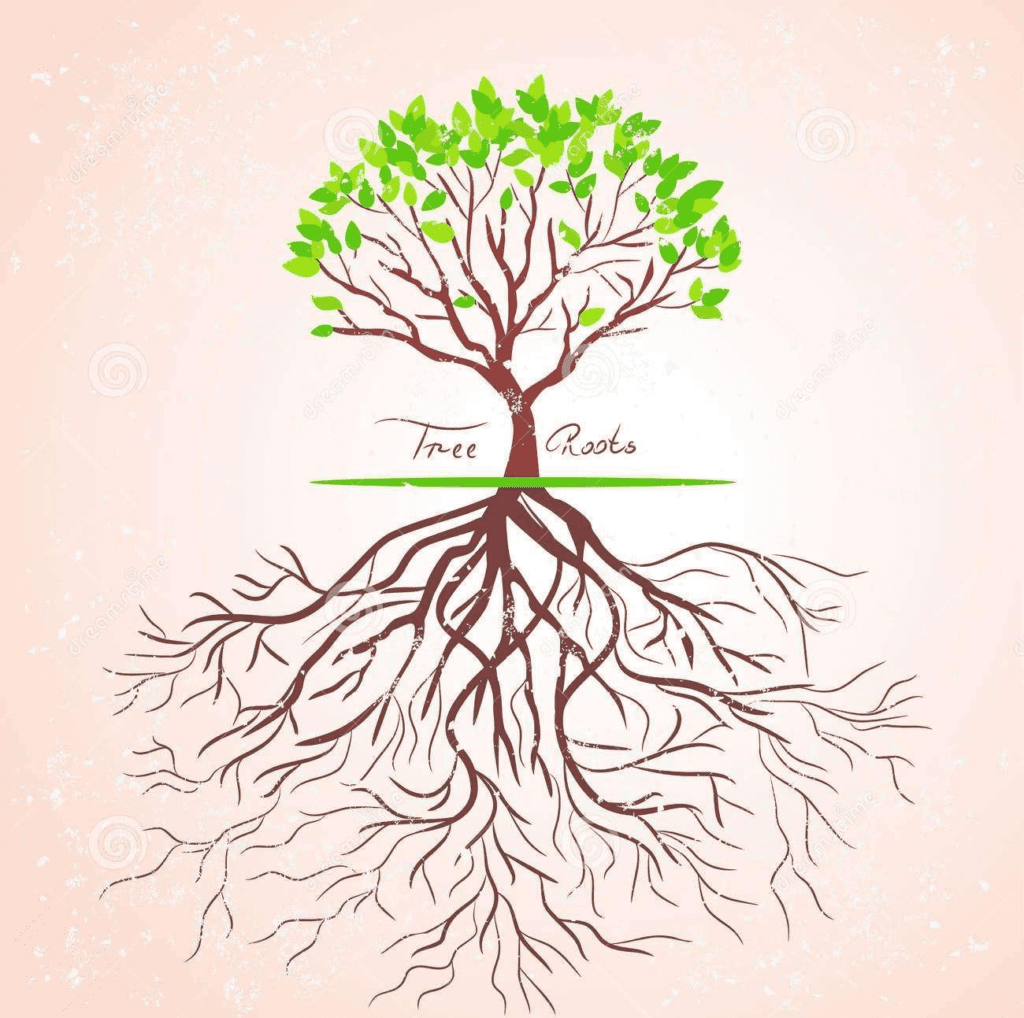
The Underground CEO: Engineering the Foundation of the Plant Kingdom
While the leaves dance in the sunlight and flowers steal the gaze of every passerby, a silent, relentless industrial revolution is happening beneath your feet. Welcome to the foundation of the plant kingdom: the Root System. In the world of Seed Plants , the root is far more than an anchor; it is a sophisticated nutrient-gathering machine, a sensory command center, and a marvel of biological engineering that allowed plants to conquer every corner of the Earth.
The Evolution of Domination: Why Seed Plants Rule
Before we dissect the root itself, we must understand the “Elite Club” it belongs to. Seed plants are the undisputed heavyweight champions of the botanical world, boasting the highest evolutionary status. Their global dominance rests on two game-changing inventions:
- Seed Formation: Unlike primitive spores, seeds provide a protective coat for the embryo, ensuring survival through harsh winters or droughts.
- Pollen Tubes: This was the “technological leap” that allowed fertilization to occur without a single drop of external water.
To sustain such a high-level existence, the plant body branched into specialized organs. The roots, stems, and leaves are known as Vegetative Organs, dedicated to the tireless work of growth and maintenance, while flowers, fruits, and seeds handle the legacy of reproduction.
Root Architecture: The Master Blueprint
When you pull up a weed in your garden or plant a sapling, you are witnessing one of two distinct underground philosophies. In botany, we categorize these as the Taproot System and the Fibrous Root System.
1. The Taproot System: The Central Pillar
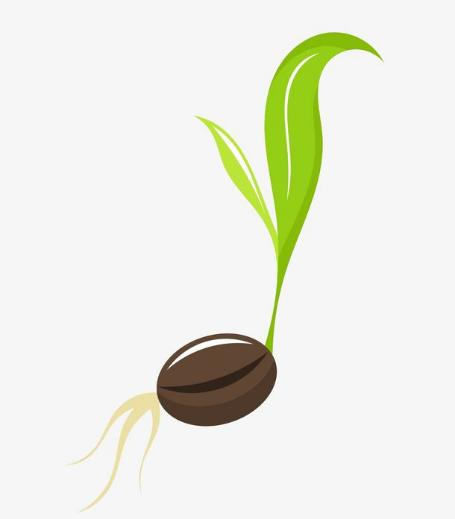
Imagine a skyscraper with a massive central column. This is the Taproot System, typical of dicotyledonous plants like soybeans or oaks. It starts with a clearly dominant Main Root —the first to emerge from the seed—which then gives birth to rows of Lateral Roots . It’s a hierarchy designed for deep-sea drilling, reaching water sources that others can only dream of.
2. The Fibrous Root System: The Horizontal Web
Now, imagine a dense, chaotic web where no single strand is the boss. This is the Fibrous Root System, the signature of monocots like wheat and corn. Here, the primary root dies off early, replaced by a cluster of Adventitious Roots arising from the stem base. It creates a “beard” of roots that grips the topsoil like a fist, preventing erosion and monopolizing surface moisture.
The Anatomy of the Root Tip: A Four-Zone Powerhouse
The very tip of a root—the Root Tip—is where the real magic of “Primary Growth” happens. If we zoom in, we see four distinct specialized zones working like a perfectly synchronized factory assembly line:
- The Root Cap : The frontline shield. It is a thimble-shaped cluster of cells that protects the delicate meristem behind it. As it grinds through abrasive soil, its outer cells slough off, acting as a lubricant to help the root slide deeper into the earth.
- The Meristematic Zone : The engine room. This is the “Birthplace of Possibility.” Here, cells are small, thin-walled, and packed with protoplasm. They divide incessantly, providing the raw biological material for everything the root will become.
- The Elongation Zone : The growth spurt. Cells here have stopped dividing; instead, they absorb water and stretch like elastic bands. This physical elongation is what actually pushes the root tip forward through the soil with immense hydraulic pressure.
- The Maturation Zone : The absorption hub. Also known as the Root Hair Zone , this is where the cells stop stretching and start specializing. Thousands of microscopic Root Hairs emerge here, increasing the surface area for water absorption by over 100 times.
Internal Engineering: The Primary Structure
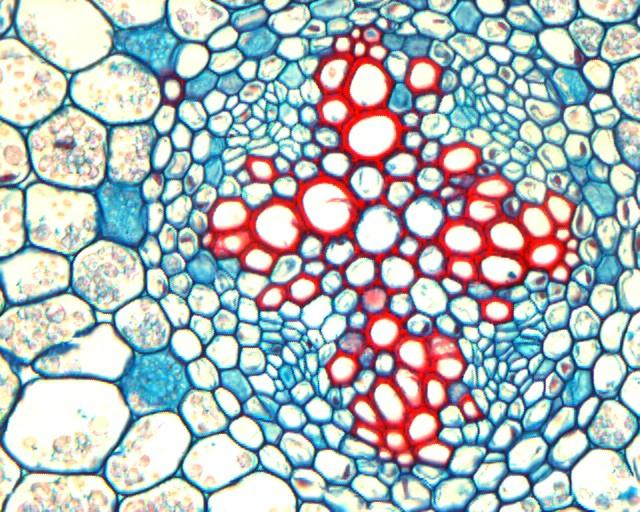
If we take a microscopic “X-ray” slice of a young dicot root, we reveal a masterpiece of internal logistics. The Primary Structure is organized into three concentric rings:
1. The Epidermis
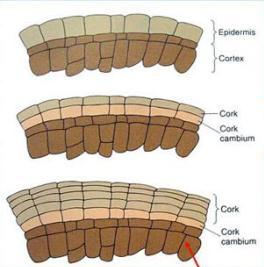
The root’s skin. It is single-layered and lacks a thick cuticle, making it perfectly permeable to water. This is where the root hairs live, acting as the primary interface between the plant and the soil.
2. The Cortex
The massive storage warehouse. It occupies most of the root’s volume, storing starch and facilitating the transport of water toward the center. At its innermost edge lies the Endodermis, featuring the legendary Casparian Strip. This strip acts as a waterproof “border control,” forcing water and minerals to pass through living cell membranes rather than leaking between cells.
3. The Vascular Cylinder
The highway system. It contains the Primary Xylem for water and the Primary Phloem for nutrients. Interestingly, they develop in an Exarch pattern—maturing from the periphery toward the center. This is a brilliant survival tactic that places the most mature, efficient pipes in the best position for long-distance transport.
Conclusion: Respect the Roots
Next time you look at a towering tree, don’t just see the leaves; imagine the complex, invisible cathedral supporting it from below. The root system of seed plants is an ancient, living technology—one that balances the fragility of a single cell hair with the raw power required to split rocks. It is the silent CEO of the natural world, managing the resources that make life on land possible.