
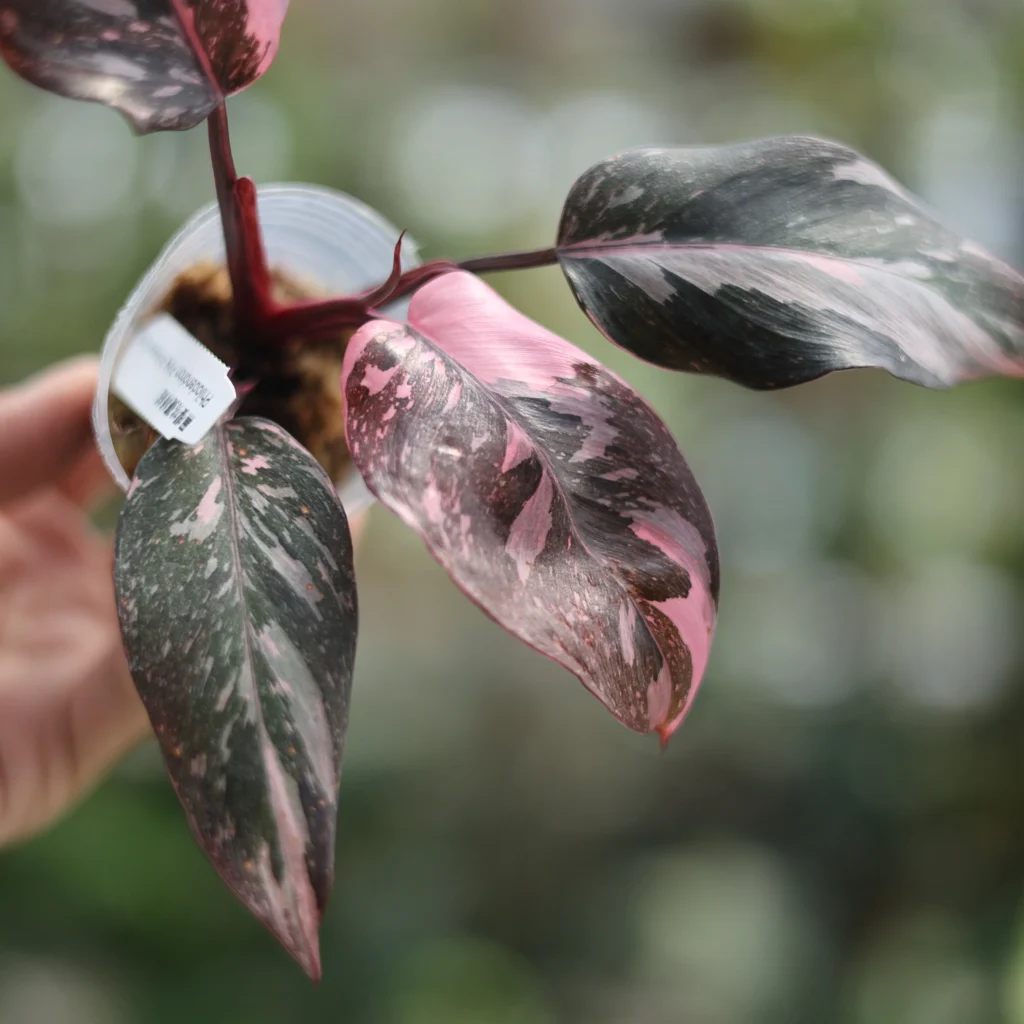
If you’re just getting into philodendrons, ‘Pink Princess’ is often one of the first variegated plants people dream of owning. And we get it—we’ve grown this plant in our studio for years, and every leaf still feels like a surprise. That mix of bubble-gum pink, deep burgundy, and matte green is one of the most unpredictable (and addictive) patterns in the aroid world.
But here’s the part many beginners don’t realize:
Growing a Pink Princess well isn’t difficult—it’s the consistency and the light strategy that matter most.
If you already care for philodendrons like P. hederaceum, P. verrucosum, or P. micans, you’re already halfway there. Pink Princess just asks for a bit more attention to lighting, node health, and growth form.
In this guide, we’ll walk you through how we—at Leafplantgarden and as fellow growers with 300+ tropical plants in our studio—keep our PPPs stable, colorful, and actively putting out new variegated leaves.
We won’t just cover watering and potting. You’ll also learn:
Table of Contents
If you’re new to philodendrons, you can also read our beginner philodendron care principles (internal link suggestion—anchored naturally in the full article).
Let’s get started.
1. What Exactly Is Philodendron ‘Pink Princess’?
Philodendron ‘Pink Princess’ is a man-made hybrid (likely involving Philodendron erubescens) developed for its pink variegation—caused not by a virus, but by a natural mutation that reduces chlorophyll in certain patches of the leaf.
Key characteristics
• Growth type: Climbing philodendron
• Leaf texture: Semi-matte, burgundy-green base with pink variegation
• Variegation pattern: Sectoral + mottled pink, highly unstable
• Speed: Moderate grower under good light
• Light demand: Higher than most philodendrons to maintain pink
• Common issue: Reversion on low light or unstable nodes
Why its variegation matters
Pink sections contain no chlorophyll, which means:
• Too much pink = weak growth
• Too little pink = reversion
• Balanced mottling = ideal, stable nodes
This is why growers often say PPP is “light-dependent but node-controlled.”
2. Pink Princess vs. Pink Congo (Important!)
A quick clarification, because beginners mix them up.
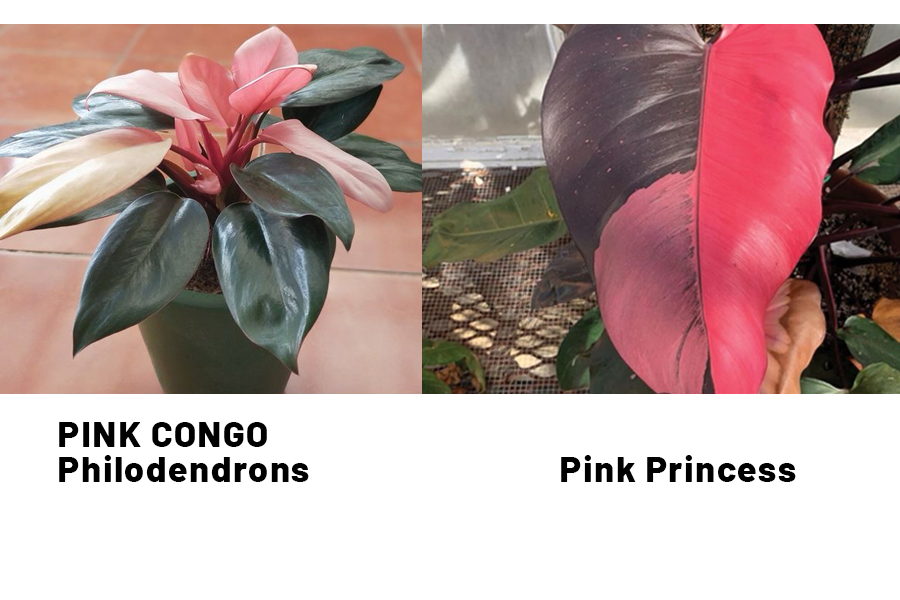
Pink Princess:
• True variegation
• Stable but can revert
• Pink stays pink as the leaf ages
• Usually shows mottling or sectoral pattern
Pink Congo:
• Chemically-induced temporary pink
• Leaves turn green again over months
• Not genetically variegated
• Not related to PPP
If your leaves flush pink and then fade completely green, it’s Pink Congo, not Pink Princess.
3. Light Requirements: The Key to Maintaining Pink
If there is only one thing we emphasize in our philodendron workshops, it’s this:
Pink Princess needs bright, indirect, and consistent light—more than typical philodendrons.
Ideal light situation
• 8–10 hours of bright filtered light daily
• East-facing window or strong grow lights
• PPFD range: 100–200 μmol/m²/s
(This is where pink develops without burning.)
Signs of too little light
• New leaves with tiny traces of pink
• Reversion at the active node
• Long internodes (stretching)
Signs of too much light
• Washed-out variegation
• Crispy pink patches
• Dull burgundy base color
If you want those big, marbled pink sectors, light is your most important tool.
For more detailed light guidance, you can refer to our Monstera light article (internal link suggestion placed naturally in the full article).
4. Soil & Potting Mix (Our Studio Mix Formula)
PPP prefers a well-aerated, fast-drying mix, similar to other climbing philodendrons but slightly chunkier to support stronger roots.
Our recommended mix
| Component | Percentage | Function |
|---|---|---|
| Pine bark (orchid bark) | 30% | Structure, airflow |
| Coco chips / peat-free base | 25% | Moisture retention |
| Perlite or pumice | 20% | Drainage |
| Sphagnum moss (shredded) | 15% | Even moisture |
| Charcoal | 10% | Prevents odor & compaction |
This mix dries predictably and supports aerial root development, which directly influences leaf size.
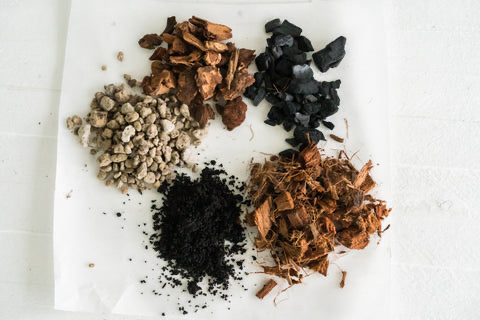
If your indoor environment is dry or you tend to underwater, increasing sphagnum by 5–10% helps.
5. Watering Strategy
Variegated philodendrons dislike “wet feet.”
Our rule: Water when the top 40–50% of the pot feels dry.
Watering rhythm
• Spring–summer: 1–2 times per week
• Autumn–winter: every 7–12 days (depending on temperature)
Signs you’re watering correctly
• Firm leaves with no yellowing
• Consistent growth
• No brown mush at the base
Signs of overwatering
• Pale/yellow new leaves
• Edema or soft stems
• Fungus gnats
PPP roots love oxygen—your soil mix should help with that.
6. Humidity & Temperature
Pink Princess appreciates warm, humid air but adapts well to normal home conditions.
| Factor | Ideal Range |
|---|---|
| Humidity | 60–75% |
| Temperature | 20–28°C |
| Minimum safe temp | >15°C |
Higher humidity produces smoother leaves and better pink development but it’s not mandatory.
7. Fertilizing Approach
We fertilize moderately because PPP already grows slower due to variegation.
Our feeding schedule
• During active growth:
Diluted liquid fertilizer (NPK 3–1–2 or 5–3–2) every 2 weeks
• In lower light months:
Every 4–6 weeks
Calcium and magnesium supplementation often improves coloration and leaf texture.
8. How to Prevent Reversion (Or Fix It)
Reversion is the #1 concern with Pink Princess.
Why PPP reverts
• The active growing node lacks variegated tissue
• Light is too low
• Genetic instability within a specific segment
Ways to prevent reversion
• Increase light (not direct sun)
• Maintain even temperature
• Rotate the pot every 1–2 weeks
If it starts reverting
You can:
- Check the next node for any pink streak inside the petiole.
- Cut back to the last node that shows variegation.
- Propagate and restart from the healthy section.
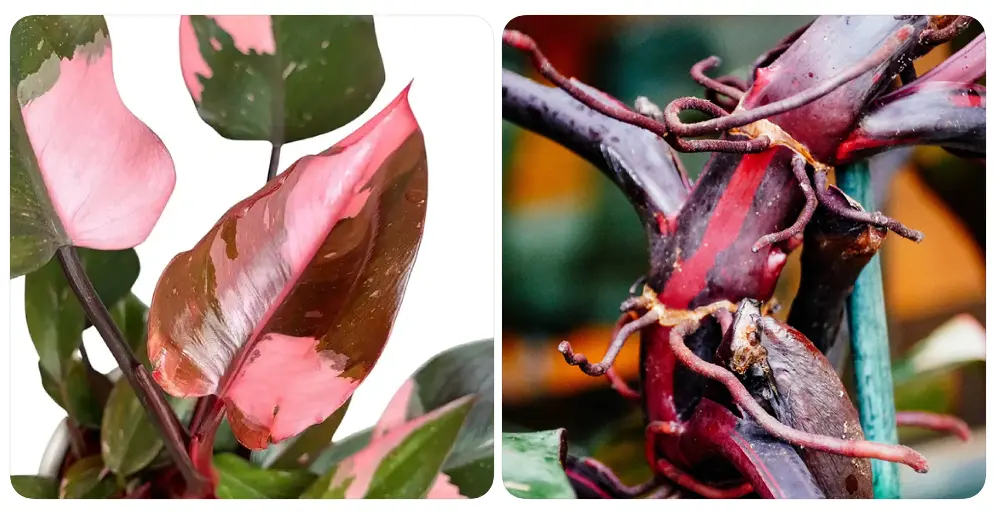
This is why experienced collectors always observe the stem, not just the leaves.
9. Encouraging Larger Leaves (Moss Pole Strategy)
As a climbing philodendron, PPP will only mature if given vertical support.
Benefits of a moss pole
• Larger leaf size
• More consistent variegation
• Stronger aerial roots
• Tighter internodes
You can reference our sphagnum moss pole guide (internal link) for a full explanation.
10. Pests & Common Problems
Common pests
• Spider mites
• Mealybugs
• Fungus gnats
• Scale insects
Physiological issues
| Problem | Likely Cause |
|---|---|
| Brown patches on pink | Light stress |
| Soft/mushy stems | Overwatering |
| Tiny new leaves | Low light or weak node |
| Fully green leaf | Reversion |
Regular leaf wiping helps prevent mites, especially on the matte surfaces.
11. Propagation (Chop & Prop)
PPP is easy to propagate once you understand node structure.
Best method
• Stem cuttings with at least 1 visible node
• Root in sphagnum, perlite, or water
• Keep humidity 60–80% during rooting
• Expect roots in 2–4 weeks
The variegation of the new plant depends on the tissue inside the node—not the existing leaf.
