
Missing key logistics is the fastest way to waste a day at a major trade show. The January weather, a large venue footprint, and packed schedules can compound the stress—unless the visit is planned.
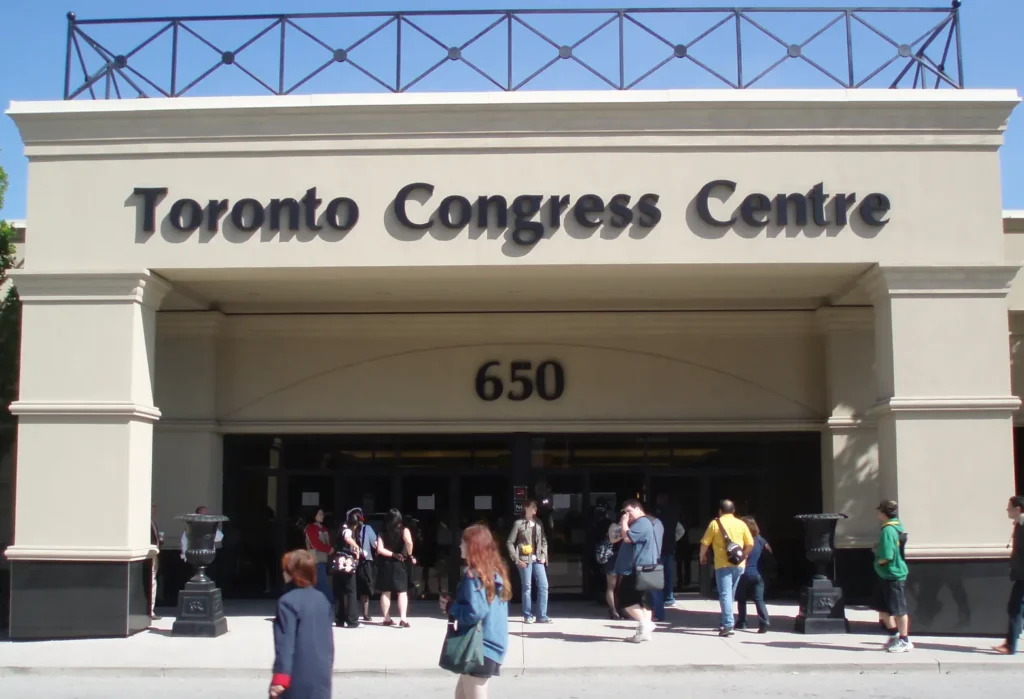
Landscape Ontario Congress 2026 runs January 6–8, 2026 at the Toronto Congress Centre (South Building) in Toronto, Ontario, Canada. Most visitors get the best value by registering early, planning hall-by-hall priorities, and using on-site programming (LIVE Stage, conference sessions, feature events) to guide what to see first.
A strong visit is built around three things: access (getting in and around efficiently), focus (what matters most on the show floor), and follow-through (notes, contacts, and next steps that survive the trip home).
Core event information
Quick Facts
| Item | Details |
|---|---|
| Event | Landscape Ontario Congress (Trade Show + Conference programming) |
| Dates (2026) | January 6–8, 2026 |
| City / Region | Toronto (Etobicoke area), Ontario, Canada |
| Venue | Toronto Congress Centre (South Entrance / South Building) |
| Public address | 650 Dixon Road, Toronto, ON M9W 1J1, Canada |
| Entry / ticket types | Trade Show Pass and Conference Pass (see official attendee information for current rates) |
| Booking / registration | Start on the official attendee page: https://www.locongress.com/attendee |
| Parking | Free parking is listed on the official venue information |
| Nearest airport | Toronto Pearson International Airport (YYZ) (near the venue) |
| Recommended arrival strategy | Arrive early for registration, then work the show floor in planned “loops” by hall and priority |
Ticketing and what it typically includes
Congress uses different access levels. The official attendee information outlines current options and inclusions, and is the safest place to confirm what is (and isn’t) included in a badge.
- Trade Show Pass: Generally positioned as exhibit hall access plus select on-floor programming (such as demos), and certain feature-event access tied to the badge (confirm on the official attendee page before visiting).
- Conference Pass: Generally positioned as trade show access plus conference sessions, with some feature-event inclusions (confirm on the official attendee page before visiting).
- Add-ons / ticketed events: Some feature events and ceremonies are listed as ticketed on the official schedule (confirm specifics on the official schedule before visiting).
Confirm on the official channel before visiting if pricing tiers, eligibility (member/non-member/student), or inclusions change close to the event.
How to get there (practical routing)
By public transport (TTC):
The Toronto Congress Centre publishes TTC guidance, including common subway-to-bus transfers. Examples include routes from Lawrence West Subway Station via 52A/52B (weekday) or 52A/52D (weekend/holidays), and from Kipling Station via 46 (Martin Grove) with a short walk from Dixon Road. Always verify service changes on the TTC site before travel.
By car / taxi / rideshare:
The Toronto Congress Centre provides highway-based directions via Hwy 401, 427, 409, 407, and Gardiner Expressway approaches, with separate guidance for the South Entrance at 650 Dixon Road. This is the most reliable reference for real-world routing.
From the nearest airport (YYZ):
Toronto Pearson (YYZ) is the closest major airport, and the venue is in the airport area. For downtown Toronto connections, Pearson’s official UP Express guidance provides current travel times, schedules, and fare rules. For airport-to-venue ground travel, confirm the best option (rideshare, taxi, or local transit) based on arrival terminal and winter conditions.
What should visitors prioritise on the Congress show floor?
Larger trade shows can feel productive while delivering little. Without priorities, time disappears into repeated aisles, long conversations with the wrong vendors, and “maybe later” notes that never become decisions.
The best approach is to treat the show floor like a shortlist-building exercise: define what must be sourced or learned, then use halls, demos, and scheduled programming to validate options quickly.

Dive deeper: a practical hall-and-time plan
Congress scheduling typically lists registration opening and set trade show hours across the event days, along with on-floor programming such as the LIVE Stage. Use that structure to plan in blocks:
1) Start with a “must-see” loop (first 60–90 minutes).
Pick 6–10 exhibitors that match current needs (equipment, materials, services, growing supplies, or operational tools). Visit them early, while aisles are less crowded and staff have time for detailed questions. Use a consistent checklist:
- Lead times and seasonal availability
- Warranty and service coverage (for equipment)
- Minimum order quantities or contract terms (for services/materials)
- Compliance or certification claims (ask for documentation, not marketing phrases)
- Total cost drivers (shipping, installation, consumables, maintenance)
2) Use LIVE Stage and scheduled demos as “filters.”
On-floor stages and demo areas are most useful when treated as comparison tools: identify which brands, systems, or techniques hold up when shown live. Take photos of model numbers and capture the presenter’s key constraints (power requirements, operator training, or operating limitations).
3) Reserve a second loop for “new-to-you” categories.
After the must-see loop, walk with a purpose: choose one category that is adjacent to current needs (e.g., moving from hand tools to powered equipment, or from one material supplier to alternatives). This is where unexpected upgrades usually appear, but only if notes stay specific.
4) Finish each day with a 10-minute consolidation.
Write down:
- Top 3 suppliers (and why)
- Top 3 ideas worth testing
- Any “no-go” discoveries (to avoid repeating mistakes later)
This keeps the next day’s plan sharper and reduces the chance of forgetting details.
How should visitors plan travel, timing, and entry to avoid bottlenecks?
Winter travel, airport-area traffic, and a large venue can turn a simple day plan into delays. Late arrivals often translate to missed sessions, long registration queues, and rushed conversations on the floor.
A smooth visit is built by arriving early, choosing a realistic commute plan, and keeping indoor comfort and storage in mind.
.jpg)
Dive deeper: entry, comfort, and commuting tactics
1) Arrive early on Day 1 (even if the schedule looks flexible).
The official schedule typically lists fixed registration opening times and trade show hours. Arriving before peak entry reduces queue time and makes it easier to orient to hall signage, amenities, and session locations.
2) Build a winter buffer into every transfer.
Airport-area weather can affect road conditions and walking comfort. Add buffer time for:
- De-icing delays or baggage claim congestion
- Slower rideshare pickup cycles
- Indoor coat/boot handling once inside the venue
3) Use TTC guidance from the venue when relying on public transport.
The Toronto Congress Centre publishes TTC route guidance and common transfer points, which is more reliable than guessing from generic maps. Verify route changes on the TTC site, and plan a short walk segment from the nearest stop.
4) Driving strategy: follow the venue’s highway instructions.
The Toronto Congress Centre provides entry routes by highway and direction, including the South Entrance (650 Dixon Road). For drivers, this reduces missed turns and avoids last-minute reroutes.
5) Carry strategy matters more than most visitors expect.
For trade shows that involve catalogues, samples, or product literature:
- Bring a small foldable tote or document tube
- Keep a dedicated “business card + notes” pocket
- Photograph signage and booth numbers to avoid relying on memory
If purchasing is not the goal, carry less—comfort improves attention and decision quality.
How can visitors turn sessions and networking into real outcomes?
A badge alone does not create value. The real benefit comes from structured learning, targeted conversations, and leaving with decisions—not just inspiration.
Congress programming (conference sessions, LIVE Stage content, and feature events on the schedule) works best when treated as a decision support system.

Dive deeper: a simple “three outcomes” framework
Before arriving, set three outcomes and map them to programming:
Outcome A: a shortlist of suppliers or partners (3–5 names).
Use the show floor for rapid qualification:
- Ask what problem the product/service solves in measurable terms
- Request a clear scope and what is excluded
- Confirm service boundaries (territory, installation, after-sales)
- Capture a follow-up path that does not depend on a vague promise
Outcome B: one operational improvement to implement within 30 days.
Conference sessions and LIVE Stage segments often surface tactics that can be trialled quickly (workflow changes, safety practices, equipment setup, hiring/retention approaches). Choose one idea that is:
- Specific enough to test
- Low-risk and reversible
- Measurable (time saved, rework reduced, customer satisfaction improved)
Outcome C: one strategic decision supported by evidence.
Use scheduled programming to challenge assumptions. If a session suggests an upgrade or new practice, collect:
- Case examples
- Implementation constraints
- Hidden costs (training, consumables, maintenance, downtime)
Then compare that evidence to what exhibitors claim on the floor.
Networking without wasting time:
Feature events listed on the official schedule can be valuable when approached with intention. A useful rule: meet five people, but only exchange details with two—those who clearly match current priorities. For jobseekers and employers, Congress scheduling includes hiring-oriented programming; treat it like a focused matchmaking window, not a general social hour.
What makes Landscape Ontario Congress special, and who is it best for?
What makes it stand out (concrete reasons):
- A large, multi-day January format that combines trade show access with scheduled learning and on-floor demonstrations (confirm the final schedule and programming on the official channel before visiting).
- A venue designed for high-volume events, with clear highway access routes and published TTC guidance.
Best suited for:
- Landscape contractors, designers, maintenance teams, and horticulture businesses who need to compare vendors in person.
- Buyers looking to evaluate equipment, materials, or services side by side.
- Students and early-career professionals using scheduled programming to learn how the industry operates.
Who may not enjoy it:
- Visitors expecting a consumer-facing “flower show” experience with decorative displays as the main attraction.
- Anyone seeking a short, casual stop without planning; the venue size and programming density reward structure.
Don’t miss (high-impact priorities):
- The first-day orientation loop: locate registration, session rooms, and key halls early.
- LIVE Stage / demo programming as a fast way to validate claims.
- A daily note-and-follow-up ritual to convert conversations into decisions.
Video: what does a Congress visit look like?
This official channel video offers a practical sense of the event environment and what attendees typically do across a Congress-style visit:
https://www.youtube.com/watch?v=hRo4XFj6F38
Readers can also check our 2026 Event Calendar for a comprehensive overview of upcoming plant and garden events.
References
- Landscape Ontario Congress — Attendee overview (dates, pass types, pricing) (Landscape Ontario Congress — Attendee)
- Landscape Ontario Congress — Schedule (timing for registration, trade show hours, feature events) (Landscape Ontario Congress — Schedule)
- Landscape Ontario Congress — Venue (venue confirmation, free parking note, location context) (Landscape Ontario Congress — Venue)
- Toronto Congress Centre — Contact info & directions (address, highway routing, TTC guidance) (Toronto Congress Centre)
- Toronto Pearson — UP Express (airport-to-downtown train timing, fares, schedule) (Toronto Pearson International Airport)
- TTC routes & schedules (service verification before travel) (Toronto Transit Commission)
- Why You Should Attend Landscape Ontario Congress 2024 (official YouTube video) (Landscape Ontario YouTube)
Conclusion
Landscape Ontario Congress 2026 is easiest to enjoy with early registration, a hall-by-hall plan, and scheduled programming used as a filter for decisions. Confirm final pricing and schedule on the official channel before visiting.
