
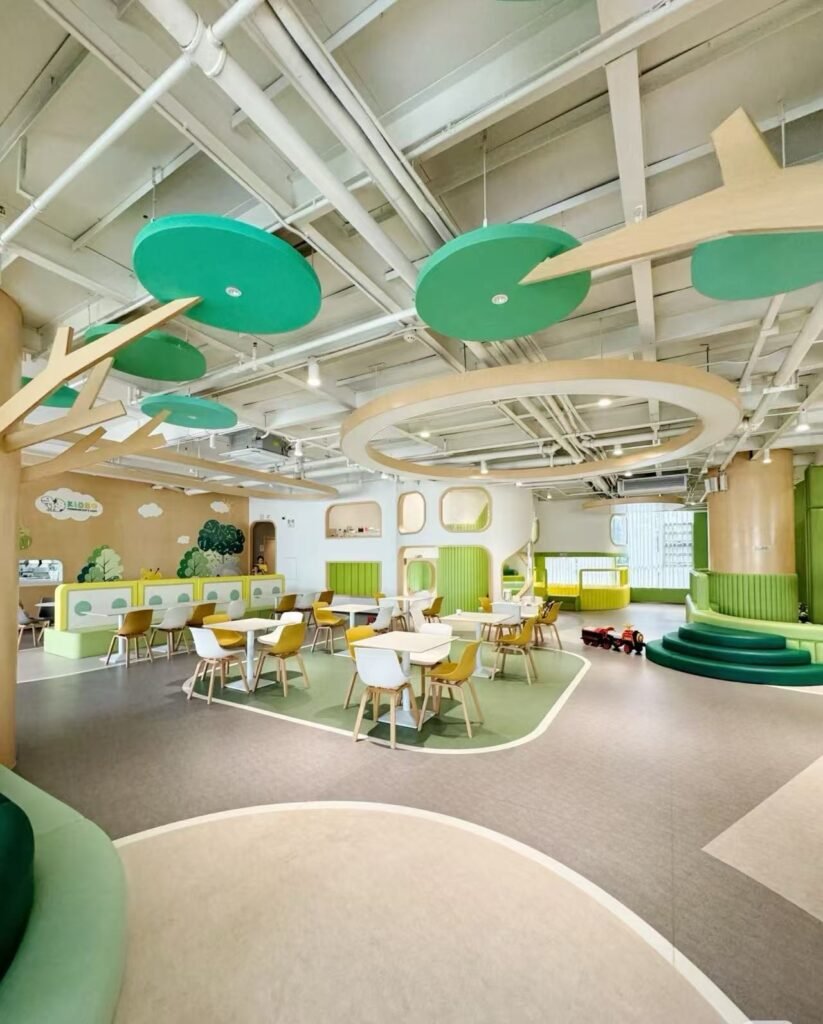
Opening a play café looks simple from the outside. Many people picture a nice theme, a play frame, a few tables, and happy families. Then the real problems start. The toddler area feels too close to the big kids. Parents cannot see their children clearly. The café seats stay half empty. Staff keep fixing traffic jams instead of serving guests. A play café can look attractive and still work badly.
A safe, profitable play café starts with zoning. Good zoning means each area has a clear job, a clear user group, and a clear connection to the rest of the venue. When I plan a play café, I do not start by asking what equipment looks exciting. I start by asking how families move, where parents sit, which age groups need separation, and how each zone supports both safety and revenue. That is what makes a venue easier to run and more enjoyable to visit.
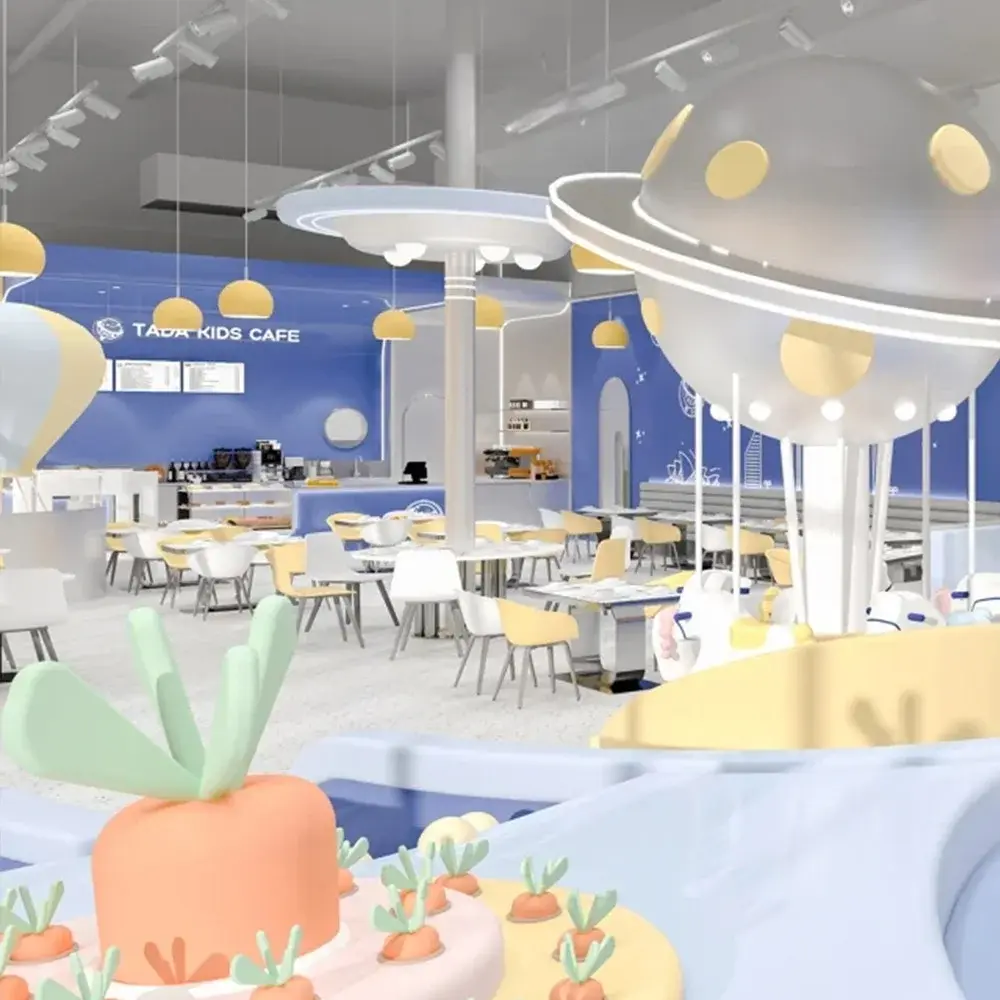
Why zoning matters more than adding more Indoor playground equipment
I have seen many indoor playground projects make the same mistake. The owner focuses too much on the attractions and not enough on the layout logic behind them. The result is a venue with a lot of equipment but no clear rhythm. Families walk in and do not know where to go first. Toddlers drift toward active play. Parents sit too far from the action. Staff lose sight of the areas that need the most attention.
Good zoning solves this before the venue opens.
In a commercial play café, zoning affects almost everything. It affects safety because children of different ages do not play in the same way. It affects customer experience because parents want to relax without losing visual contact. It affects spending because people stay longer when the space feels calm and easy to use. It affects cleaning and staffing because a well-zoned venue is easier to supervise and reset between busy periods.
This is why I usually treat layout planning as a business decision, not just a design step. A strong zoning plan helps the venue feel organized from the first visit. It also gives the owner a better base for choosing commercial indoor playground equipment that actually fits the business model.
The five core zones a modern play café usually needs
Not every play café needs the same footprint, but most successful venues have five core zones. The exact size of each zone can change, but the logic behind them stays very similar.
1. Main active play zone
This is the energy center of the venue. It often includes the main climbing structure, slides, bridges, tunnels, obstacle features, or other high-interest activity elements. This zone usually attracts older toddlers, preschool children, and early primary-age kids. It should feel exciting, but it also needs clear entry and exit points.
I like to place this zone where it is visible from several angles. It should not sit behind walls, columns, or decorative elements that block sightlines. Parents do not need to stand inside it, but they do need to understand it at a glance.
2. Toddler and soft play zone
This area should not be an afterthought. In many venues, it is one of the most important spaces. Families with younger children often decide very quickly whether a play café feels safe enough for them. If the toddler zone feels exposed, noisy, or mixed with larger children, trust drops fast.
The toddler zone should feel protected, slower, and more controlled. Soft surfaces, gentle scale, sensory features, and simple movement paths matter here. This zone should be close enough to seating for easy supervision, but separated enough to reduce collisions and overstimulation.
3. Role play or pretend play zone
This is one of my favourite areas to plan because it adds value in a very different way. Active play burns energy. Role play builds dwell time. Children stay longer when they can move from physical play into calmer, imaginative play.
A strong role play area gives the venue more depth. It can include a mini market, kitchen, doctor room, workshop, or themed houses. It does not need the biggest footprint, but it needs the right position. I usually avoid hiding it in a dead corner. It works best in a calm zone that still gets natural traffic.
4. Parent lounge and café seating zone
This is not just a waiting area. It is a revenue zone. It is also part of the brand experience. If parents feel cramped, disconnected, or stressed, they are less likely to stay longer, order more, or come back with friends.
The seating area should have clear views toward the most important play zones. It should also have logical paths to the counter, restrooms, and exits. In some concepts, a themed parent lounge design can become a major part of the venue identity.
5. Flexible event or party zone
A party room, workshop room, or flexible private-use corner can create strong income. It can also help separate birthday groups from daily traffic. This keeps the main venue calmer and protects the experience for regular visitors.
The key is to make this zone accessible without making it disruptive. Party traffic should not cut through the toddler area or the main café seating line.
How each zone supports both safety and profit
Some owners still think safety and profit pull in opposite directions. I do not see it that way. In a good play café, safety is part of the profit model.
When the toddler zone is clearly separated, parents of young children feel more confident. That confidence helps them stay longer. When the café tables have direct lines of sight, parents feel they can relax for a few minutes. That makes food and drink sales more likely. When the role play zone creates a second layer of engagement, children do not burn out too quickly and ask to leave early. That extends visit time.
Here is a simple way I think about it:
| Zone | Safety value | Profit value |
|---|---|---|
| Main active play | Controls high-energy movement in one clear area | Creates excitement and strong first impression |
| Toddler soft play | Reduces age-mixing risk | Builds trust with younger families |
| Role play zone | Offers lower-intensity play | Increases dwell time and repeat appeal |
| Parent lounge & café | Improves supervision and comfort | Drives food, drink, and longer stays |
| Party / event zone | Separates group activity from general traffic | Adds higher-margin booking revenue |
When I explain zoning to a client, I often say this: every zone should answer two questions. First, how does this space make the venue safer or easier to supervise? Second, how does this space help the business earn better revenue, retention, or repeat visits? If a zone does neither, it needs to be reworked.
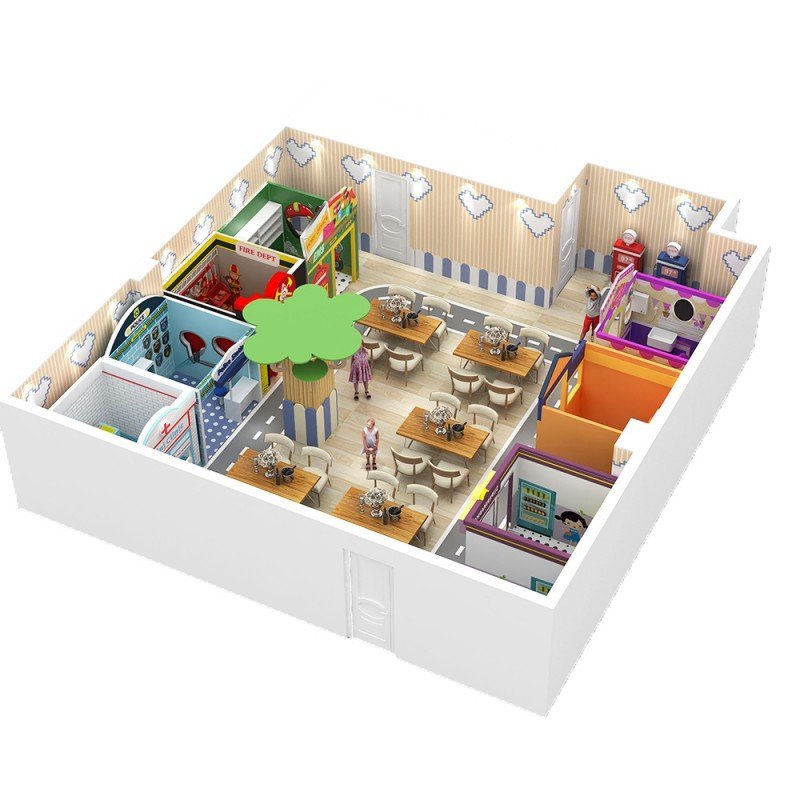
Common zoning mistakes that hurt customer experience
I have seen some layout problems appear again and again. Most of them come from making the venue look full instead of making it work well.
Putting the toddler area next to high-energy traffic
This is one of the biggest errors. A toddler zone should not sit right beside fast slides, racing routes, or entrance congestion. Younger children need slower movement around them. Parents need confidence that the area is not constantly being crossed by bigger kids.
Hiding the role play zone
Role play should feel calm, but it should not feel forgotten. If families cannot see it easily, they may skip it. That means one of the best dwell-time spaces in the venue becomes underused. A better approach is to place it on a quieter edge of the floor, with clear visual access and easy transition from the main play route.
Designing café seating with poor sightlines
Parents do not want to keep standing up, walking around, and leaning over barriers to find their child. If they cannot supervise comfortably from their seat, the café stops working as a true lounge space. That affects both comfort and spending.
Making circulation too narrow
Paths between the entrance, café counter, party room, restrooms, and play areas must stay readable. Crowded walkways create friction. Staff carrying drinks should not fight through children running between zones. Families arriving with strollers should not block the entry sequence.
Treating the venue as one open zone
Open plans can look modern, but they still need invisible structure. Children, parents, and staff all behave better in a venue where the use of space is clear. Good zoning does not always mean hard walls. Sometimes it means subtle boundaries created by furniture, floor treatment, height changes, or themed transitions.
A practical way to plan zones before you choose equipment
When I start a zoning plan, I like to work in this order:
Step 1: Define the user groups
I ask who the venue is really for. Is it mostly toddlers and preschool children? Is it mixed-age family traffic? Is it a café-first concept with a small play zone, or a play-led concept with food as support? This changes everything.
Step 2: Mark supervision priorities
Not every area needs the same level of visibility. I identify the zones that require the clearest sightlines first. Usually this includes the toddler area, main active zone entrances, and transition points where children move between energy levels.
Step 3: Map the customer journey
I think about what families see in the first 30 seconds. Then I track what happens next. Where do shoes go? Where do strollers pause? Where do parents order? Where do kids pull first? What happens when a birthday party arrives? The layout should answer these questions without needing signs everywhere.
Step 4: Separate energy levels
A strong play café usually moves from higher-energy play to lower-energy play to seated parent space in a logical way. This does not need to be linear, but it should feel intuitive. I do not want toddlers opening directly into the busiest circulation lane. I do not want role play squeezed between slide exits and the coffee queue.
Step 5: Choose the right attractions for each zone
Only after the zoning logic is clear do I match features to each space. This is where themed structures, sensory pieces, and role play attractions become much easier to select. At this stage, the venue starts to become a working concept, not just a list of products.
How themed design can strengthen zoning
A good theme is not only visual. It can also help users understand the layout. I like themed design when it makes the venue easier to read.
For example, a forest-themed play area can give the toddler section a softer identity, while a brighter active zone can feel more adventurous. A themed transition can also help children understand that they are moving from climbing play to imaginative play. This makes the venue feel richer without making it confusing.
That is one reason I think themed planning works best when it grows from the zoning plan. It is much easier to create a clear environment when each area already has a defined purpose. Owners exploring themed concepts can often get useful ideas from projects like natural and forest theme indoor playgrounds or more focused role play settings.
What venue owners should review before finalizing the layout
Before the zoning plan is locked, I always recommend one last review. This step can prevent expensive changes later.
Check the ceiling height. A good zone on paper may not work once structure height is added. Check columns and wall interruptions. These can either block sightlines or help create natural boundaries. Check emergency exits and service access. A profitable venue still has to function safely under real operating conditions.
I also like to review cleaning logic. Can staff reach the surfaces easily? Can busy zones be reset without disrupting the whole venue? Then I review parent comfort. Are there enough useful seats, not just enough seats on paper? Can adults actually enjoy the space while still feeling connected to their children?
This final review is where a venue shifts from a nice concept to a realistic business environment.
Final thoughts
A successful play café is not built by filling every square metre with attractions. It is built by giving every zone a job. When I plan a play café well, I want families to feel that the space is easy, safe, and enjoyable from the moment they enter. That feeling is what supports longer stays, better spending, smoother operations, and stronger repeat business. Good zoning is not a small detail. It is the structure that makes the whole venue work.
About KoalaPlay
KoalaPlay is a commercial indoor playground and play café design-build team that supports venue owners from concept planning to project launch. Rather than only supplying equipment, the company helps clients create indoor play spaces that are safe, practical, visually engaging, and easier to operate in daily business.
Its services can include layout planning, age-based zoning, traffic flow strategy, toddler area separation, parent sightline planning, 3D renderings, themed concept development, and practical attraction selection. KoalaPlay also provides complete solutions for commercial indoor playground equipment, role play zones, toddler soft play areas, and parent lounge café spaces. The goal is to help venue owners build play environments that work well for children, parents, and operators at the same time.
For projects that need stronger visual identity, KoalaPlay also supports themed planning and differentiated attraction ideas, including options such as custom role play concepts and natural-themed indoor playground designs.

Explore Your Play Café Project with KoalaPlay
For venue owners planning a new play café solution or improving an existing family entertainment space, starting with layout and zoning is often the smartest step. A well-planned floor layout can reduce costly mistakes, improve supervision, and create a better customer experience from the beginning.
KoalaPlay works with clients to review floor plans, define the right functional zones, and match the venue with suitable attractions, themes, and support areas. Those who want to explore project options in more detail can review the company’s indoor play design approach, browse themed play café concepts, or contact the team for a tailored proposal based on venue size, target age group, and business model.
Planning a safer, more profitable play café?
KoalaPlay offers practical support to help turn an idea into a well-zoned, commercially workable family venue.
