
Brown tips, droopy “angel wings,” and sudden leaf drop usually come from a small mismatch in light, moisture, and airflow—not a “hard” plant.
Begonia maculata (polka dot begonia) does best in bright, indirect light, evenly moist (never soggy) substrate, warm temperatures, and higher humidity with gentle airflow. Let the top layer dry slightly before watering again, keep water off foliage when possible, and use a fast-draining mix in a pot with real drainage.
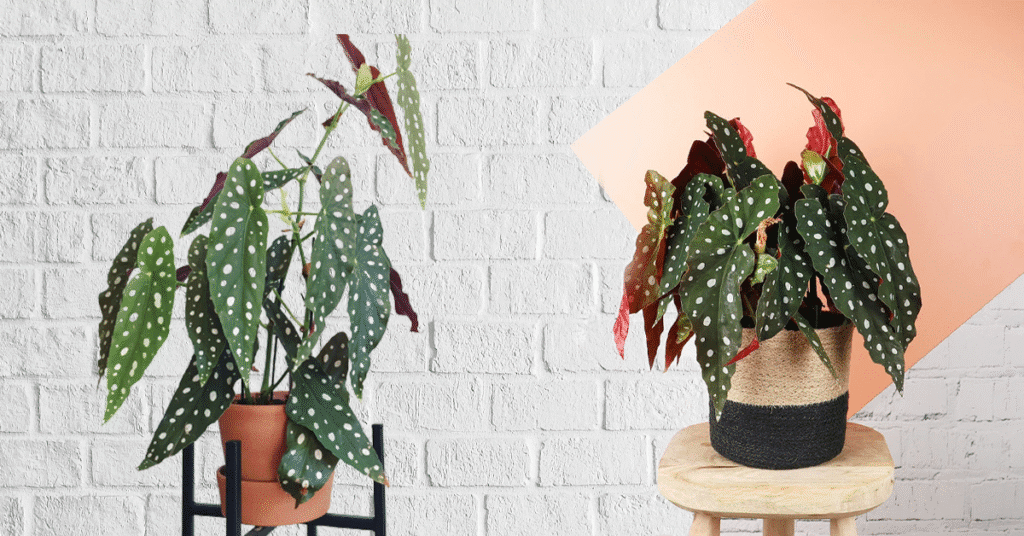
Care Requirements (At a Glance)
| Requirement | What to do (practical baseline) |
|---|---|
| Botanical name (verified) + common name | Begonia maculata Raddi (polka dot begonia / spotted begonia; cane-stem begonia) |
| Light (with placement examples) | Bright, filtered light. Place 0.5–1.5 m back from an east/south window behind a sheer curtain, or near a bright north window. Avoid harsh midday sun that scorches leaves. |
| Watering baseline (what to check before watering) | Check the top 2–3 cm: water when it feels just-dry, while the root zone remains lightly moist. Never let the pot sit in water. Reduce watering in winter. |
| Temperature range + cold sensitivity | Aim for 15–22°C indoors; protect from cold drafts and sudden drops. Keep consistently above ~13–15°C if possible. |
| Humidity (what is sufficient vs risky) | Higher humidity helps leaf quality, but stagnant air + wet leaves raises mildew risk. Use a humidifier or pebble tray plus airflow; avoid frequent leaf misting. |
| Soil/substrate (drainage/aeration) | A moisture-retentive base with added aeration: quality houseplant mix/coir-based compost + perlite + fine bark. Target: drains fast, stays lightly moist, never swampy. |
| Pot & drainage (must-have features) | A pot with drainage holes and a saucer you empty. Choose a stable pot size that matches the rootball (don’t “oversize”). |
| Fertilising (type + frequency guidance) | During active growth, feed lightly—e.g., every 2 weeks late spring to early autumn with a balanced or bloom-leaning fertiliser at reduced strength; pause or reduce in winter. |
| Toxicity/pet safety (or confirm statement) | Toxic to cats/dogs/horses (Begonia spp.; calcium oxalates—most toxic part is underground). Keep out of reach of pets and children. |
| Difficulty level (Beginner/Intermediate/Advanced) | Intermediate (easy once light + moisture + airflow are consistent). |
Where should Begonia maculata sit for the best leaf colour and sturdy stems?
Too little light leads to leggy stems and sparse leaves; too much sun causes scorch and fading spots.
Keep it in bright, indirect light so stems grow firm and leaves stay evenly patterned. Rotate the pot weekly for balanced growth, and use a simple support stake if it leans.
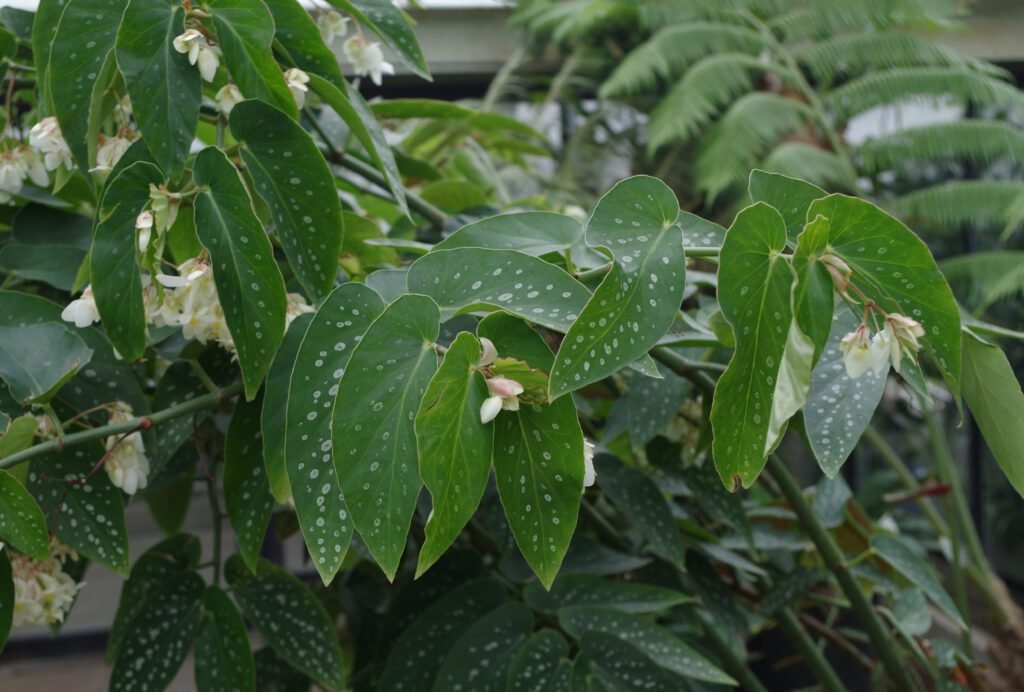
Light placement checklist (use this to decide “too bright” vs “too dim”)
- Too dim: long gaps between leaves, leaning hard toward the window, smaller new leaves.
- Too bright: pale patches, crisp scorch marks, leaf edges turning dry fast even with correct watering.
Grow-light strategy (if winter light is weak)
- Use an LED grow light and aim for a steady daily schedule rather than intense bursts.
- Keep leaves out of direct heat from lamps; raise the light if leaves feel warm.
Staking and pruning for a fuller plant
- Cane-type begonias can grow upright and benefit from support as they gain height.
- If the plant is tall and sparse, prune above a node to encourage branching. Keep cuts clean and avoid leaving long bare “stumps.”
Related readings: How to Care for Begonia Rex: Brighter Leaves, Less Rot, Fewer Brown Edges?
How do you water Begonia maculata without triggering root rot or powdery mildew?
Overwatering usually isn’t “too much water once”—it’s wet roots for too long in a slow mix or pot without drainage.
Water thoroughly, let excess drain fully, and only water again when the top layer dries slightly. Keep water off foliage and ensure gentle airflow to reduce mildew risk.
A repeatable watering method
- Check: top 2–3 cm dry, pot feels lighter, leaves still firm.
- Water: soak the substrate evenly until water runs from drainage holes.
- Drain: empty the saucer after 5–10 minutes.
- Reset: don’t water again until the top layer is just-dry.
What “evenly moist” actually means
- The root zone should feel like a wrung-out sponge—moist, airy, never muddy.
- If the mix stays wet for >5–7 days indoors, it’s usually too dense, the pot is too large, or conditions are too cool/dim.
Mildew prevention (especially in humid rooms)
- Humidity helps, but wet leaves + still air can encourage fungal issues. Prioritise humidifier + airflow over misting.
- If mildew appears, isolate the plant, remove the worst leaves, and improve ventilation immediately.
What soil mix and pot choice help Begonia maculata stay moist but never soggy?
The goal is a mix that holds some moisture while draining quickly—so roots get oxygen between waterings.
Use a pot with drainage holes and a fast-draining, airy substrate. Avoid “upsizing” too much at repotting; extra wet soil around a small rootball is a rot risk.

A practical, beginner-friendly mix
- 2 parts quality houseplant mix or coir-based compost
- 1 part perlite (or pumice)
- 1 part fine orchid bark (or similar chunky amendment)
Pot rules that prevent 80% of watering problems
- Choose a pot only slightly larger than the rootball.
- Prefer breathable materials if you tend to overwater (e.g., terracotta), but remember they dry faster.
- Never rely on decorative cachepots without drainage unless the plant stays in a nursery pot that you remove to water and drain.
Signs the mix is wrong
- Water pools on top and drains slowly (too compacted).
- Fungus gnats persist (often a symptom of consistently wet topsoil).
- Leaves yellow while soil stays wet (roots stressed).
How do you balance humidity and airflow for bigger leaves—without leaf spots?
Begonia maculata likes humidity, but it also needs fresh air movement. High humidity in still air can raise the risk of powdery mildew and other fungal problems.
Aim for higher humidity with gentle airflow and stable warmth. Keep the plant away from cold drafts, but don’t trap it in a stagnant corner.
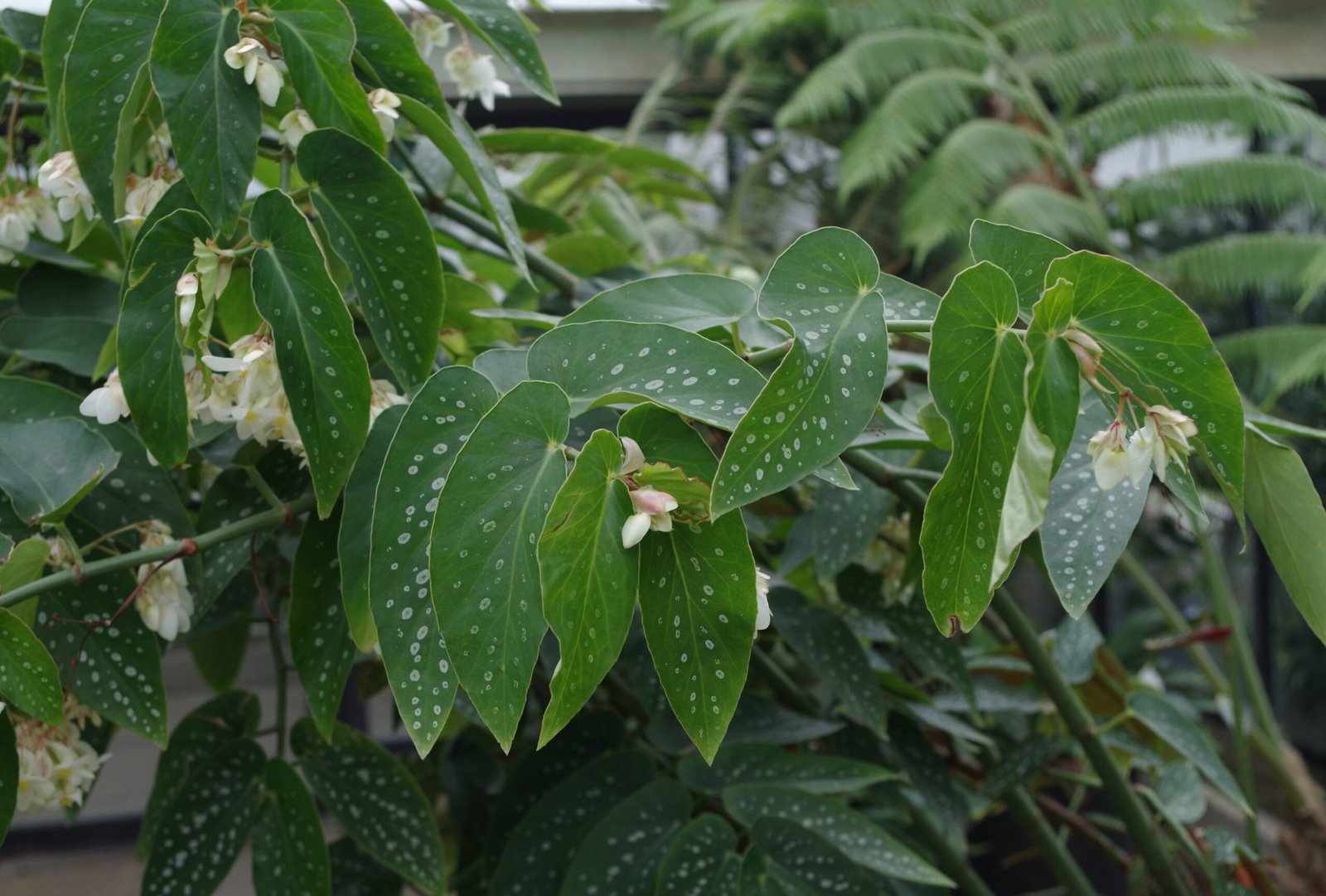
Humidity that helps (and humidity that backfires)
- Helps: humidifier nearby, pebble tray, grouping plants, warm room, consistent watering.
- Backfires: frequent misting that keeps leaves wet, cramped shelf with no airflow, cool temperatures.
Airflow tips that don’t dry the plant out
- Use a small fan on low, pointed past the plant rather than directly at it.
- Leave a little space between plants so leaves dry within a reasonable time after watering.
Leaf quality quick fixes
- Crispy edges: often uneven moisture + low humidity spikes + salts buildup. Flush the pot occasionally and keep watering consistent.
- Soft droop: can be either thirst or root stress—check the soil before reacting.
Troubleshooting (Fast Diagnosis Table)
| Symptom | Most likely cause | What to do now | Prevention |
|---|---|---|---|
| Yellowing leaves (especially lower) | Roots staying wet too long; low light | Let mix dry slightly, improve drainage, move to brighter indirect light | Airier mix, drainage holes, don’t oversize pot |
| Leaf curl or droop | Underwatering, heat/draft stress, or root stress | Check soil moisture; water if just-dry. Shield from drafts/vents | Stable placement, consistent checks, rotate weekly |
| Brown tips/edges | Humidity swings, inconsistent watering, salts | Stabilise watering; consider humidifier; flush soil occasionally | Use airflow + humidity, avoid over-fertilising |
| Root rot risk signs (sour smell, mushy stems, persistent wet mix) | Dense mix, cold conditions, overwatering | Unpot, trim rotten roots, repot into airy mix, reduce watering | Fast-draining substrate, warm temps, smaller pot |
| Powdery mildew / white film | High humidity + stagnant air, wet leaves | Remove affected leaves, increase airflow, avoid misting | Humidity with ventilation; keep foliage dry |
| Pest signals (stippling, webbing, cottony clusters) | Spider mites/mealybugs (often in stressed plants) | Isolate, wipe leaves, treat with appropriate control, repeat weekly | Quarantine new plants; keep plant vigorous |
| Stalled growth | Low light, cool temps, underfeeding | Increase light, keep warmer, start light feeding in growth season | Seasonal adjustments; repot only when needed |
| Leggy, leaning canes | Light too weak; no rotation | Move brighter, rotate weekly, stake if needed | Bright indirect light and regular turning |
Seasonal Care (Spring/Summer vs Autumn/Winter)
Spring & summer (active growth)
- Light: brightest indirect light of the year; protect from harsh midday sun.
- Water: more frequent, but still based on the top-layer dry check.
- Feed: light, regular feeding during growth (then taper off toward autumn).
- Pests: inspect weekly—warmth + new growth attracts mites and mealybugs.
Autumn & winter (slow growth)
- Light: move closer to the brightest window (still avoiding direct scorch).
- Water: reduce frequency; let the surface dry a bit more between waterings.
- Humidity: indoor heating dries air—use a humidifier, but keep airflow to prevent mildew.
- Temperature: keep away from cold glass and drafts; stable warmth matters.
When to repot (clear signs)
- Roots circling heavily and the plant dries out unusually fast.
- The mix has collapsed and stays wet too long even with careful watering.
- The plant is top-heavy and unstable (repot into a slightly wider, stable pot—still with drainage).
Propagation (Verified, Low-Risk Method for Cane Begonias)
Best method: stem cuttings (recommended for cane-stemmed begonias).
Materials
- Clean scissors or pruners (sanitised)
- Small pot with drainage holes
- Airy propagation mix (light, sandy mix or a perlite-heavy blend)
- Clear bag or propagator (optional)
- Label/date (recommended)
Step-by-step
- Take a 7–10 cm cutting from healthy growth, cutting just below a node.
- Remove lower leaves to expose a node that will sit in the mix.
- Insert into a lightly moist propagation medium; firm gently.
- Keep in bright, indirect light and warm conditions. Maintain light moisture, never soggy.
- Once rooted and showing new growth, pot up into the standard airy mix.
Failure points (and how to avoid them)
- Rot at the base: medium too wet or too cold → use a lighter mix, warmer spot, and drainage.
- Wilting cutting: humidity too low → use a loose cover, but ventilate daily.
- No roots: light too weak or cutting too old → choose fresh, healthy stems and brighter indirect light.
Confirm with an authoritative horticulture source before applying if using any alternative propagation method not listed above.
FAQs
Is Begonia maculata a “low light” houseplant?
It tolerates lower light better than many sun-loving plants, but “low light” usually leads to leggy canes, fewer leaves, and slower growth. For strong stems and crisp spotting, it needs bright, indirect light—think near a bright window with filtered sun. If winter light is weak, a grow light on a consistent schedule can prevent stretching. Watch the plant: long gaps between leaves and leaning are reliable signs it wants more light.
How often should Begonia maculata be watered?
There isn’t a fixed weekly schedule that works year-round. Instead, water when the top 2–3 cm of mix feels just-dry and the pot feels lighter, then water thoroughly and drain fully. In brighter, warmer months this may be more frequent; in winter it’s usually less. The key is avoiding long periods of wet, airless soil—especially in a pot that’s too large for the rootball.
Why does my polka dot begonia get crispy edges even when I water it?
Crispy edges often come from humidity swings, inconsistent moisture (too dry, then too wet), or salts buildup from fertiliser/hard water. Stabilise the routine: keep the substrate lightly moist, raise humidity with a humidifier (not constant misting), and ensure airflow. If you fertilise, use reduced strength and occasionally flush the pot with clean water to reduce accumulated salts—then let it drain completely.
Is Begonia maculata toxic to cats and dogs?
Yes. Begonias (Begonia spp.) are listed as toxic to dogs and cats due to calcium oxalates; the most toxic parts are usually underground. Typical signs include drooling, vomiting, and oral irritation. Keep the plant out of reach, prevent chewing on fallen leaves, and contact a veterinarian or animal poison control promptly if ingestion is suspected.
Should Begonia maculata be staked or pruned?
Many cane begonias benefit from light support as they grow taller. If stems lean or the plant becomes top-heavy, add a discreet stake and soft ties. Pruning can also help: cutting above a node encourages branching and a fuller shape. Use clean tools, avoid drastic pruning during the darkest winter period, and propagate healthy cuttings if you want backups.
References
- Begonia maculata Raddi (Plants of the World Online — Kew) https://powo.science.kew.org/taxon/urn:lsid:ipni.org:names:105130-1
- Begonia maculata (RHS Plant Details) https://www.rhs.org.uk/plants/112222/begonia-maculata-(c)/details
- Begonias as Houseplants: Care + Propagation Notes (Royal Horticultural Society) https://www.rhs.org.uk/plants/begonias/houseplants
- Polka Dot Begonia—Cane Types: Begonia maculata (UF/IFAS Extension PDF) https://sfyl.ifas.ufl.edu/media/sfylifasufledu/santa-rosa/docs/pdfs/demo-garden-5/Polka-Dot-Begonia-final.pdf
- Begonia (Begonia spp.) Toxicity (ASPCA Animal Poison Control) https://www.aspca.org/pet-care/aspca-poison-control/toxic-and-non-toxic-plants/begonia
- Begonia (Genus Overview: culture notes incl. soil, pH, cold sensitivity, propagation) (NC State Extension Gardener Plant Toolbox) https://plants.ces.ncsu.edu/plants/begonia/
