

Missing the best rare-plant events usually comes down to unclear dates, confusing venue info, and last-minute planning. This guide fixes that with a practical plan, transport notes, and what to expect inside.
The Bangkok International Exotic Plants Show & Sale (often called the Bangkok Exotic Plant Show) is a large rare-plant market and exhibition held 23–25 January 2026 at Chaengwattana Hall (5.5th floor), Central Chaengwattana, Nonthaburi (Bangkok area), Thailand. Visitors come to browse specialist growers, buy uncommon plants, and learn from the collector community.
If rare aroids, orchids, and niche collectors’ plants are on the wish list, this event is one of the easiest ways to see a lot of stock—and a lot of plant people—in one weekend without running across the whole city.
Core event information
Quick facts (save this table)
| Item | Details |
|---|---|
| Event name | Bangkok International Exotic Plants Show & Sale 2026 |
| Dates | 23–25 January 2026 |
| Venue | Chaengwattana Hall (5.5th floor), Central Chaengwattana |
| City / area | Pak Kret, Nonthaburi (Greater Bangkok), Thailand |
| Address (mall) | 99/99 Moo 2, Chaengwattana Road, Bang Talat, Pak Kret, Nonthaburi 11120 |
| Booking / updates | Official Facebook page and major local event listings |
| Entry fee | Not consistently published in public listings; confirm on official channels before travel |
| Best time to go | Early day for calmer browsing; later day for deals and last-minute seller discounts |
Date(s) and venue confirmation
Multiple public listings confirm the 23–25 January 2026 schedule and the Central Chaengwattana / Chaengwattana Hall 5.5 location. The TAGTHAi event listing gives the 2026 dates, and a vendor schedule page (Greenroom Planter) also lists the event with the Central Chaengwattana address.
Readers can also check our 2026 Event Calendar for a comprehensive overview of upcoming plant and garden events.
Ticket price / entry fee
This is the part to double-check. Some editions of Bangkok plant shows are free-entry or low-cost, but the 2026 January edition does not have a universally published price on the main English listings. The safest plan is to treat entry as “confirm before you go” and check the official event updates close to the date.
Practical tip: if a “ticket” post appears, it may refer to vendor pre-orders (plants reserved for pick-up at the show) rather than an entrance ticket. Always look for wording like “entry fee,” “admission,” or “บัตรเข้างาน”.
Booking / reservation channel
- Primary channel: the event’s official Facebook page (often where floor plans, vendor lists, and last-minute changes appear).
- Backup channel: the TAGTHAi event listing, which often links back to the official page for updates.
How to get there
Venue context: Central Chaengwattana is in Nonthaburi, north of central Bangkok, and Chaengwattana Hall is inside the mall (5.5 floor). Central Pattana’s branch information page provides the mall address and map link.
By public transport (most realistic option)
- BTS / MRT + taxi/ride-hail: Bangkok’s rail lines may still require a final taxi/ride-hail leg to reach Central Chaengwattana conveniently, depending on where the hotel is located. Plan the last segment as a short road transfer.
- Bus: Chaengwattana Road is a major corridor with bus routes, but this is easiest for residents familiar with Bangkok routes rather than short-term visitors.
By taxi / Grab / Bolt
- Use “Central Chaengwattana” as the destination. Add “Chaengwattana Hall 5.5 floor” in notes for clarity.
- Aim to arrive earlier in the day to avoid peak mall traffic.
By driving
- Parking is available at the mall. Weekend crowd levels can be high, so arriving before midday usually reduces friction.
Nearest airport
- Don Mueang International Airport (DMK) is generally the closer Bangkok airport to Nonthaburi/northern Bangkok areas than Suvarnabhumi, depending on traffic. For arrivals on the same day, choose the airport based on flight options, then use taxi/ride-hail to the mall.
What is the Bangkok International Exotic Plants Show, and what makes it different?
Crowded plant markets can feel chaotic when there is no clear structure or expectations. This show feels more manageable when the layout and “how people shop” are understood ahead of time.
The Bangkok International Exotic Plants Show & Sale is best understood as a collector-heavy marketplace inside a formal exhibition hall: many vendors, curated “rare plant” stock, and a community that treats plant condition and provenance seriously.

Dive deeper
This event is not a single “brand” booth show. It behaves more like a concentrated version of Bangkok’s rare-plant scene—multiple growers and traders in one hall, with a lot of overlap between collectors, small nurseries, and specialty importers. The visible focus tends to be on plants that photograph well and hold value in collector circles: variegated aroids, anthuriums with velvet foliage, unusual philodendron forms, select orchids, and niche plants that are harder to find in standard garden centres.
For visitors, the experience is usually split into two modes:
1) Browsing mode: walking the aisles to compare plant sizes, variegation patterns, leaf condition, and root health across vendors.
2) Buying mode: returning to a short list of booths to negotiate, bundle, or ask for care details.
It helps to arrive with a plan, because the “best plant” is often not the rarest one—it is the healthiest plant that can survive the trip home. Many buyers bring insulated bags, rigid boxes, and tissue or paper to protect leaves. Even if no purchase is planned, the show is still valuable as a live reference library: leaf forms, growth stages, and vendor care styles can be compared in a single visit.
How should a first-time visitor plan the day step by step?
First-time visitors often get overwhelmed by decision fatigue: too many booths, too many “must-buy” plants, and not enough time to compare quality.
A simple plan is: arrive early, do a full loop, shortlist, then buy at the end—with a clear budget and a carrying strategy.
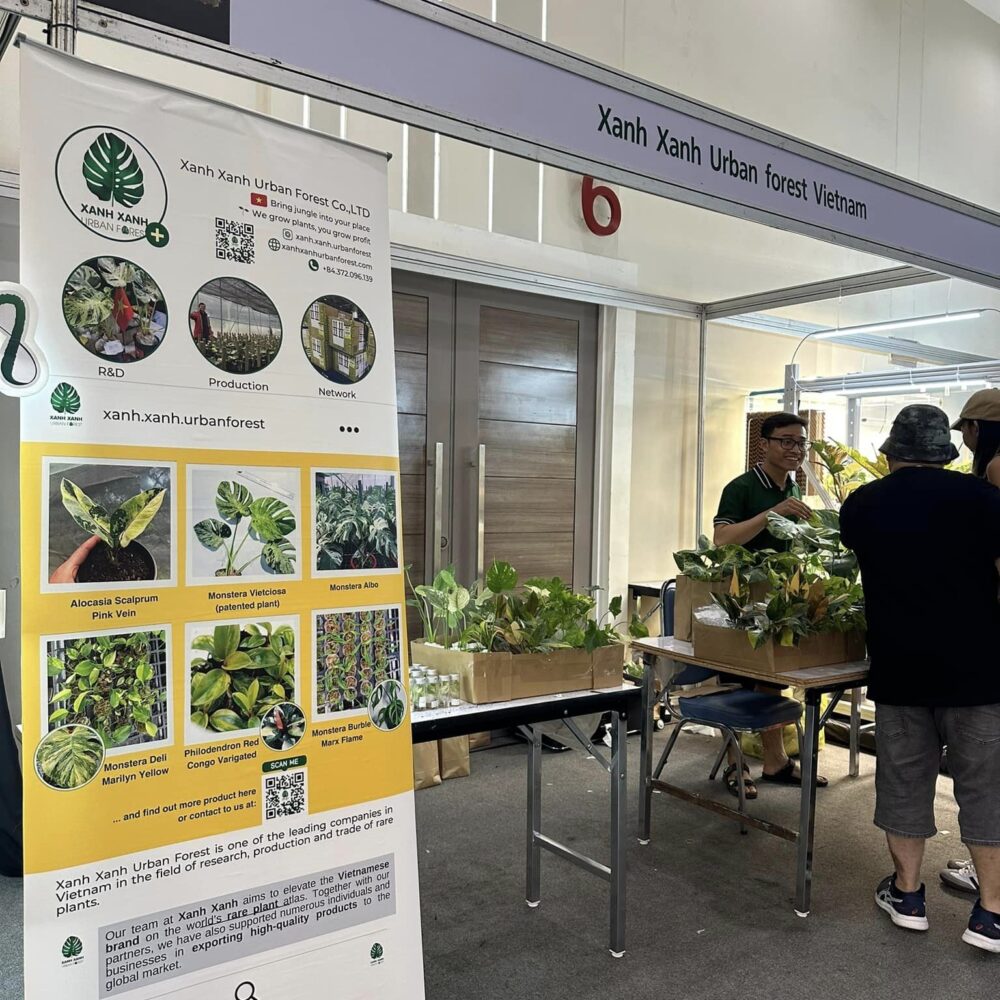
Dive deeper
A practical day plan looks like this:
| Time block | What to do | Why it works |
|---|---|---|
| First 30–45 minutes | Walk the entire hall without buying | Builds price and quality reference fast |
| Next 30 minutes | Shortlist booths (photos + notes) | Prevents impulse buying and repeats |
| Mid-visit | Ask questions: media, watering rhythm, pest history | Filters out risky plants |
| Final hour | Buy and pack | Reduces time carrying plants in crowds |
What to bring (light but useful):
- A reusable tote + a rigid box or small carry crate for structure
- Paper wrap or light tissue to protect leaves
- Hand sanitiser (handling pots and shared surfaces adds up)
- A budget note on the phone (it sounds basic, but it prevents regret)
What to check on any plant you might buy:
- Leaf: no soft rot spots, no suspicious webbing, no heavy mechanical damage
- Stem/petiole: firm, not dark or collapsing
- Roots (if visible): healthy light roots, not sour-smelling or mushy
- Growing medium: avoid soaking-wet media if travel is long
If bringing plants home internationally: rules vary by destination and change often. A safe approach is to treat all purchases as local-only unless there is clear vendor documentation and destination-country guidance.
What kinds of plants and booths are most common at the show?
It is easy to assume “rare plant show” means only aroids. In practice, the mix changes by season and vendor groups.
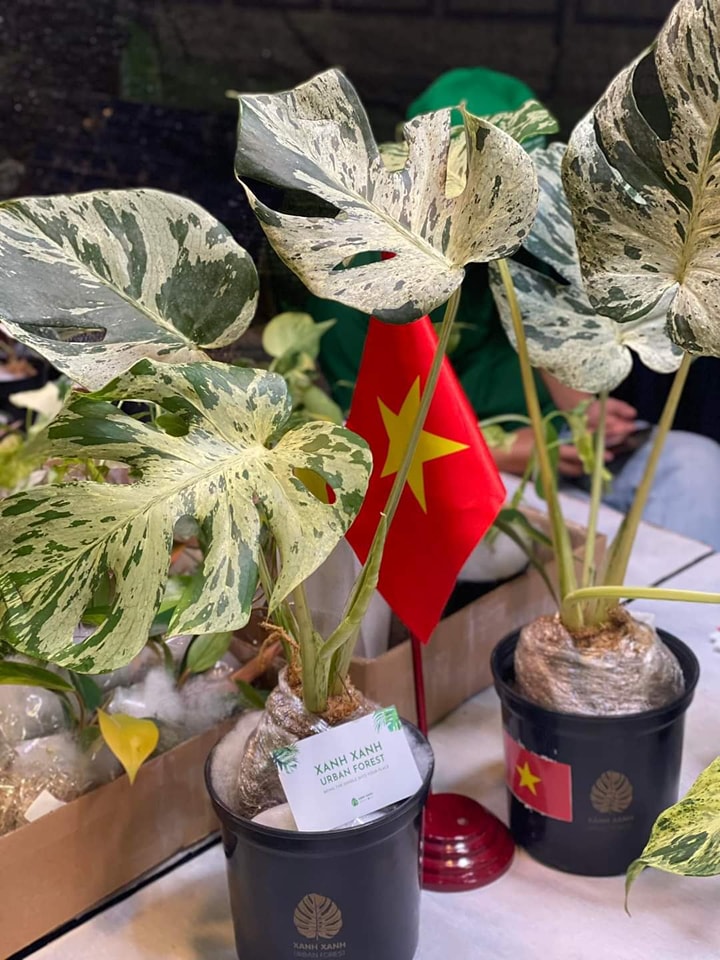
Expect a strong presence of aroids (especially anthuriums and variegated monsteras), plus orchids and other collector plants depending on vendors.
Dive deeper
Based on past editions and how Bangkok’s collector scene trends, a few categories usually dominate the floor:
- Aroids: Monstera, Philodendron, Anthurium, Alocasia. These often take centre stage because leaf pattern and size create instant visual impact.
- Orchids: common in Thailand’s plant scene, with both display-level specimens and more affordable starter plants.
- “Collector extras”: niche foliage plants, unusual forms, tissue-culture releases, and occasional carnivorous plants.
A useful way to browse is to treat the show like a quality comparison exercise rather than a treasure hunt. Two plants can share the same name but differ dramatically in:
- variegation stability,
- leaf maturity,
- stem health,
- and how aggressively they were grown to look “sale-ready.”
A good booth will normally answer basic questions calmly: what medium the plant is in, whether it recently transitioned from tissue culture, and how it is handled under Bangkok conditions. Even without buying, these conversations teach what “normal” looks like for each category.
For photography, the most compelling images often come from the contrast: velvet anthuriums under booth lights, variegated leaves against dark backgrounds, and “line-up” tables where sellers organise plants by size and pattern.
Event highlights
What makes this event special
- Dense vendor concentration: many specialist sellers in one hall, which saves time compared with travelling between nurseries.
- Collector-level stock: plants are often displayed in a way that makes comparison easier (leaf size, variegation, colour, and maturity).
- Seasonal timing: late January is a comfortable time to be in Bangkok, which makes the visit easier for travellers.
Who it suits best
- Collectors who want to compare quality across sellers in one trip
- Hobbyists who want to see “what’s possible” before committing to higher-end plants
- Visitors who enjoy markets but prefer an indoor hall setup rather than outdoor heat
What not to miss
- A full loop of the hall before buying anything
- Vendor tables that show multiple maturity stages of the same plant (best learning value)
- Late-day bundle opportunities (common at many plant markets)
Video: what the show looks like in real life
A walkthrough video helps set expectations for crowd levels, booth layouts, and the kinds of plants that actually appear on tables. This one gives a practical “eyes-on” view of the Bangkok show environment:
References
- Bangkok International Exotic Plants Show and Sale (23-25 January 2026) (TAGTHAi)
- Shows in 2026: Bangkok International Exotic Plants Show & Sale 2026 (Thailand) (Greenroom Planter)
- Central Chaengwattana branch information (address and map link) (Central Pattana)
- DAY ONE: Bangkok International Exotic Plants Show (June 2025) (YouTube)
Conclusion
The Bangkok International Exotic Plants Show 2026 is easiest with a simple plan: confirm entry details, arrive early, do a full loop, shortlist calmly, and buy late with a safe packing strategy.
