
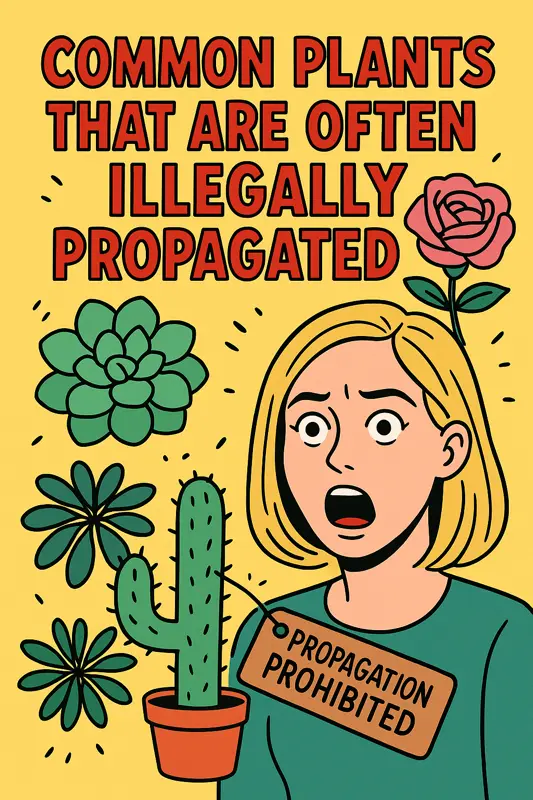
For many home gardeners, taking a cutting or dividing a plant feels as natural as watering it. But the moment you enter the world of patented cultivars, rare succulents, or protected native plants, propagation becomes more than a gardening technique—it becomes a legal and ethical responsibility. Some of the world’s most popular ornamentals, houseplants, and succulents are frequently involved in illegal propagation cases, not because gardeners mean harm, but because the rules surrounding these plants are rarely explained clearly.
This article breaks down the plants most commonly illegally propagated, real cases showing how violations happen, and the key points every hobbyist and small grower should understand before multiplying a plant.
1. Popular Patented Ornamentals Frequently Illegally Propagated
The most widespread category of illegal propagation comes from asexually cloned patented varieties—plants protected by plant patents, Plant Breeder’s Rights (PBR), or Plant Variety Protection (PVP). These protections mean that no one can propagate the plant without the breeder’s permission, even for personal use.
Some cultivars become so popular and widely sold that gardeners forget they are intellectual property.
1.1 Rose Cultivars (e.g., ‘Knock Out®’ Series)

The ‘Knock Out®’ roses are among the most widely cited illegal propagation cases. Their fame and hardiness make them a popular target for unlicensed cuttings. Multiple commercial growers have been fined for producing thousands of unauthorized clones.
Why they’re protected:
They are patented and trademarked. All asexual propagation—cuttings, budding, grafting—is prohibited without license.
1.2 Proven Winners® Annuals & Shrubs
Proven Winners is one of the strictest breeders regarding unauthorized propagation. Many of their varieties carry labels explicitly stating “Asexual Propagation Prohibited.” Illegal cuttings of hydrangeas, calibrachoa, petunias and lavenders are among the most common violations found in commercial inspections.
Why violations happen:
People assume annuals or common shrubs are not protected, but the entire business model relies on licensing.
1.3 Modern Hydrangea Varieties (e.g., Endless Summer® Series)
Hydrangeas are extremely popular, and many new cultivars—especially reblooming types—are protected. Gardeners frequently take cuttings without realising that the trademarked name and underlying cultivar are both licensed.
Common misunderstanding:
Some believe “If I own the plant, I can propagate it.” This is untrue for patented varieties.
1.4 Branded Petunias, Calibrachoa, Coleus, and Impatiens
These colorful annuals are cheap and everywhere, so hobbyists often clone them freely. Many are, in fact, protected for more than a decade after introduction.
The issue:
Large-scale illegal propagation undermines breeders and has triggered lawsuits in several countries.
2. Rare Succulents Commonly Illegally Harvested or Propagated
The rare plant boom—fueled by social media—has pushed succulents into a global black market. Illegal propagation in this category usually begins with illegal wild collection, followed by mass propagation and international resale.
2.1 Conophytum Species
These tiny South African succulents have become the center of a global poaching crisis. Wild populations are being stripped by smugglers; many plants then enter the market through unlicensed propagation.
Why this is serious:
- Many species are near extinction in the wild.
- “Nursery-grown” claims are often false.
- Authorities regularly confiscate shipments and prosecute offenders.
2.2 Rare Haworthia and Astroloba
Several South African Haworthia species are highly collectible. Illegal harvesting followed by propagation has caused major ecological decline.
Typical illegal pattern:
Wild collection → mass propagation → sale to international collectors.
2.3 Mexican Ariocarpus and Lophophora
Many Mexican cacti are protected nationally and internationally. Illegal propagation starts with illegal extraction; propagated plants remain illegal if their origin cannot be documented.
Risk to gardeners:
Even buying such plants unknowingly may violate import laws.
3. Orchids and Carnivorous Plants Illegally Propagated Due to CITES Control
Some of the world’s most beautiful plants sit under strict international regulations.
3.1 Wild Orchids (CITES Appendix I & II species)
Certain orchids (especially slipper orchids) are tightly regulated. Removing them from the wild or propagating wild-collected plants for sale without permits is illegal.
Why violations occur:
Collectors often chase “wild-origin” plants, especially unusual forms.
3.2 Nepenthes and Sarracenia (Pitcher Plants)
Many carnivorous species are endangered in their native habitats. Illegal propagation usually begins with wild poaching.
Common case:
“Rare color forms” harvested from swamps → propagated → sold online.
4. Invasive Plants That Cannot Be Legally Propagated in Some Regions
Propagation isn’t only illegal for rare or patented plants. In many countries, certain species are prohibited because they are environmentally destructive.
4.1 Japanese Knotweed (Fallopia japonica)
Illegal to plant, propagate, or transport in many countries. Even a tiny cutting can create a new infestation.
4.2 Water Hyacinth (Eichhornia crassipes)
Banned in many regions due to its ability to choke waterways.
4.3 Purple Loosestrife (Lythrum salicaria)
A beautiful garden flower, but invasive in wetlands. Spreading or propagating it is illegal in several states.
Why gardeners violate these rules:
They don’t realize local invasive species laws apply to private gardens too.
5. Houseplants Often Involved in Unintentional Illegal Propagation
Some trending houseplants are protected varieties, but their tags are easily lost or discarded, and hobbyists often take cuttings unknowingly.
5.1 Patented Philodendron, Pothos, and Monstera Cultivars
Variegated forms, compact hybrids, and specialty lines often come from breeders and carry IP protection.
Illegal propagation examples:
- Selling variegated cuttings from a patented cultivar
- Swapping or gifting cuttings online
- Propagating a plant whose tag said “PPAF,” long forgotten after repotting
Some new tissue-culture-developed specimens are protected even if they look very similar to common species.
6. How These Illegal Propagation Cases Usually Get Discovered
Most home gardeners will never face legal consequences. Enforcement focuses on commercial or high-volume propagation, especially when these red flags appear:
- A seller lists dozens or hundreds of cuttings online
- The plants are protected cultivars from major breeders
- The seller advertises rare wild species with no paperwork
- Imports arrive without CITES or phytosanitary documentation
- A nursery is inspected and found propagating protected stock
Major breeding companies hire “watch services” to monitor markets. Many illegal cases have started from social media posts showing propagation of patented plants.
7. Why These Plants Are Targeted: A Quick Summary Table
To make the landscape more understandable, here is a reference table summarizing the four major categories of plants commonly involved in illegal propagation:
Table: Categories of Plants Most Often Illegally Propagated
| Category | Examples | Why Illegal Propagation Happens | Risk Level |
|---|---|---|---|
| Patented Ornamentals | Knock Out® roses, Proven Winners® hydrangeas & annuals | People forget patents last 20+ years; tags are discarded | High (breeders enforce) |
| Rare Succulents | Conophytum, rare Haworthia, Ariocarpus | Black-market demand; wild plants are poached | Very High |
| CITES-Controlled Plants | Wild orchids, Nepenthes, Sarracenia | Permits required; wild collection illegal | High |
| Invasive Species | Water hyacinth, purple loosestrife, knotweed | Spread harms ecosystems; illegal to propagate | Moderate–High |
| Patented Houseplants | Variegated Philodendrons, Pothos cultivars | Hobbyists multiply without realizing IP status | Moderate |
8. What Gardeners Should Pay Attention To
To stay on the right side of both the law and ethical horticulture, gardeners should learn a few reliable habits:
1. Always read plant tags carefully.
Words like PP#, PPAF, PBR, PVP, “Propagation Prohibited” mean cloning is not allowed.
2. Keep tags or note plant names during repotting.
Many illegal cuttings come from plants whose owners simply forgot they were protected.
3. Avoid “mystery” rare plants sold without documentation.
If it seems too rare or too cheap to be true—it often is.
4. Learn invasive species lists for your region.
Even innocent propagation can cause ecological damage.
5. Buy from reputable nurseries.
Legitimate sellers are transparent about plant origins and rights.
6. Do not assume that “personal use” makes it legal.
Most intellectual property laws apply regardless of scale.
9. Final Thoughts: Propagation Is Joyful—But Not Always Free to Do
Propagation is one of the most satisfying aspects of gardening. But as plant breeding advances, the international trade in rare species expands, and environmental protections grow stronger, propagating certain plants becomes more than a hobby—it becomes a responsibility.
The key is awareness. The plants most often involved in illegal propagation fall into only a few predictable categories: patented ornamentals, endangered wild species, highly desirable succulents, and invasive plants. Once you understand what these categories look like, it becomes easy to make responsible choices.
Knowing when not to propagate is just as important as knowing how. And when gardeners stay mindful, the entire plant world—wild and cultivated—benefits.
