
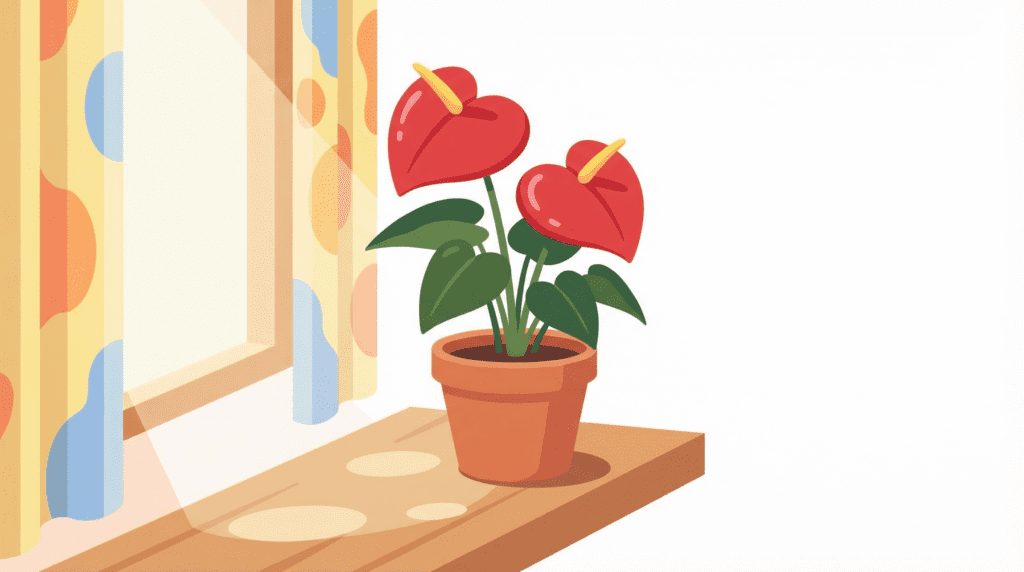
If you are looking for a houseplant that brings a touch of tropical elegance into your home, the Anthurium is an outstanding choice. Often referred to as the Flamingo Flower or Tail Flower, this stunning plant is celebrated for its glossy, heart-shaped leaves and vibrant, long-lasting blooms. While it may look exotic and high-maintenance, learning how to care for anthurium plants indoors is surprisingly straightforward once you understand their natural habitat. This comprehensive anthurium plant care guide will walk you through everything you need to know to keep your tropical beauty healthy, vibrant, and blooming year-round.
Understanding Your Anthurium
Before diving into the specific care routines, it is helpful to understand where the Anthurium comes from. Native to the tropical rainforests of the Andes Mountain range in Colombia and Ecuador, these plants are naturally epiphytic — meaning that in the wild, they often grow on the surface of other plants or trees rather than in the ground, absorbing moisture and nutrients from the air and rain.
Interestingly, the colorful, waxy “flowers” that make the Anthurium so popular are not actually flowers at all. They are modified leaves called spathes. The true flowers are the tiny bumps covering the spike (the spadix) that protrudes from the center of the spathe. Keeping their rainforest origins in mind is the secret to mastering anthurium care.
Light and Temperature Requirements
To encourage your Anthurium to produce its signature vibrant blooms, providing the right lighting is crucial. Anthuriums thrive in bright, indirect light. Placing your plant near an east or west-facing window where it can receive plenty of filtered sunlight is ideal. You must avoid exposing the plant to extended periods of direct, harsh sunlight, as this will quickly scorch the leaves and cause irreversible damage. While they can adapt to lower light conditions, their growth will significantly slow down, and they are unlikely to produce new flowers.
Temperature is another vital factor. Because they are tropical plants, they prefer a warm environment. Maintain room temperatures between 65°F and 80°F (18°C to 27°C) for optimal growth. It is extremely important to protect your plant from cold drafts, air conditioning vents, and sudden temperature drops below 60°F (15°C), which can shock the plant and halt its growth.
Mastering the Watering and Humidity Routine
Watering is where many plant parents make mistakes, but finding the right balance is easy once you know what to look for. You should water your Anthurium when the top 50–75% of the soil volume feels dry to the touch. When you do water, water thoroughly until liquid flows out of the drainage holes at the bottom of the pot. Always empty the saucer afterward — allowing the plant to sit in standing water is a guaranteed recipe for root rot. If you notice the leaf tips turning yellow, you are likely overwatering. Conversely, brown and crispy leaf tips indicate underwatering.
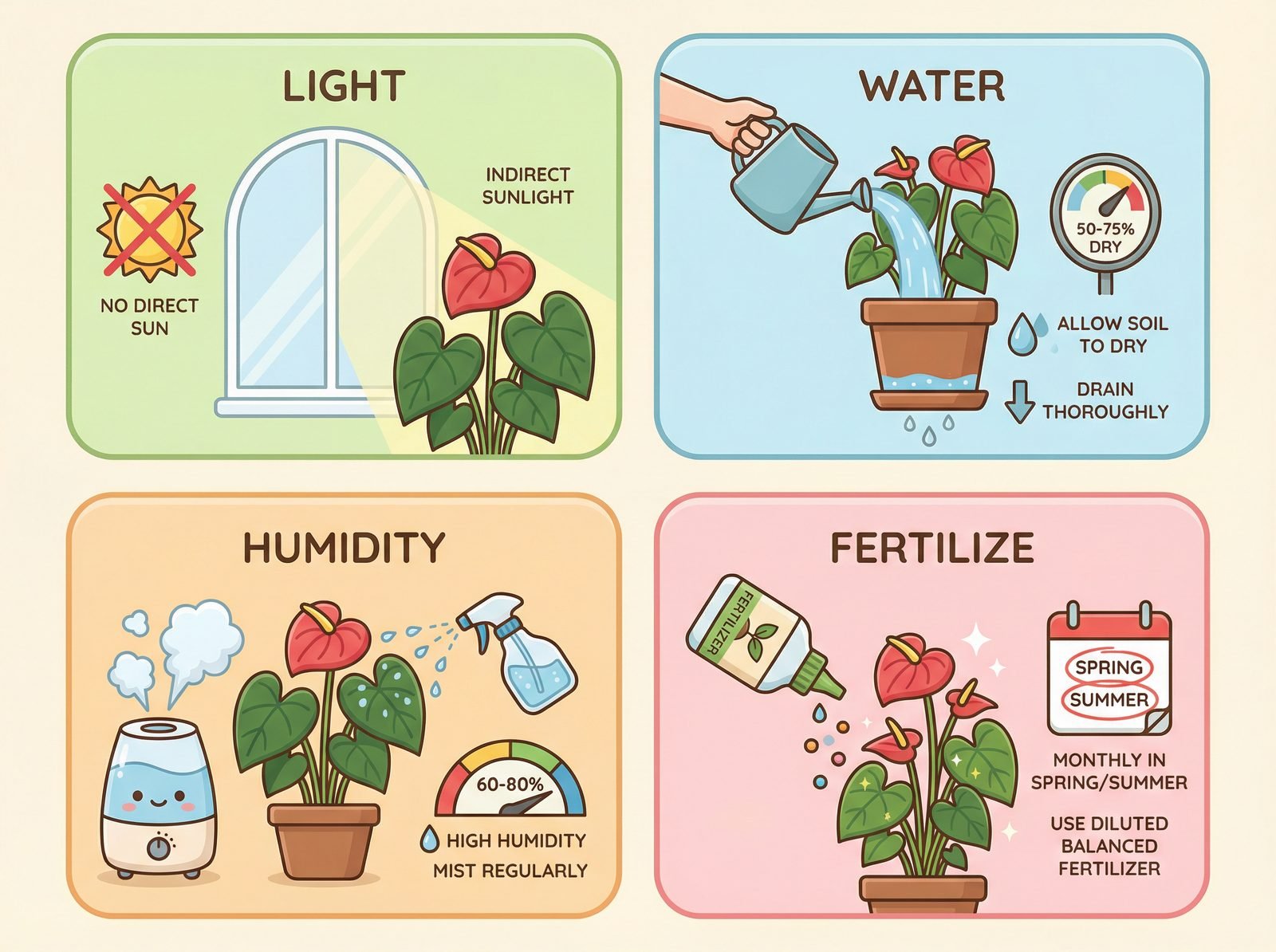
Humidity is equally important for these rainforest natives. Anthuriums love a highly humid environment, ideally between 60% and 80%. In most standard homes, especially during the winter when indoor heating dries out the air, you will need to supplement the humidity. You can achieve this by misting the leaves every few days, placing the pot on a pebble tray filled with water, or using a room humidifier.
The Perfect Soil Mix and Fertilization
Because Anthuriums are epiphytes, they require a very specific type of soil. Standard indoor potting soil is usually too dense and retains too much moisture. Instead, they need a coarse, porous, and well-draining mix. An excellent DIY mix consists of one-third sphagnum moss, one-third coco coir, and one-third perlite or orchid bark. This airy mixture allows the roots to breathe and prevents waterlogging.
To fuel their growth and beautiful spathes, regular fertilization is necessary during the active growing season. Feed your Anthurium once a month during spring and summer using a fertilizer high in nitrogen or a specialized orchid/anthurium fertilizer. Always dilute the fertilizer to half the recommended strength and apply it only to damp soil to prevent root burn. During the winter months, give your plant a six-week rest period by withholding fertilizer and reducing watering, which encourages vigorous blooming in the following spring.
Pruning, Repotting, and Pest Management
Maintenance for the Anthurium is relatively minimal. Pruning simply involves removing any yellowing leaves or spent flowers using clean, sharp pruning shears. Snipping off old flowers redirects the plant’s energy into producing new growth. As slow growers that actually prefer to be slightly root-bound, Anthuriums only need to be repotted every two to five years. When you do repot, choose a container only one size larger than the current one, and ensure it has adequate drainage holes.
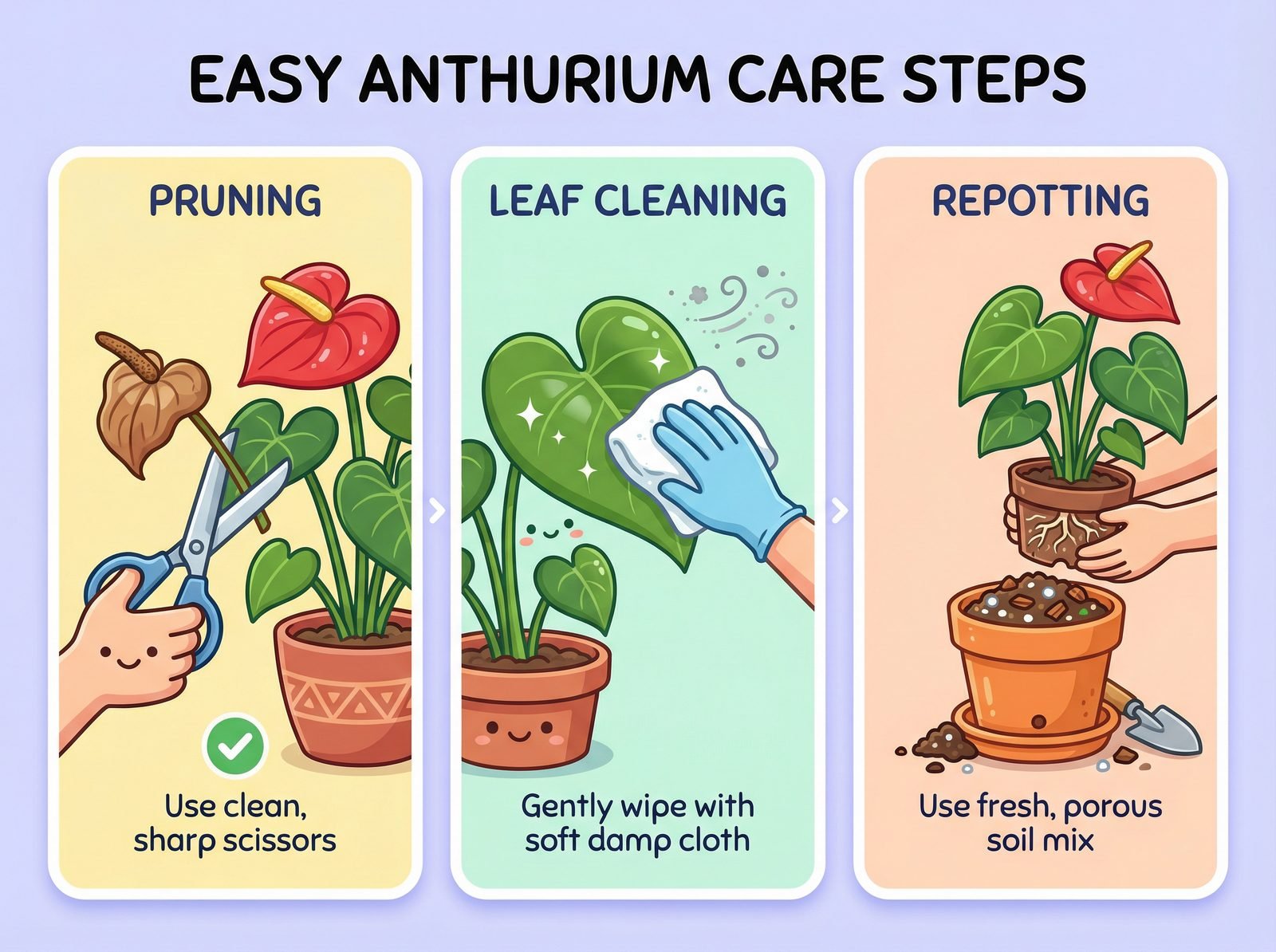
Finally, keep an eye out for common houseplant pests such as spider mites, mealybugs, and aphids. Because of their large leaves, Anthuriums can also collect dust. Wiping the leaves gently with a damp, soft cloth every few months not only keeps the plant looking beautiful but also helps it photosynthesize efficiently and deters pests.
Safety Note: Anthuriums are toxic to pets and humans if ingested. Be sure to place them out of reach of curious cats, dogs, and small children.
By following this complete anthurium plant care guide, you will be rewarded with a spectacular, long-living plant that brings a continuous splash of tropical color to your indoor garden.
Quick Reference Care Table
| Care Factor | Requirement |
|---|---|
| Light | Bright indirect light; no direct sun |
| Watering | When top 50–75% of soil is dry |
| Humidity | 60–80%; mist or use humidifier |
| Temperature | 65–80°F (18–27°C) |
| Soil | Coarse, porous, well-draining mix |
| Fertilizer | Monthly (spring/summer), half-strength |
| Repotting | Every 2–5 years |
| Toxicity | Toxic to pets and humans |
