
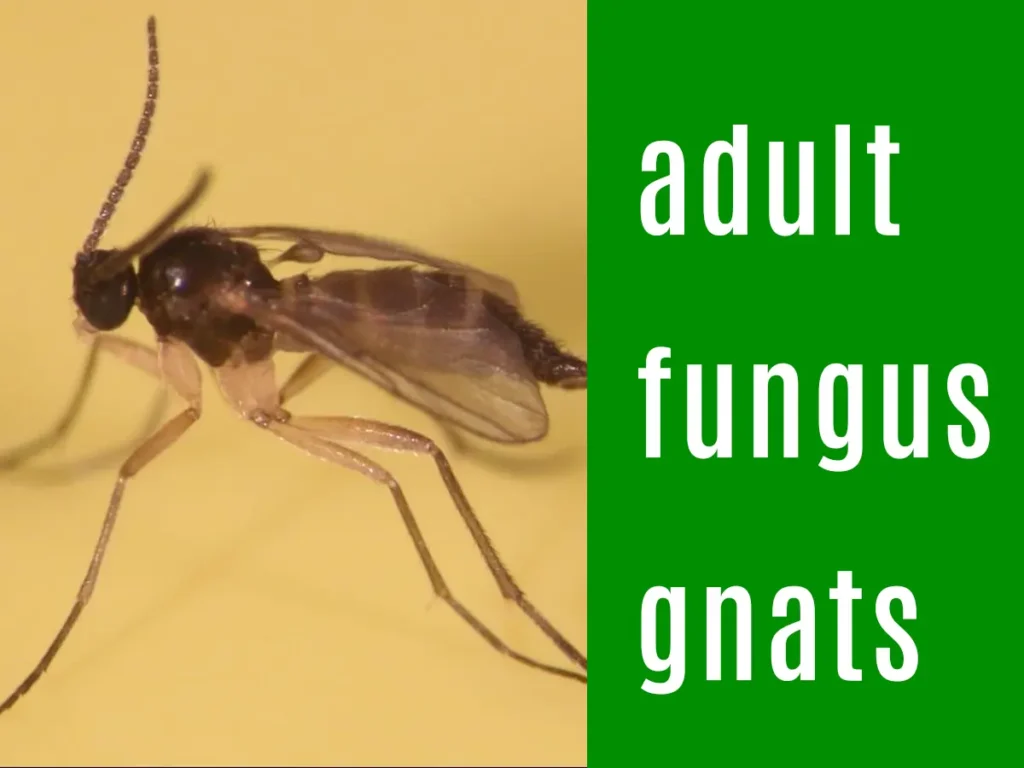
Fungus gnats are tiny, dark, mosquito-like flies that hover around houseplants and run across the soil surface. The adults are mostly a nuisance, but the larvae can damage roots—especially in seedlings, cuttings, and stressed plants. The good news: you can eliminate them reliably with a simple, repeatable routine.
1) Confirm It’s Fungus Gnats (Not Fruit Flies)
Before you treat, make sure you’re targeting the right pest.
Fungus gnat signs
- Adults hover near soil and fly in short, weak bursts.
- You see them most when you water or disturb the pot.
- Larvae (harder to see) live in the top 1–2 inches (2–5 cm) of moist mix; they’re small, translucent worms with a dark head.
Common look-alikes
- Fruit flies: usually swarm kitchen/fruit/garbage, not soil; stronger flyers.
- Shore flies: often around very wet conditions; adults are more robust; less common indoors.
Quick ID test (2 minutes)
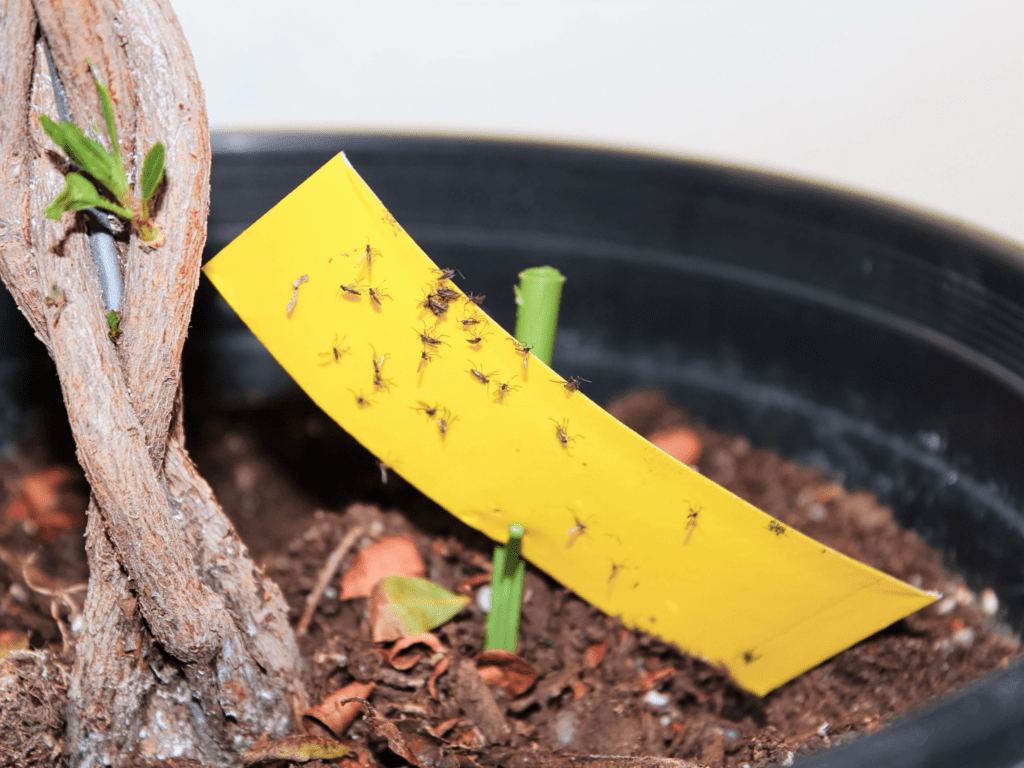
- Place a yellow sticky trap at soil level for 24–48 hours.
- If traps catch small black flies near plants, you’ve likely got fungus gnats.
2) Understand the Enemy: The Life Cycle (Why “One Treatment” Fails)
Fungus gnats reproduce fast because the larvae thrive in consistently damp organic potting mix.
- Adults lay eggs in moist media.
- Larvae feed on fungi, decaying matter, and sometimes tender roots.
- Pupae develop in soil.
- New adults emerge and repeat the cycle.
A single treatment may kill adults but not eggs/larvae. The goal is to break the cycle for 2–4 weeks while you reduce soil conditions that support them.
3) Your 3-Phase Game Plan
Phase A — Immediate Knockdown (Days 1–3)
You’ll reduce adult numbers quickly so the problem feels under control.
- Deploy sticky traps (non-negotiable)
- Put traps at soil height, not up in the air.
- Use 1–2 per pot (more for large planters).
- Replace when covered or dusty.
- Let the top of the soil dry more than usual
- For most houseplants, allow the top 1–2 inches to dry before watering again.
- This deprives larvae of the moisture they need.
- Quarantine the worst offenders
- Move heavily infested plants away from others to prevent spread.
What to expect: You’ll catch lots of adults in the first week. That’s normal—and useful feedback that your traps are working.
Phase B — Larvae Elimination (Week 1–3)
This is where you actually solve the infestation. Pick one primary larval treatment and do it consistently.
Option 1: BTI Drench (Most Practical for Home Use)
BTI (Bacillus thuringiensis israelensis) is a biological control that targets gnat/mosquito larvae.
How to use
- Use a BTI product labeled for larvae control (often sold for mosquito larvae).
- Mix or steep per label directions.
- Water (drench) the soil thoroughly so it reaches the larval zone.
- Repeat weekly for 2–4 weeks (or per label).
Why it works
- It kills larvae as they feed—without relying on drying the soil to extremes.
Best for
- Established houseplants, mild-to-heavy infestations, anyone who wants a low-drama method.
Option 2: Beneficial Nematodes (Great for Persistent Cases)
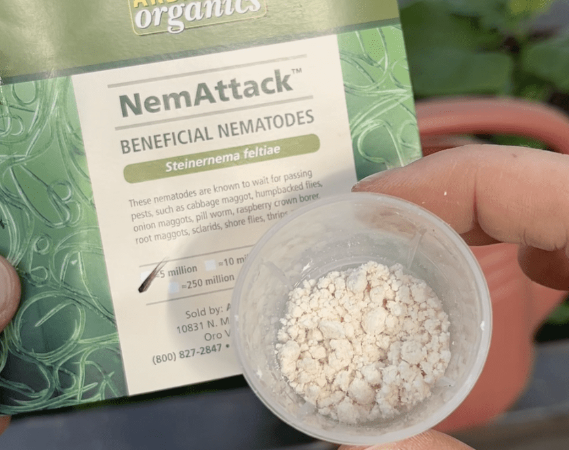
Beneficial nematodes (often Steinernema feltiae) hunt larvae in the soil.
How to use
- Apply as a soil drench per package instructions.
- Keep media lightly moist for about a week afterward (nematodes move through moisture).
- Avoid letting soil completely dry immediately after application.
Best for
- Repeated infestations, large collections, “I want a natural biological solution.”
Option 3: Repotting + Media Reset (Fastest “Hard Reset”)
If the potting mix is old, compacted, or stays wet for too long, repotting can remove eggs/larvae and fix the root cause.
Steps
- Prepare fresh, well-aerated mix (more on that below).
- Remove plant, gently shake off loose soil.
- Rinse the pot (and saucer) with hot soapy water.
- Repot, water once, then follow improved watering practices.
- Add traps + (optional) BTI for 1–2 cycles to catch stragglers.
Best for
- Plants in soggy peat-heavy mixes, root issues, chronic gnats.
Phase C — Prevention & Long-Term Control (Ongoing)
Once numbers drop, keep conditions less inviting.
- Fix the watering pattern
- Water only when the plant actually needs it.
- Use a simple check: finger test (top inch dry), pot weight, or moisture meter (as a trend tool, not a truth machine).
- Improve drainage + aeration Fungus gnats love dense, wet mix. Adjust your potting strategy:
- Ensure pots have drain holes.
- Add aeration components (perlite, pumice, bark, etc.) appropriate for your plant type.
- Avoid letting plants sit in a water-filled saucer.
- Bottom watering (useful, but not magic) Bottom watering can keep the top layer drier. It helps, but if the overall media stays wet for days, gnats can still thrive.
- Remove decaying organic debris
- Dead leaves on the soil surface = food for fungi and larvae.
- Clean the surface regularly.
4) A Simple “Do This” Schedule (Copy/Paste Routine)
Day 1
- Place sticky traps at soil height.
- Pause watering on infested plants (unless the plant is truly wilting).
- Remove dead leaves and surface debris.
Day 3–7
- Start larval control (BTI weekly drench or nematodes).
- Keep traps in place.
Week 2
- Repeat larval control.
- Check if the mix is staying wet too long; consider repotting problem pots.
Week 3–4
- Repeat larval control again if you still see adults.
- Replace traps as needed.
Goal
- You should see a steep drop in adults within 1–2 weeks, and near-zero by week 3–4 if you stayed consistent.
5) “Quick Fix” Methods: What Works, What to Avoid
Works (when used correctly)
- Sticky traps: great for adults + monitoring.
- BTI: reliable larval control.
- Nematodes: powerful biological control.
- Repotting: removes the habitat and fixes mix issues.
- Drying the top layer: reduces egg laying and larval survival.
Be careful with these
- Hydrogen peroxide drenches: can harm fine roots and beneficial microbes if too strong or repeated. If you use it, treat it as an occasional intervention—not a weekly habit.
- Sand or thick top-dressing “caps”: sometimes helps, sometimes traps moisture underneath and makes conditions worse. If your mix already dries slowly, capping can backfire.
- Systemic insecticides: not usually necessary for fungus gnats indoors, and many people want to avoid them—especially around pets/children.
6) Special Situations
Seedlings and propagation trays
This is where fungus gnats can be truly damaging.
- Use BTI early and consistently.
- Improve airflow and avoid keeping trays wet 24/7.
- Let the surface dry slightly between waterings when possible.
- Consider a sterile seed-starting mix and clean tools.
Terrariums / very high humidity setups
Drying the soil surface may be unrealistic.
- Use BTI or nematodes as primary control.
- Reduce excess organic decay.
- Improve ventilation when possible.
7) Troubleshooting: If They Keep Coming Back
If gnats persist after 3–4 weeks, one of these is usually the reason:
- Soil stays wet too long
- Root issue, pot too large, dense mix, low light, cool temperatures.
- You’re only killing adults
- Traps help, but they don’t eliminate larvae. Add BTI/nematodes.
- Reinfestation source
- Another plant, a bag of potting soil, or a consistently wet area (drip tray, decorative cachepot).
- Over-fertilized / rotting organic matter
- Excess organic decomposition can fuel fungi and larvae.
Fast diagnostic
- If you stop watering and still see adults for weeks, you likely have ongoing larval production in another pot or wet area.
Mini FAQ about Fungus Gnats
How long does it take to get rid of fungus gnats?
Usually 2–4 weeks if you treat larvae and reduce moisture. Faster if you repot and do BTI.
Do fungus gnats harm my plant?
Adults rarely. Larvae can damage roots, especially in seedlings, cuttings, and already-stressed plants.
Should I throw the plant away?
Almost never necessary. Fix the mix and watering, treat larvae, and you’re fine.
Are fungus gnats a sign of “bad” plant care?
Not always. They’re common with store-bought peat-heavy mixes and indoor conditions. Treat them as a signal that the moisture + organic mix is supporting their cycle.
