
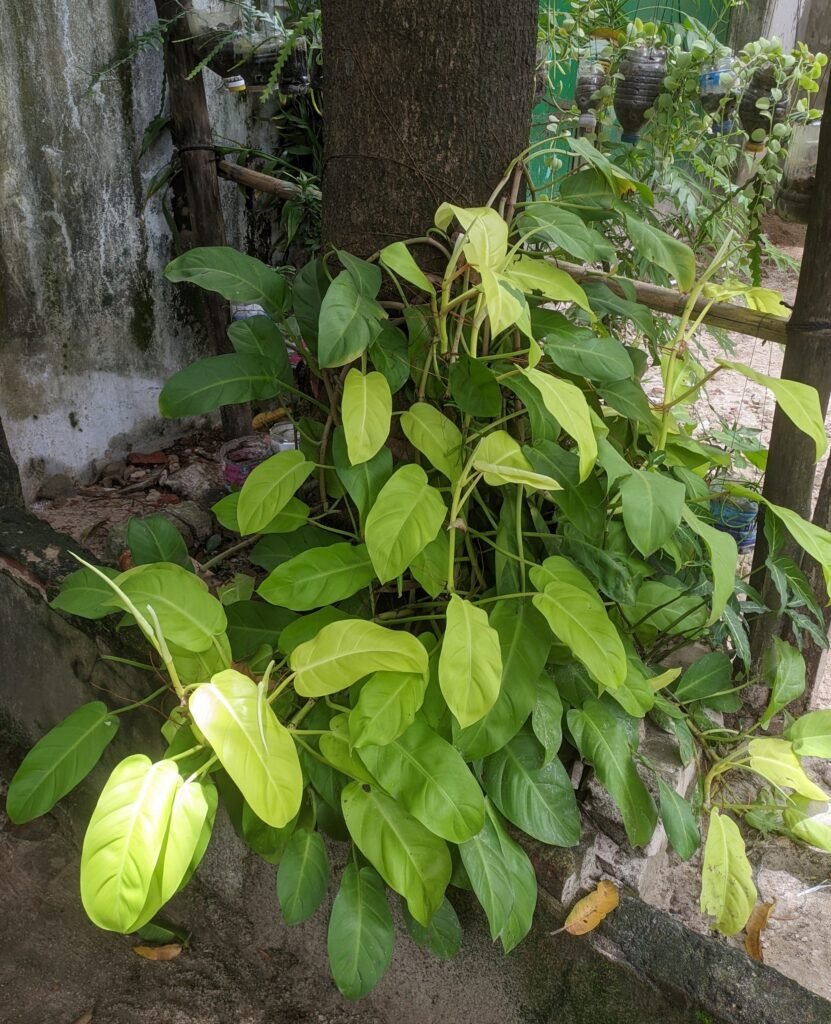
Yellowing leaves, limp vines, and “mystery” root rot usually come from one thing: care that’s too wet, too dim, or too inconsistent. Fix the basics, and Lemon Lime rebounds fast.
Give Lemon Lime philodendron bright, indirect light, water only when the top 1–2 inches of mix are dry, keep it warm (ideally 65–80°F / 18–27°C), and use a well-draining potting mix in a pot with drainage. Prune to prevent legginess, and feed lightly during active growth.
Care Requirements (At a Glance)
| Item | What to do (practical baseline) |
|---|---|
| Botanical name (verified) + common name | Philodendron hederaceum (Jacq.) Schott; commonly sold as Lemon Lime philodendron / Heartleaf philodendron ‘Lemon Lime’ |
| Light (with placement examples) | Bright, indirect: 1–3 ft (30–90 cm) back from an east window, or near a north window; a few feet back from bright south/west with a sheer. Tolerates lower light but grows slower and greener. |
| Watering baseline (what to check before watering) | Water only after top 1–2 in (2.5–5 cm) are dry and the pot feels noticeably lighter. Never let it sit in a full saucer. |
| Temperature range + cold sensitivity | Prefers typical indoor temps (~65–80°F / 18–27°C). Cold sensitive below ~50°F / 10°C; avoid chilly windows and cold drafts. |
| Humidity (what is sufficient vs risky) | Household humidity is usually fine. Aim for ~40–60% if possible; >70% without airflow raises leaf spot/rot risk. |
| Soil/substrate (drainage/aeration) | Use a well-draining, airy potting mix (potting mix + added perlite + chunky bark) so roots get oxygen. |
| Pot & drainage (must-have features) | A pot with drainage holes is non-negotiable. Use a saucer you can empty; consider a slightly smaller pot to avoid staying wet too long. |
| Fertilising (type + frequency guidance) | During spring/summer growth: a balanced houseplant fertiliser at reduced strength; pause or reduce significantly in winter. Avoid overfeeding (tip burn). |
| Toxicity/pet safety (or confirm statement) | Toxic to cats/dogs/horses (insoluble calcium oxalates). Keep out of reach; seek veterinary advice if chewed. |
| Difficulty level (Beginner/Intermediate/Advanced) | Beginner (forgiving if you avoid soggy soil and cold) |
What’s the best light for Lemon Lime philodendron indoors?
PAS micro-opener (≤25 words):
Faded colour and long gaps between leaves usually mean light is too low. Fix placement, and the plant tightens up fast.
Snippet (≤50 words):
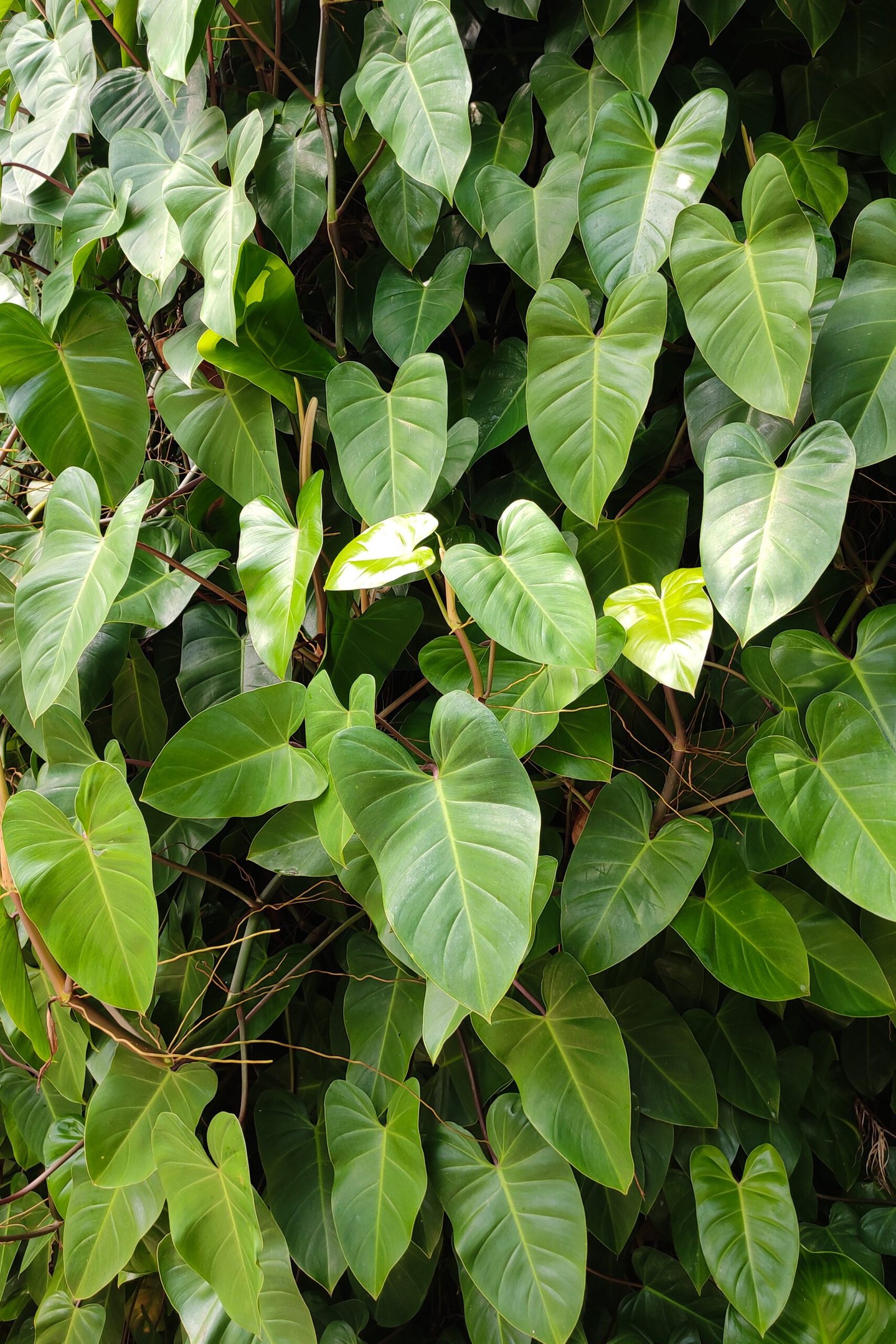
Aim for bright, indirect light to keep the chartreuse “lemon-lime” colour and compact spacing. Too little light makes vines leggy and leaves duller; harsh sun can scorch.
Dive deeper (practical steps):
A simple placement rule (no gadgets needed):
- If you can read comfortably where the plant sits during the day without straining, it’s usually in the right “bright indirect” zone.
- If the plant is thriving but turning greener, increase light gradually (move closer over 7–10 days).
- If leaves show bleached patches or crispy brown scorch, move it back from the window and use a sheer.
Best window choices:
- East window: excellent; morning sun is gentler. Place near the glass or slightly to the side.
- North window: often good for “bright shade” in many homes; expect slower growth in winter.
- South/West: workable, but avoid direct midday/afternoon sun on the leaves. Use a sheer curtain or place 3–6 ft (1–2 m) back.
Grow light strategy (if winter is dim):
- Use a white full-spectrum LED or a dedicated grow light, positioned above/near the canopy.
- Start with 8–10 hours/day, then adjust: if vines still stretch, increase duration; if leaf edges dry faster, back off intensity or distance.
- Rotate the pot ¼ turn weekly to prevent leaning and uneven growth.
Quick diagnosis by plant shape:
- Leggy vine + small leaves: increase light and prune (see pruning module).
- Leaves curling toward light: gradual move closer or add supplemental lighting.
- Scorched patches: too much direct sun or hot glass contact.
How do you water Lemon Lime philodendron without root rot?
PAS micro-opener (≤25 words):
This plant forgives missed waterings better than soggy soil. The fastest way to lose it is to “top up” on a schedule.
Snippet (≤50 words):
Water thoroughly only when the top 1–2 inches are dry, then let excess drain completely. Consistently wet soil plus low light is the classic root-rot setup.
Dive deeper (practical steps):
The two checks that prevent overwatering:
- Finger test: top 1–2 in (2.5–5 cm) should feel dry, not cool/damp.
- Weight test: lift the pot—if it feels light compared to right after watering, it’s closer to ready.
How to water (the “full soak + full drain” method):
- Take the pot to a sink/shower or use a deep tray.
- Water until it flows freely from drainage holes.
- Wait 2–3 minutes, then water once more (this helps evenly hydrate).
- Let it drain fully; empty the saucer.
When people think it needs water (but it often doesn’t):
- Leaves look slightly soft in the afternoon → check soil first; heat/light can cause temporary droop.
- A few older leaves yellow → often low light + too wet, or normal ageing; confirm by soil moisture.
Signs you’re watering too often:
- Multiple yellowing leaves at once
- Soil stays wet for >7–10 days
- Musty smell, fungus gnats, or soft stems near the soil line
Fix “stays wet too long” without repotting immediately:
- Move to brighter indirect light
- Increase airflow (small fan across the room)
- Ensure the pot truly has drainage
- Pause watering until the top half of the pot dries more than usual
What soil and pot setup keeps Lemon Lime philodendron growing steadily?
PAS micro-opener (≤25 words):
If the mix stays heavy and wet, roots suffocate—even with “perfect” watering. Soil structure is the hidden success factor.
Snippet (≤50 words):
Use a well-draining, airy mix in a pot with drainage holes. A slightly smaller pot often performs better than an oversized one because it dries at a safer pace.

Dive deeper (practical steps):
A reliable mix recipe (easy to find ingredients):
- 2 parts quality indoor potting mix
- 1 part perlite (or pumice)
- 1 part chunky orchid bark (or coconut husk chips)
This creates air pockets and faster drainage—ideal for aroids like philodendron.
Pot choice:
- Plastic pots hold moisture longer (for warm, bright rooms or for people who forget to water).
- Terracotta dries faster (helpful in low light or humid homes).
- Always prioritize drainage holes; decorative cachepots are fine only if the nursery pot drains and you empty runoff.
Right pot size (a common mistake):
- Choose a pot only 1–2 inches (2–5 cm) wider than the root ball when repotting.
- Oversized pots hold extra wet soil that roots can’t use yet.
When to repot (clear signs):
- Roots circling the pot heavily or growing out the bottom
- Water runs straight through (root mass is too tight), or the opposite: soil stays wet too long because it’s compacted/old
- Growth stalls during active season despite good light
After repotting (the safe reset):
- Water once to settle the mix, then allow a longer dry-down than usual.
- Hold fertiliser for 3–4 weeks to avoid stressing fresh roots.
How do you prune, train, and feed Lemon Lime philodendron for a fuller plant?
PAS micro-opener (≤25 words):
Long bare vines aren’t “just how it grows.” Without pruning and support, nodes space out and the plant looks sparse.
Snippet (≤50 words):
Prune above a node to trigger branching, then either let it trail or train it upward. Feed lightly in the growing season and stop over-fertilising if you see brown, crispy tips.
Dive deeper (practical steps):
Pruning for fullness (the node rule):
- Find a node (the bump where a leaf and aerial root may emerge).
- Cut just above a node on the mother plant to encourage a new growth point.
- For a fuller pot, take 2–6 cuttings and replant them back into the same container once rooted.
Training options (choose your look):
- Trailing (hanging basket): easy, tidy; vines can get leggy if light is low.
- Climbing (trellis/pole): often produces larger leaves over time and tighter spacing when light is adequate.
How to attach vines without damage:
- Use soft plant ties or clips; avoid tight wires.
- Anchor gently at the internode, not through the petiole.
Feeding: how much is “enough”:
- In spring/summer: use a balanced fertiliser at ¼–½ strength every 4–6 weeks (or follow label at reduced rates).
- In autumn/winter: reduce dramatically or pause if growth slows.
- If leaf tips brown and curl soon after feeding, suspect overfertilising or salt buildup.
Salt-buildup reset (simple and effective):
- Every 2–3 months in active growth, flush the pot with plain water until it drains freely for a minute, then drain completely.
- If using very hard water, consider alternating with filtered or rain water (when safe and available).
How do you troubleshoot problems and handle seasonal care and propagation?
PAS micro-opener (≤25 words):
Most Lemon Lime issues look dramatic but trace back to light + moisture balance. Diagnose calmly, change one variable, and watch new growth.
Snippet (≤50 words):
Use symptoms to pinpoint the cause: yellowing often means too wet or too dim, brown tips often mean salts or dry air, and pests show up when growth is stressed. Adjust care by season and propagate from healthy nodes.
Troubleshooting (common problems)
| Symptom | Most likely cause | What to do now | Prevention |
|---|---|---|---|
| Yellowing leaves (several at once) | Too wet, low light, cold stress | Let mix dry more; move to brighter indirect light; keep above ~50°F/10°C | Use airy mix; don’t water on a schedule; avoid cold windows |
| Single older leaf yellowing | Normal ageing or minor stress | Remove if it detaches easily; confirm soil isn’t soggy | Stable light/water routine; rotate plant weekly |
| Leaf curl or droop | Underwatering, hot draft, or recent move | Check soil moisture; water if dry; move away from vents | Use the weight test; keep away from heat/AC blasts |
| Brown tips/edges | Salt buildup, overfertilising, inconsistent watering, very dry air | Flush soil; reduce fertiliser strength; water more evenly | Feed lightly; flush periodically; aim ~40–60% humidity |
| Root rot risk signs (soft stem base, sour smell, persistent wetness) | Chronic overwatering + poor aeration | Unpot, trim mushy roots, repot into fresh airy mix; pause fertiliser | Drainage holes; smaller pot size; brighter light |
| Pest signals (sticky residue, white cottony spots, webbing) | Mealybugs/scale/spider mites (often in dry, stressed conditions) | Isolate plant; wipe leaves; treat with appropriate insecticidal soap per label | Inspect weekly; keep leaves clean; avoid chronic stress |
| Stalled growth in spring/summer | Light too low, rootbound, or depleted mix | Increase light; check roots; repot if crowded; feed lightly | Bright indirect light; refresh mix when it compacts |
| Small new leaves + long internodes | Insufficient light | Move closer to light or add grow light; prune to reset | Maintain higher light; train upward if desired |
Seasonal care (Spring/Summer vs Autumn/Winter)
Spring/Summer (active growth):
- Light: brightest indirect spot available; consider a grow light if your home is dim.
- Water: expect faster dry-down; keep the “top 1–2 inches dry” rule.
- Feed: light, consistent feeding (reduced strength) during active growth.
- Pest checks: weekly leaf undersides and nodes; pests multiply quickly in warm months.
Autumn/Winter (slower growth indoors):
- Light: move slightly closer to windows (still avoid harsh direct sun).
- Water: reduce frequency; the pot may take much longer to dry.
- Humidity/airflow: heating can dry air; balance humidity with airflow to avoid fungal issues.
- Temperature: keep away from cold glass and drafts; avoid dips near/below ~50°F/10°C.
When to repot (best timing + clear signs):
- Best time is usually spring to early summer when the plant rebounds quickly.
- Repot if: roots circle densely, the plant dries out too fast (severely rootbound), or the mix compacts and stays wet too long.
Propagation (verified method: stem cuttings in potting media)
Best method (verified): Short stem cuttings rooted in clean, well-drained potting media.
Materials:
- Clean scissors/pruners (sanitised)
- Small pot with drainage
- Fresh, airy potting mix (see recipe above)
- Optional: clear plastic bag/dome for humidity (with ventilation)
Step-by-step:
- Choose a healthy vine and locate a node (where a leaf and/or aerial root emerges).
- Cut a section with 1–2 nodes and at least one leaf.
- Let the cut end air dry for 10–20 minutes (helps reduce rot risk).
- Insert the node into lightly moist, airy mix; keep the leaf above the surface.
- Place in bright, indirect light and warm temperatures.
- Keep the mix lightly moist, never soggy. New roots typically form from nodes.
- After consistent new growth appears, treat it like a normal plant (water when top dries).
Common failure points (and how to avoid them):
- Cutting rots: mix too wet or too cold → use airy mix, warm location, and lighter watering.
- No rooting for weeks: light too low → move brighter (still indirect) or add a grow light.
- Wilting leaf: humidity too low at first → loosely tent with a bag and vent daily to prevent mold.
Note: Water propagation is widely practiced for philodendrons, but if you choose that route, confirm with an authoritative horticulture source before applying, then transition carefully to soil to avoid setback.
One reputable YouTube video (propagation basics)
For a practical, extension-led walkthrough of houseplant propagation (including philodendron-style cuttings), see:
https://www.youtube.com/watch?v=Wn6if-oMp8A
FAQs
Is Lemon Lime philodendron the same as heartleaf philodendron?
Lemon Lime is commonly sold as a bright chartreuse form of heartleaf philodendron (Philodendron hederaceum). Care is broadly the same as other heartleaf types: bright, indirect light; an airy mix; and watering after partial dry-down. What changes is how the plant looks under different light levels—Lemon Lime typically holds its brighter colour better with more indirect light, while lower light can push it greener and leggier. If labels conflict at the store, prioritise matching care to Philodendron hederaceum rather than the marketing name.
Why is my Lemon Lime turning darker green?
The most common reason is insufficient light. Many plants deepen in green as chlorophyll increases to capture more available light. Move the plant gradually to brighter indirect conditions, rotate weekly, and prune leggy stems to restart tighter growth. Also check feeding: excess nitrogen can deepen green, though light is usually the main driver. Avoid “fixing” colour by cutting water—underwatering can stress the plant and cause droop or leaf loss. Focus on brighter indirect light and consistent watering only when the top layer dries.
Is Lemon Lime philodendron safe for pets?
No—philodendrons are toxic to cats and dogs due to insoluble calcium oxalates. Chewing can cause oral irritation, drooling, vomiting, and difficulty swallowing. The safest approach is placement: high shelves, hanging baskets, or rooms pets can’t access. If a pet mouths the plant, remove any plant material from the mouth (carefully), offer water, and contact a veterinarian or poison control for guidance based on symptoms. If pets are persistent chewers, consider swapping to a verified non-toxic plant list for the same area.
How do I make it bushier instead of one long vine?
Bushiness comes from branching, and branching comes from pruning at nodes. Cut a vine just above a node to trigger new growth points, then root the removed sections and plant them back into the same pot to “fill in” volume. Pair that with brighter indirect light to keep node spacing tight. If the plant is in low light, it may keep producing long internodes no matter how much you prune—so fix light first, then prune. A small trellis or pole can also help you direct growth upward for a denser look.
References
- Philodendron hederaceum (Jacq.) Schott (Plants of the World Online — Royal Botanic Gardens, Kew) https://powo.science.kew.org/taxon/urn:lsid:ipni.org:names:87797-1
- Heartleaf Philodendron (UF/IFAS Gardening Solutions — University of Florida) https://gardeningsolutions.ifas.ufl.edu/plants/houseplants/heartleaf-philodendron/
- How do I care for a philodendron? (Yard and Garden — Iowa State University Extension and Outreach) https://yardandgarden.extension.iastate.edu/faq/how-do-i-care-philodendron
- Heartleaf Philodendron (ASPCA Animal Poison Control — Toxic and Non-Toxic Plants) https://www.aspca.org/pet-care/aspca-poison-control/toxic-and-non-toxic-plants/heartleaf-philodendron
- Philodendron hederaceum var. hederaceum (RHS Gardening — Royal Horticultural Society) https://www.rhs.org.uk/plants/254662/philodendron-hederaceum-var-hederaceum/details
