
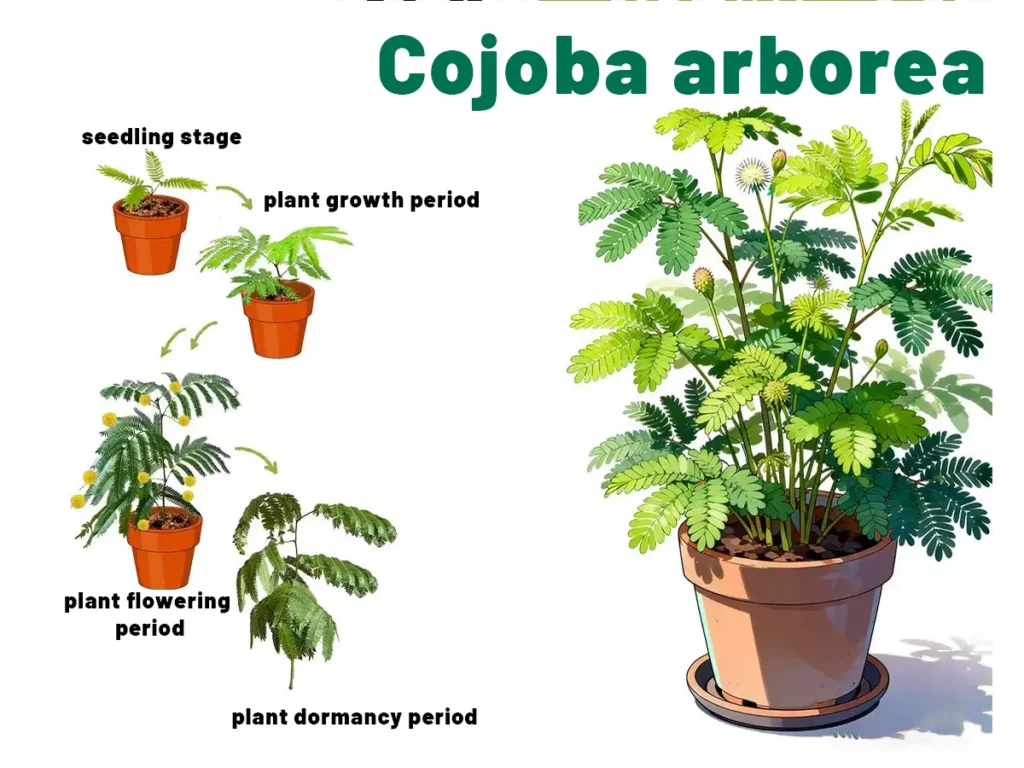
The Monkey Earring Plant is one of those houseplants that looks more impressive the closer you get. At first glance, it’s just a light, feathery little tree in a pot. But when you lean in, you notice the tiny leaflets arranged in perfect order, the layered canopy, and the way the leaves seem to “breathe” as light and humidity change throughout the day.
You might also see it sold as Monkey Ear Tree or Everfresh Tree. In many houseplant collections it’s labelled Cojoba arborea, a small evergreen tree from the pea family that adapts surprisingly well to life in a container. Under the right conditions it grows into an elegant indoor tree with a soft, fern-like crown and a gentle, almost rhythmic character.
This guide walks through everything you need to know to keep a Monkey Earring Plant happy indoors: how it grows, what kind of light and soil it prefers, how to water and feed it through different stages, how to prune it into a neat canopy, how to propagate it by air layering, and how to deal with common problems like brown edges, yellow leaves and pests.
What the Monkey Earring Plant Looks Like
The first thing you notice is the foliage. The Monkey Earring Plant has bipinnate leaves, which means each leaf is divided into several side branches, and each of those is lined with tiny leaflets. When the plant is healthy, these leaves sit in layers around the stem like little green umbrellas. From a distance it looks delicate, but the overall structure is quite architectural.
On a mature plant:
- Leaves form soft tiers from top to bottom
- Each tier is made up of dozens of miniature leaflets
- The overall silhouette feels light and airy rather than heavy or bulky
In good conditions the plant can also produce clusters of small, puffball-like flowers followed by slender pods. As they mature, the pods twist into curves and loops that resemble earrings, which is where the common name comes from. Indoors, you may or may not see flowering every year, so it’s best to treat blooms as a bonus rather than a guarantee.
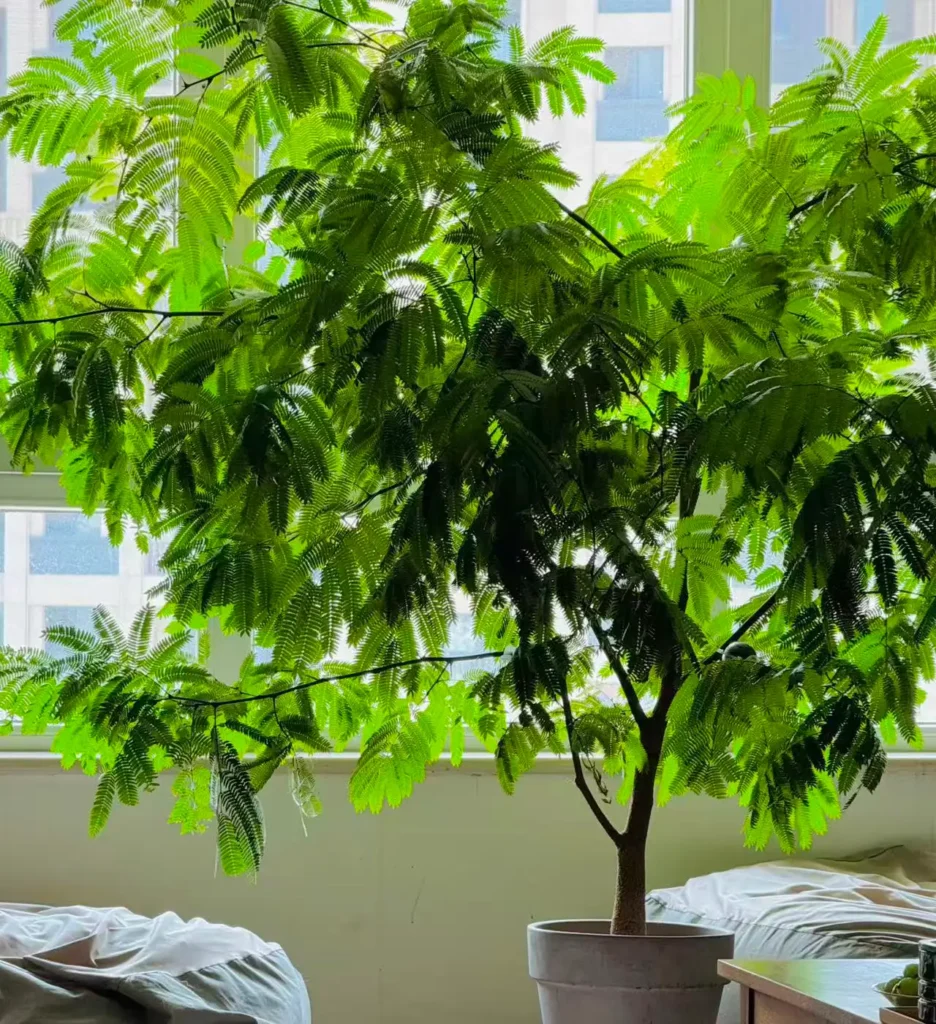
In a pot, Monkey Earring Plant usually stands between 80 and 150 cm tall. You can keep it low and bushy or encourage a more tree-like form by pruning; we’ll come back to that later.
Light: Bright but Gentle
Light is one of the most important parts of getting this plant right. Monkey Earring Plant likes bright, indirect light—enough to keep the leaves dense and compact, but not so strong that the tiny leaflets scorch.
Good spots include:
- A position near an east-facing window where it gets morning sun
- A little back from a bright south- or west-facing window with a sheer curtain
- A bright north-facing room with no deep shade
A few practical signs:
- If the canopy starts to look thin and stretched, the plant probably needs more light.
- If the tips of the leaflets bleach or burn, or the leaves fold tightly during the day while the soil is still moist, it’s likely getting too much direct sun or too much heat.
Think of it like this: strong daylight is great, but the plant should never feel like it’s sitting under a magnifying glass at midday.
Temperature and Humidity
Monkey Earring Plant enjoys the same range that most people find comfortable indoors.
- Temperature: Aim for roughly 18–28°C (64–82°F).
- Avoid cold drafts, unheated window ledges in winter, or spots right next to air-conditioning vents.
- Short dips a little below this range aren’t fatal, but long periods below about 10°C (50°F) will eventually damage the plant.
Humidity makes a noticeable difference in how good the foliage looks. This plant is happiest in moderately humid air, around 50–65%. When the air gets too dry for too long, the first symptoms are:
- crisp or brown leaflet tips
- edges that look dry and tired, even when the soil is fine
You can gently raise humidity by grouping plants together, placing the pot on a pebble tray with water below the stones, or running a small humidifier nearby during the driest months. There’s no need to turn your living room into a jungle glasshouse; a small boost is usually enough.
Soil: Loose, Fertile, and Well-Drained
Although the foliage looks delicate, the roots are strong and active—as long as they get enough air. Monkey Earring Plant dislikes heavy, compact soil and sitting in water. The ideal mix is light, slightly acidic, and free-draining, with enough organic matter to stay moist but not soggy.
You can mix your own potting substrate along these lines:
- 40% peat moss or coco peat
- 30% perlite or pumice for air pockets
- 20% fine bark or other chunky organic material
- 10% compost or worm castings for slow, gentle nutrition
Key points:
- Always choose a pot with a drainage hole.
- Avoid pure garden soil, which compacts quickly in containers.
- If water takes a long time to disappear from the surface after watering, the mix is probably too dense.
When you first bring a plant home, it may be in standard nursery soil. Once it has settled and started to grow, repotting into a more breathable mix usually results in stronger, healthier foliage.
Watering: Deep Drinks, Not Constant Sips
Most problems with Monkey Earring Plant come from watering—either too much, too often, or both.
The goal is a pattern of thorough watering followed by a period where the top layer of soil can dry slightly. The plant prefers this to constantly damp conditions.
A simple routine:
- Check the soil with your finger. When the top 2–3 cm feel dry, it’s time to water.
- Water slowly and evenly until moisture runs from the drainage hole.
- Let the excess drain and empty any water that has collected in the saucer after 10–15 minutes.
In warm, bright conditions this might mean watering every few days. In cooler or lower-light months the plant will use water much more slowly, and watering intervals will stretch out.
Some warning signs:
- Soil always wet + yellow leaves dropping from the lower part of the plant → likely overwatering or poor drainage.
- Leaves drooping, soil very light and pulling away from the pot edges → plant is too dry; re-wet the soil thoroughly and adjust the schedule.
Monkey Earring Plant would rather be allowed to dry a little between waterings than live permanently in saturated compost.
Fertilizing Through the Growth Cycle
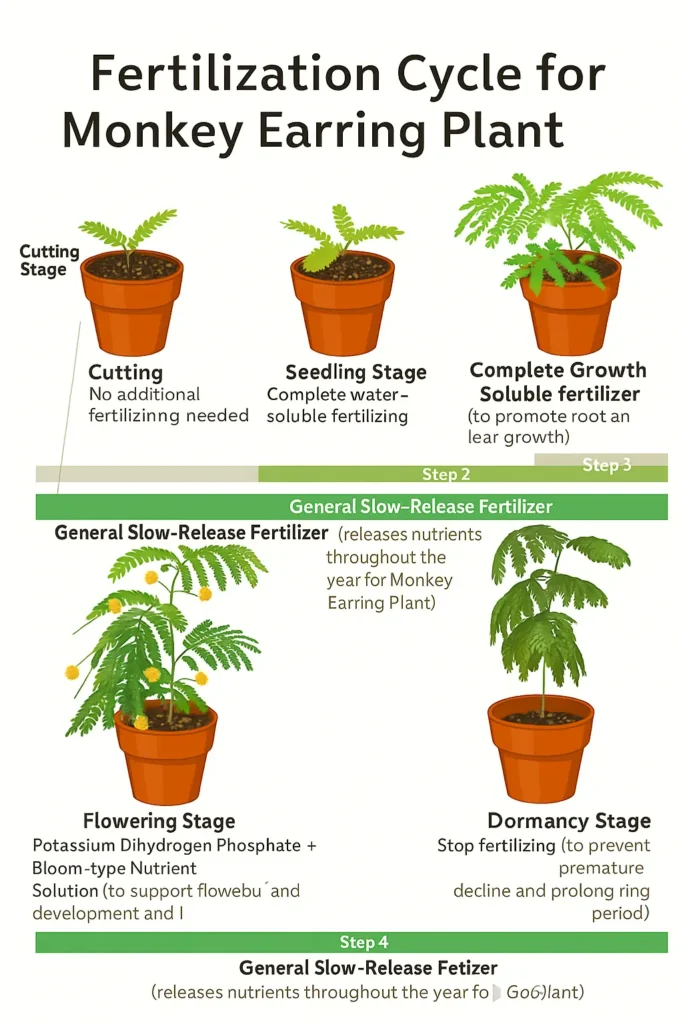
Feeding is easiest if you think in stages—young plant, actively growing plant, flowering plant, and resting plant. The same plant will move through all of these states over the course of a year or two.
Young plant or recent transplant
For very small plants or those that were recently potted up:
- Use a mild, balanced liquid fertilizer at half strength every 3–4 weeks in the growing season.
- The aim is to support root development and new foliage without overwhelming the young root system.
Actively growing plant
Once the plant has a good root system and is putting out new layers of leaves:
- Feed with a balanced liquid fertilizer every 2–3 weeks during spring and summer.
- You can also add a slow-release granular fertilizer to the surface of the soil once or twice a year as a base layer.
Flowering stage (if it blooms)
If your Monkey Earring Plant produces buds and flowers:
- Switch to a formula with a little more phosphorus and potassium to support buds and pod development.
- Keep the concentration on the gentle side; heavy feeding is not necessary.
Rest or low-light season
During winter, or whenever the plant is clearly growing very slowly:
- Pause fertilizing.
- Keep the soil slightly drier than in the main growing season.
Roots that are not actively growing cannot use a lot of nutrients, so feeding during this time tends to do more harm than good.
Pruning: From Skinny Stick to Elegant Mini Tree
One of the best things about Monkey Earring Plant is how well it responds to pruning. With a bit of regular attention, you can turn a skinny young plant into a full, balanced mini-tree.
Pinching the tip to encourage branching
When the main stem reaches a height you’re happy with:
- Pinch or cut the soft, growing tip.
This interrupts the plant’s habit of putting all its energy into the top and encourages side buds to break lower down. Over time you get:
- more side branches
- a thicker, rounder crown
- a plant that looks like a tree rather than a long, single stem
Thinning the interior
As the canopy builds up, branches in the middle can become dense and shaded. Every now and then, it helps to:
- remove thin, weak shoots from the interior
- cut away crossing branches that rub against each other
This improves airflow, reduces the risk of pests and disease, and keeps the layered structure clear and attractive.
Shaping for looks and health
You can also selectively shorten long or awkward branches to keep a smooth outline. The goal is a balanced shape where:
- the crown is full but not cluttered
- light can still filter through the layers of leaves
- there are no obviously bare or crowded sections
The best time for more serious pruning is late spring to midsummer, when the plant is growing strongly and can replace lost leaves quickly. Avoid heavy pruning in the middle of winter.
After a bigger pruning session, it’s often helpful to:
- reduce watering slightly for a short time
- make sure the plant is in good light so new growth is compact
Cojoba arborea Propagation by Air Layering
Air layering is a great way to propagate a Monkey Earring Plant if you have a branch you’d like to turn into a new plant without sacrificing the look of the parent.
Here’s a straightforward method:
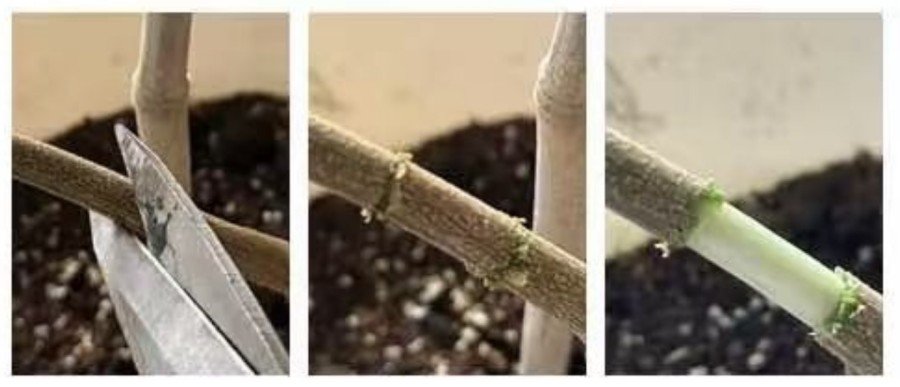
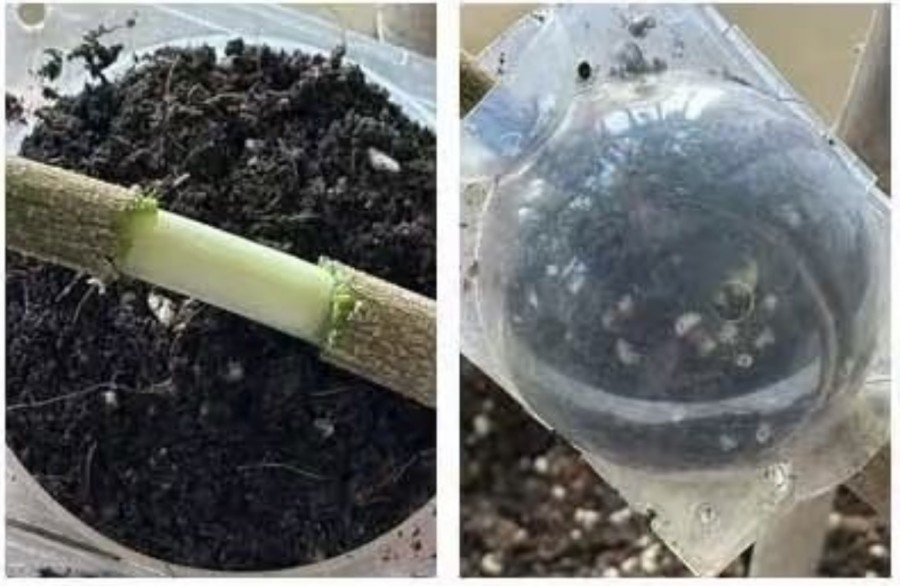
- Choose a healthy branch Pick a firm, woody section that’s thick enough to handle a bit of work and long enough to give you a good cutting.
- Make a ring cut About where you’d like the new root system to form, carefully remove a ring of bark around the stem, about 1–1.5 cm wide. You should see the pale inner wood exposed.
- Add moist rooting medium Take a handful of moist sphagnum moss or a mix of peat and perlite. Pack it snugly around the exposed section of stem so it forms a ball roughly the size of a small fist.
- Wrap and seal Wrap the moss ball with plastic film or an air-layering shell and tie both ends so the moisture stays trapped. The interior should be dark and evenly damp, not dripping wet.
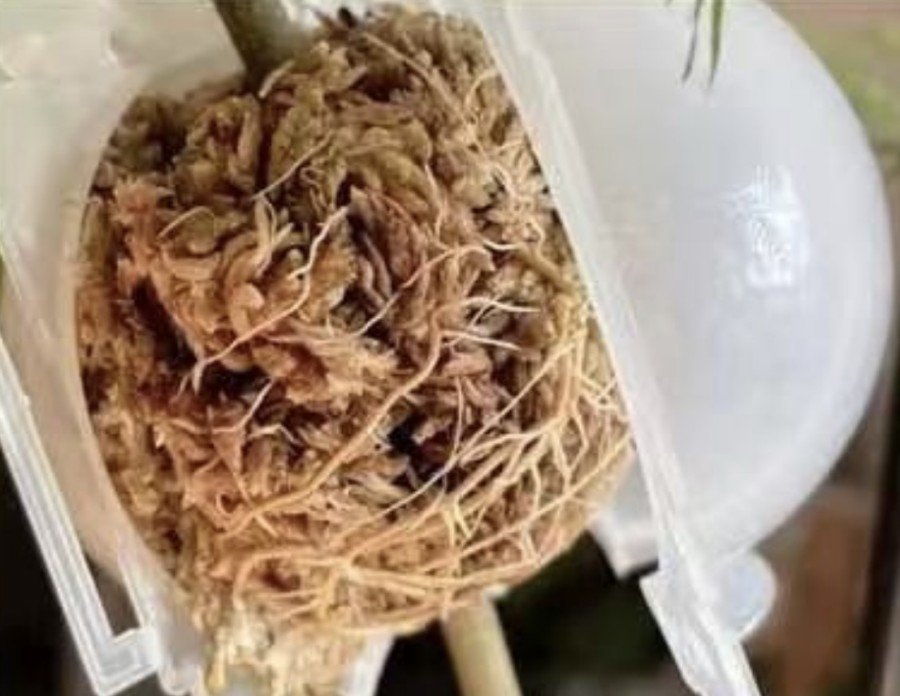
- Wait for roots to form Over the next few weeks, roots will gradually grow into the moss. You can gently open one side to check, or watch through a clear shell. When the ball is full of white roots, it’s ready.
- Cut and pot up Cut the branch just below the rooted section. Remove the wrapping carefully, keeping as much moss and root intact as you can, and pot the new plant into a small container with well-draining soil. Keep the newcomer in bright, indirect light and slightly higher humidity until it settles.
The parent plant usually fills in quickly, especially if you combine air layering with light pruning to encourage new branches.
Common Problems and How to Fix Them
Even with good care, every plant will send up a signal or two from time to time. Here are the main issues you’re likely to see and what they usually mean.
Brown edges and dry tips
This is one of the most frequent complaints.
Typical causes:
- air that is too dry for too long
- strong, direct sun burning the very fine leaflets
- underwatering or big swings between very wet and very dry soil
What helps:
- raise humidity a little around the plant
- soften the light with a sheer curtain if it’s near a strong window
- adjust watering so the soil dries slightly between deep drinks, but doesn’t alternate between bone-dry and waterlogged
Yellowing leaves and leaf drop
If older leaves turn yellow and drop from the lower part of the plant, especially when the soil feels wet and heavy, overwatering is usually the culprit.
What to check:
- Does water sit in the saucer after you water?
- Does the pot feel very heavy and cold for days at a time?
- Is the soil dense and slow-draining?
If the answer to any of these is yes, let the soil dry more before the next watering, and consider repotting into a lighter mix. Make sure excess water can always drain away.
Pests
Monkey Earring Plant isn’t the most pest-prone houseplant, but in dry, still air it can attract:
- spider mites
- scale insects
Early signs include tiny speckles on the leaves, fine webbing, or sticky patches.
What to do:
- Rinse the foliage gently with lukewarm water.
- Wipe leaves with a damp cloth and a little mild, plant-safe soap.
- Remove scale insects with a cotton swab dipped in alcohol.
- Improve air movement and humidity to make the environment less attractive to spider mites.
Regularly checking the undersides of leaves is the best way to catch any problem early.
Using Monkey Earring Plant in Your Space
Because the leaves are so fine and layered, this plant pairs beautifully with broader, bolder foliage. It works well as:
- a soft, airy backdrop in a mixed plant corner
- a light-crowned tree beside a sofa or reading chair
- a vertical accent in a narrow spot that can’t take a bulky plant
It has enough presence to stand alone, but it also plays nicely with others without visually dominating them.
Final Thoughts
Monkey Earring Plant (Cojoba arborea) combines a lot of things people love about indoor plants: movement, structure, fine texture and a calm, green presence. It isn’t the easiest plant on earth, but it’s also not as demanding as its delicate foliage suggests.
If you give it:
- bright, indirect light
- a loose, breathable potting mix
- deep but not constant watering
- moderate humidity
- a bit of seasonal pruning
it will reward you with a fresh, layered canopy that looks good all year and quietly animates the room.
