
Low margins usually come from slow growth, high loss rates, and plants that don’t ship well. The fix is choosing fast, forgiving houseplants that propagate reliably and sell year-round.
For most small sellers, the best “profit” plants are common foliage houseplants with steady demand, simple propagation, and low shrink: pothos, heartleaf philodendron, Monstera deliciosa, snake plant, and ZZ plant—priced as healthy, well-rooted starter pots.

Care Requirements (At a Glance)
| Care Requirements (At a Glance) | Pothos | Heartleaf Philodendron | Monstera deliciosa | Snake Plant | ZZ Plant |
|---|---|---|---|---|---|
| Botanical name (verified) + common name | Epipremnum aureum (pothos / devil’s ivy) | Philodendron hederaceum (heartleaf philodendron) | Monstera deliciosa (Swiss cheese plant) | Dracaena trifasciata (syn. Sansevieria trifasciata) (snake plant) | Zamioculcas zamiifolia (ZZ plant) |
| Light (with placement examples) | Bright indirect; tolerates medium. East window or 1–2 m back from south/west. | Bright indirect; tolerates medium. East/north window, or under a modest grow light. | Bright indirect. Near an east/south window with sheer; rotate for even growth. | Bright indirect to low; handles shade. Works further from windows. | Medium to bright indirect; tolerates lower light. Avoid harsh direct sun. |
| Watering baseline (what to check before watering) | Water when top 2–5 cm is dry; don’t keep constantly wet. | Water when top 2–5 cm is dry; reduce in winter. | Water when top 3–5 cm is dry; avoid soggy soil around aerial-root nodes. | Water only after mix dries deeply; err on the dry side. | Water only after mix dries deeply; overwatering is the #1 loss driver. |
| Temperature range + cold sensitivity | Best ~18–29°C; protect from <13°C. | Best ~18–29°C; protect from cold drafts. | Best ~18–29°C; protect from <13°C and cold window glass. | Comfortable ~16–29°C; dislikes prolonged cold. | Best ~18–29°C; protect from chilling and wet-cold soil. |
| Humidity (what is sufficient vs risky) | Normal home humidity is fine; very high humidity + wet soil increases rot risk. | Normal home humidity works; stable airflow helps. | Moderate humidity helps leaf size; stagnant high humidity can invite fungal issues. | Normal humidity fine; avoid misting that wets the crown repeatedly. | Normal humidity fine; high humidity isn’t necessary. |
| Soil/substrate (drainage/aeration) | Airy potting mix: potting soil + perlite/bark for oxygen. | Airy mix with bark/perlite; avoid heavy peat-only mixes. | Chunky aroid mix (bark + perlite + potting base) for fast drainage. | Very free-draining mix (add perlite/pumice); avoid dense, wet mixes. | Fast-draining mix; add perlite/pumice/bark; never “mud.” |
| Pot & drainage (must-have features) | Drainage holes required; nursery pots inside cachepots are fine. | Drainage holes; upsize only when rootbound. | Drainage holes; stake/moss pole optional for larger leaves. | Drainage holes; smaller pot is safer than oversized. | Drainage holes; avoid oversized pots that stay wet for weeks. |
| Fertilising (type + frequency guidance) | Balanced fertilizer at low dose in spring/summer; pause in low light. | Balanced feed in spring/summer; light dosing is safer than “strong.” | Balanced feed in active growth; avoid feeding a stressed plant. | Light feeding in warm, bright months only. | Light feeding in warm, bright months only. |
| Toxicity/pet safety (or confirm statement) | Commonly reported as toxic if chewed; confirm with an authoritative poison-control plant database before advising customers. | Same. | Same. | Same. | Same. |
| Difficulty level (Beginner/Intermediate/Advanced) | Beginner | Beginner | Intermediate | Beginner | Beginner–Intermediate (slow, but hardy) |
Core care logic that makes these 5 plants profitable
Identification cues (and common mix-ups).
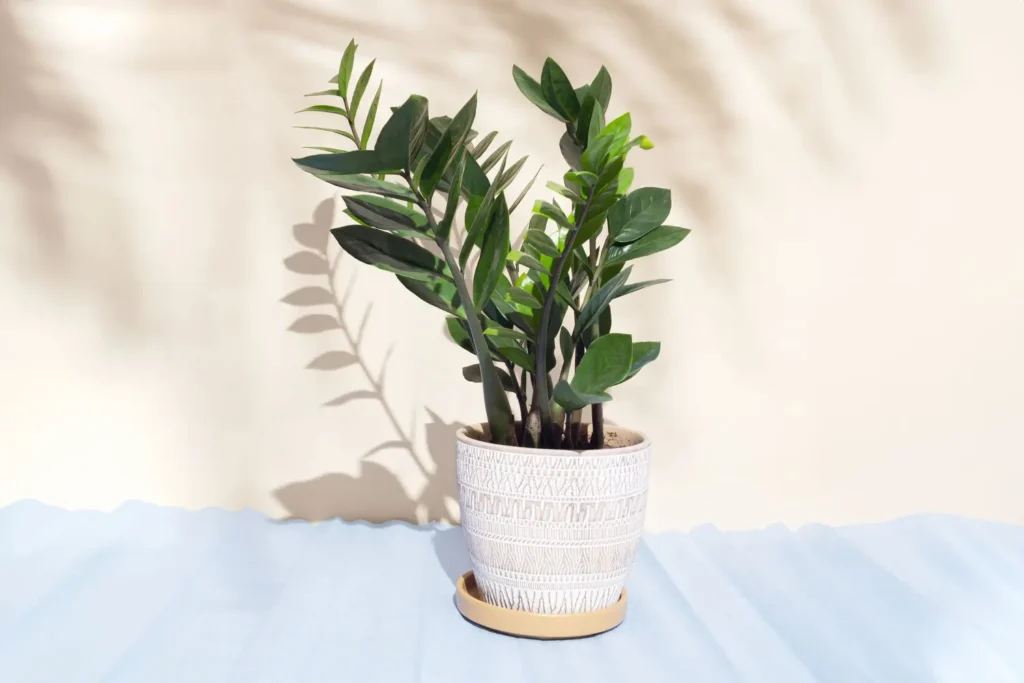
Pothos and heartleaf philodendron are often confused because both trail and root at nodes. Pothos typically has thicker, waxier leaves and a distinct “winged” petiole; heartleaf philodendron tends to have thinner, softer heart-shaped leaves with longer internodes. Monstera deliciosa is identified by large leaves that develop splits/holes (fenestrations) as the plant matures. Snake plant forms upright, sword-like leaves from a rhizome. ZZ plant has glossy leaflets along thick, upright stems emerging from underground rhizomes.
Native range/habitat (why it matters indoors).
These plants are popular because their natural habitats map well to indoor conditions: pothos, heartleaf philodendron, and Monstera are tropical climbers adapted to filtered light; snake plant and ZZ plant tolerate drier cycles and lower light compared with many tropical foliage plants. That resilience lowers loss rates and returns.
Light placement that sells “quality.”
Profit is easier when your stock looks consistent: shorter internodes, fuller growth, and clean leaves. For pothos/philodendron, brighter indirect light produces denser vines and more nodes per cutting. For Monstera, brighter indirect light supports larger leaves and cleaner fenestration. Snake and ZZ hold up in lower light, but they still look best with moderate indirect light.
Watering checks that reduce shrink.
Most small growers lose money to rot, not lack of growth. Use the same rule across all five: check dryness before watering (finger test or pot weight), then water thoroughly and let excess drain. For snake and ZZ, be even stricter: allow the pot to dry deeply and avoid watering “on a schedule.”
Temperature, airflow, and cold thresholds.
Cold + wet soil is a common failure mode, especially for ZZ and snake plant. Keep winter plants away from cold window glass and HVAC blasts. Stable warmth and gentle airflow reduce fungal problems and keep growth predictable.
Substrate and pot choice (why “air” = margin).
Airy mixes are a profitability tool: they reduce root loss, speed recovery after shipping, and shorten the time to a sellable plant. Drainage holes are non-negotiable.
Fertilising: keep it boring.
Overfeeding causes weak growth and salt stress that shows up as ugly leaves—harder to sell. Light, consistent feeding during active growth beats strong doses.
Toxicity/handling.
Because toxicity varies by species and household, the safest practice is to label plants and direct buyers to an authoritative poison-control plant database—especially if you sell to pet owners.
Which plants sell fastest with the lowest loss rates?
You can’t out-market slow, fragile plants forever. Choose plants that look good in a 4–6 inch pot, tolerate missed waterings, and still arrive healthy after shipping.
These five check the “fast + forgiving” box in different ways:
- Pothos: fast rooting, easy to bulk up, and forgiving if a buyer under-waters.
- Heartleaf philodendron: similar to pothos, with strong demand for trailing plants in small spaces.
- Monstera deliciosa: higher perceived value; sells well as a rooted node/young plant when grown cleanly.
- Snake plant: slow-ish, but low maintenance and low loss once established; great for “low light” buyers.
- ZZ plant: slow, but extremely durable in homes and offices; low return rate when watered correctly.
Practical selection rule (for profit):
- If you have limited space: prioritize pothos + heartleaf philodendron for volume.
- If you want higher ticket per pot: add Monstera deliciosa.
- If you want low-care buyers and fewer complaints: keep snake + ZZ as “forgiving” options.
How do you price, package, and ship plants for profit?
If you don’t control packaging and shrink, your “best sellers” become your biggest time sink.
A simple profit model per plant batch:
- Revenue = (sell price) × (units sold)
- Costs = pots + substrate + labels + packaging + heat packs (if needed) + payment fees + labor
- Shrink = dead stock + damage + refunds + replacements
Pricing that matches buyer expectations
- Price your consistency, not just the species: rooted, actively growing, pest-checked, and clean leaves.
- Offer two tiers:
- Starter pots (high turnover): small, rooted, easy-to-ship.
- “Ready to display” pots (higher margin): fuller, staked (Monstera), or multi-plant pots (pothos/philodendron).
Packaging essentials
- Ship only well-rooted plants (less wobble, less breakage).
- Keep foliage dry when boxing to reduce rot and fungal spots.
- Immobilize the pot (paper stuffing or molded inserts) so the rootball doesn’t shear.
Shipping risk controls
- Avoid shipping freshly watered snake/ZZ in cold weather.
- If winter shipping is unavoidable: ship drier, insulate the box, and use heat packs only when truly needed (misuse can cook plants).
How do you build a propagation system that scales safely?
Scaling is less about “more cuttings” and more about preventing disease and bottlenecks.
Mother plant strategy
- Keep mothers in brighter indirect light to produce shorter internodes and more nodes (more cuttings per meter of vine).
- Rotate mothers through “rest” and “cut” cycles so they don’t become weak, leggy, and pest-prone.
Propagation workflow (simple and repeatable)
- Sanitation first: clean tools and containers; don’t mix questionable cuttings with healthy batches.
- Standardize cutting size: consistent node count = predictable rooting time.
- Use airy media: perlite/soilless mixes reduce rot and speed root oxygenation.
- Label everything: date, mother ID, and method (water vs medium).
- Harden off before sale: move rooted cuttings to normal humidity and brighter indirect light so they ship better.
Method fit (what works best for each)
- Pothos & heartleaf philodendron: stem cuttings with at least one node.
- Monstera deliciosa: stem cuttings with a node (and ideally an aerial root nub) for reliability.
- Snake plant: division for speed and true-to-type; leaf section cuttings are possible but can be slower and may not preserve variegation.
- ZZ plant: division is fastest; leaf cuttings can work but are slower.
What legal and ethical rules matter when selling plants?
Ignoring plant IP and biosecurity rules can wipe out profits quickly.
Plant patents and protected cultivars
- Some cultivars (especially trendy variegated types) may be protected by plant patents or trademarks. Propagating and selling protected plants without permission can be illegal.
- Practical rule: if a plant tag includes ™/® or “PP” (plant patent), treat it as protected until proven otherwise.
Pest and disease responsibility
- Selling plants with pests (thrips, mites, scale) damages reviews and can create local spread. Quarantine new stock, inspect mothers, and discard heavily infested plants instead of “saving” them.
Labeling
- Label botanical name, light, and watering baseline. For potentially toxic plants, include a simple safety note directing buyers to an authoritative poison-control plant database.
Troubleshooting
| Symptom | Most likely cause | What to do now | Prevention |
|---|---|---|---|
| Cuttings turn mushy/black at the base | Overwatering, low oxygen, dirty tools | Re-cut above the rot, discard mushy parts, re-root in airy medium | Sterilize tools; use airy mix; let media approach damp—not wet |
| Roots form but growth stalls | Too little light or depleted media | Increase bright indirect light; up-pot only if rootbound; light feeding in growth season | Standardize light levels; avoid oversized pots |
| Yellowing leaves on pothos/philodendron | Water stress (often too wet), low light | Let mix dry to the correct depth; move to brighter indirect light | Water by dryness check; use drainage holes |
| Fungus gnats | Constantly wet media | Let top layer dry; use sticky traps; improve airflow | Avoid soggy mixes; bottom-water only when needed |
| Brown, crispy Monstera edges | Underwatering or inconsistent watering; low humidity + heat | Rebalance watering; keep away from heater vents | Check pot weight; stable room conditions |
| Snake/ZZ leaf collapse | Cold + wet soil, or overwatering | Stop watering; move warmer; repot into dry, airy mix if roots are compromised | Water sparingly; keep away from cold drafts/window chill |
| Visible pests (thrips/mites/scale) | Incoming plant contamination | Quarantine; mechanically remove; treat appropriately; cull severe cases | Routine inspection; isolate new plants 2–4 weeks |
Seasonal care and repot timing
Spring/Summer (active growth)
- Increase light exposure (still indirect), water a bit more often as pots dry faster, and feed lightly.
- This is the best window to bulk up pothos/philodendron baskets and to stake Monstera for faster, cleaner growth.
- Do frequent pest checks; warm weather speeds pest reproduction.
Autumn/Winter (slow growth)
- Reduce watering frequency across the board—especially snake and ZZ.
- Keep plants away from cold glass and drafty windows.
- Pause feeding if growth slows substantially; pushing fertilizer in low light often worsens leaf quality.
When to repot (clear signs)
- Roots circling heavily, water rushing through without wetting the mix, or the plant drying out dramatically faster than usual.
- For sales stock, repot before the plant becomes stressed; stressed plants ship poorly and get returned.
Propagation (verified methods and how to avoid failures)
Best method (by plant)
- Pothos (Epipremnum aureum) & heartleaf philodendron (Philodendron hederaceum): stem cuttings with nodes.
- Monstera deliciosa: stem cutting with a node (and ideally an aerial root nub).
- Snake plant (Dracaena trifasciata / Sansevieria): division (fastest), or leaf section cuttings (slower; variegation may not hold).
- ZZ plant (Zamioculcas zamiifolia): division (fastest); leaf cuttings work but are slow.
Materials list
- Clean pruning shears/knife, isopropyl alcohol, labels, airy rooting medium (perlite/soilless), small nursery pots, clear humidity cover (optional), bright indirect light source.
Step-by-step (general, reliable workflow)
- Start with pest-free, well-watered mother plants (not freshly soaked).
- Disinfect tools; take cuttings with at least one node for vines, or use division for snake/ZZ.
- Root in airy medium kept evenly damp (not wet). Keep in bright, indirect light.
- Once roots are abundant and stable, pot into your selling mix and grow for 2–4 weeks before listing.
Common failure points
- Rot during rooting: media too wet, low oxygen, cold conditions.
- Weak growth post-rooting: too little light, oversized pot, or feeding too early.
- Inconsistent outcomes: mixing different cutting sizes and maturity levels in one batch.
FAQ
Do “rare” variegated plants make more money than common houseplants?
Sometimes, but the risk profile is higher. Trend plants can bring higher prices, yet they often have slower growth, higher loss rates, and higher buyer expectations. They may also be protected by patents or trademarks. If you’re building dependable monthly income, common foliage plants usually outperform because they propagate quickly, sell steadily, and generate fewer refunds.
What’s the biggest reason small sellers lose profit on houseplants?
Shrink. Rot, pests, and shipping damage quietly erase margin. The fastest way to improve profit is controlling watering (especially for snake and ZZ), using airy mixes with drainage holes, and only shipping well-rooted plants. A smaller, healthier plant usually earns more long-term than a larger, stressed plant that gets returned.
Can I propagate and sell any plant I buy at a big box store?
Not always. Some cultivars are protected by plant patents or trademarks, which can restrict propagation for sale. Look for tags that include ™/® or “PP” and treat them as protected unless you confirm otherwise. When in doubt, sell the plant as-is rather than propagating it for commercial resale.
Which of the five is best if my space is low light?
Snake plant and ZZ plant are typically the most tolerant of lower light, followed by pothos and heartleaf philodendron. “Low light” still means bright enough to read comfortably during the day—true dim corners slow growth and reduce sale quality. For consistent stock, add a modest grow light and you’ll get tighter growth and better-looking plants.
References
- Floriculture Crops 2024 Summary (USDA National Agricultural Statistics Service) https://downloads.usda.library.cornell.edu/usda-esmis/files/0p0966899/5m60rx46b/4m90g656h/floran24.pdf
- Monstera deliciosa Liebm. (Plants of the World Online — Royal Botanic Gardens, Kew) https://powo.science.kew.org/taxon/urn:lsid:ipni.org:names:87478-1
- These Houseplants Can Cause Trouble for Your Pets (ASPCA) https://www.aspca.org/news/these-houseplants-can-cause-trouble-your-pets
- Propagating House Plants (University of Nebraska–Lincoln Extension) https://extensionpubs.unl.edu/publication/g1853/na/html/view
- Monstera deliciosa (Swiss Cheese Plant) (University of Minnesota Extension) https://extension.umn.edu/houseplants/monstera-deliciosa-swiss-cheese-plant
- ZZ plant is an easy tough indoor use (Michigan State University Extension / CANR) https://www.canr.msu.edu/uploads/resources/pdfs/7-_zz_plant.pdf
- Plant Patents (USPTO) https://www.uspto.gov/patents/basics/types-patent-applications/plant-patents
Conclusion
For dependable profit, focus on steady-demand foliage plants that propagate predictably and ship well: pothos, heartleaf philodendron, Monstera deliciosa, snake plant, and ZZ plant.
